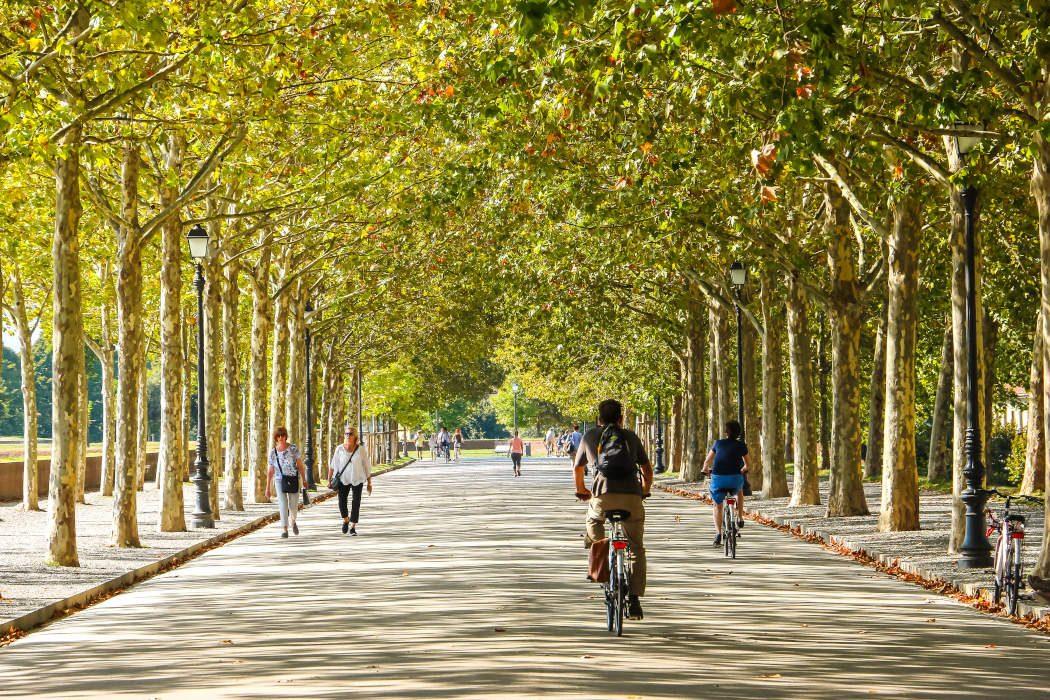
Living in Italy without a car is not only possible. In the right town or neighborhood, it can be one of the most enjoyable aspects of Italian life. Walking to the market, taking a train to a neighboring city, cycling to a café, and having essential services close to home can make everyday life simpler, healthier, and less expensive.
But there is an important distinction between visiting Italy without a car and actually living here without one.
A beautiful medieval village may be perfect for a weekend but frustrating when you need groceries, medical appointments, or a reliable connection to the nearest railway station. A coastal apartment may look ideal in July but feel isolated when seasonal buses stop running in October.
For foreigners planning to move to Italy, retirees looking for a slower lifestyle, and remote workers searching for a practical home, choosing the right location matters far more than simply choosing the most attractive town.
Italy offers some excellent opportunities for a car-free lifestyle. However, public transportation, walkability, and access to everyday services vary considerably between cities, towns, and even neighborhoods.
This guide explains how to evaluate Italian locations for car-free living, which cities deserve consideration, what problems to anticipate, and how to test a location before signing a lease or purchasing a property.
Why Living Without a Car Works Better in Some Parts of Italy
Italy has several advantages for people who prefer not to drive.
Many historic Italian towns developed centuries before automobiles existed. Their original centers were designed around walking, with shops, churches, markets, and public squares relatively close together.
Larger Italian cities generally have established public transport networks, while the national railway system connects many important urban centers and smaller communities.
In some locations, a bicycle is all you need for daily errands. Elsewhere, buses, trams, metros, and regional trains make it possible to travel regularly without owning a vehicle.
However, Italy’s transport infrastructure is uneven.
A town just 20 kilometers from a major city may have an excellent train connection. Another town at the same distance might have only a few weekday buses.
The difference becomes particularly important when you need to travel during evenings, weekends, or public holidays.
Before choosing a home, consider three kinds of mobility:
- Everyday mobility: Reaching supermarkets, pharmacies, cafés, doctors, and local services.
- Regional mobility: Traveling to nearby towns, hospitals, shopping centers, and administrative offices.
- Long-distance mobility: Reaching airports, major cities, and other Italian regions.
An ideal car-free location should make everyday mobility easy and provide dependable options for the other two.
For a broader introduction to relocating and settling into the country, explore our Living in Italy guides.
The Five Essentials of a Car-Free Italian Neighborhood
Before falling in love with an apartment, investigate the surrounding neighborhood.
A good location should provide five essential advantages.
1. Shops and Daily Services Within Walking Distance
Look for a supermarket, pharmacy, bakery, cafés, ATM, and basic household services within approximately 10–15 minutes on foot.
A lively outdoor market is a bonus, but it should not be your only grocery option.
For longer-term residents, proximity to a post office, bank, hairdresser, and other everyday businesses can also be important.
Check whether these businesses operate throughout the year. Seasonal destinations may have fewer services during the winter.
2. A Useful Railway Station
Living close to a railway station can make a significant difference.
Ideally, your home should be within 10–20 minutes of a station that offers regular trains throughout the day.
However, frequency matters more than simply having a station nearby.
Some smaller Italian stations have infrequent services or trains that stop running relatively early in the evening.
Use the official Trenitalia website to check schedules, destinations, and connections before deciding whether a town is suitable.
3. Dependable Local Transportation
A bus stop outside your apartment is useful only if buses operate when you need them.
Check weekday, weekend, and holiday schedules.
In smaller towns, buses may be designed primarily around school hours or commuting patterns rather than the needs of residents throughout the day.
Make sure there are practical connections to supermarkets, medical facilities, and the nearest railway station.
4. Comfortable Walking and Cycling Routes
Flat streets, continuous sidewalks, safe crossings, and cycling infrastructure make everyday journeys easier.
Steep hills, uneven cobblestones, and narrow roads without sidewalks can become inconvenient, especially when carrying groceries.
A distance of one kilometer may be effortless in a flat neighborhood but exhausting in a hillside village.
5. Accessible Healthcare
Find out where the nearest pharmacy, family doctor’s office, medical clinic, and hospital are located.
Do not assume that a nearby hospital can be reached conveniently by public transportation.
For older residents and people with mobility limitations, access to healthcare should be a primary consideration.
You can find related information in our Healthcare & Retirement section.
The Best Italian Cities for Living Without a Car
There is no single best Italian city for everyone. Your choice depends on your budget, mobility, lifestyle, and how frequently you expect to travel.
The following destinations are particularly worth investigating.
Bologna: Excellent Connections and Urban Convenience
Bologna is one of the most appealing choices for residents who want the conveniences of a major city without depending on a private vehicle.
Its historic center is relatively compact, and its famous porticoes provide sheltered walking routes through much of the city.
Bologna Centrale is an important railway hub, with connections to Florence, Milan, Venice, Rome, and many other destinations.
The city also has an extensive urban bus network.
Bologna is particularly suitable for remote workers, students, professionals, and people who travel frequently around Italy.
However, housing costs can be relatively high, and central neighborhoods may be crowded.
Best for: Professionals, students, remote workers, and frequent train travelers.
What to check: Housing costs, neighborhood traffic, and walking distance to railway and bus connections.
Padua: A Practical Alternative to Venice
Padua, known in Italian as Padova, combines historic architecture, a substantial university population, and practical public transportation.
The city has tram and bus services, while its railway station offers useful regional and longer-distance connections.
Padua can be a good choice for residents who want access to Venice and other parts of the Veneto without living in Venice itself.
Its historic center contains shops, markets, cultural institutions, and everyday services within a relatively concentrated urban area.
Residential neighborhoods outside the center can offer additional choices, although their transport convenience varies.
Best for: Retirees, professionals, students, and residents who appreciate a medium-sized university city.
What to check: Tram and bus connections, proximity to the railway station, and availability of services within walking distance.
Parma: A Manageable City With Everyday Amenities
Parma is attractive to people who enjoy Italian food culture, cultural activities, and a manageable urban environment.
Its center is well suited to walking, and cycling is an established part of local daily life.
The railway station connects Parma with other cities along important northern Italian routes.
For people who do not need the intensity of Milan or Bologna, Parma can offer a comfortable balance between urban convenience and a more relaxed lifestyle.
The city has restaurants, shops, cultural institutions, medical facilities, and an active local community.
Best for: Couples, retirees, food enthusiasts, and residents looking for a mid-sized city.
What to check: Access to outer neighborhoods, local bus frequency, and railway connections.
Lucca: Historic Beauty and a Compact Center
Lucca demonstrates why historic Italian towns can be particularly appealing without a car.
Its walled center is compact, and everyday walking and cycling are practical for many residents.
The famous tree-lined city walls also provide an exceptional recreational route.
Lucca railway station is located outside the historic walls, although the exact walking distance depends on where you live.
Regional trains connect the city with Pisa, Viareggio, and Florence, with travel arrangements varying according to the route.
Lucca is particularly appealing to people seeking a smaller city with historic character and access to the Tuscan countryside.
However, historic apartments may lack elevators, and certain railway journeys require changes.
Best for: Retirees, couples, culture lovers, and residents who prefer smaller cities.
What to check: Apartment accessibility, distance to the station, and the availability of supermarkets within the historic center.
Florence: Walkable but Neighborhood Selection Is Critical
Florence has one of Italy’s most attractive pedestrian environments, particularly in its historic center.
Its tram network, buses, and major railway connections make car-free living entirely realistic.
However, central Florence can be expensive, crowded, and affected by tourism.
Residential districts close to useful tram stops may provide a better balance than living immediately beside a famous monument.
For long-term residents, the ideal Florence neighborhood is often one that combines access to public transport with ordinary local businesses.
Best for: Culture enthusiasts, professionals, retirees, and residents who value frequent national rail connections.
What to check: Rental prices, tourist congestion, neighborhood noise, and proximity to supermarkets and tram stops.
Turin: Public Transport and Big-City Amenities
Turin deserves serious consideration for car-free living.
Its regular street layout, extensive porticoes, trams, buses, and metro provide several ways to move around the city.
Turin also offers museums, universities, restaurants, shopping districts, and healthcare services associated with a major metropolitan area.
For someone who wants an urban lifestyle without the expense of owning a vehicle, Turin can be an appealing alternative to Milan.
Neighborhood choice remains important because access to rapid transit varies across the city.
Best for: Professionals, city-oriented retirees, and people looking for extensive urban services.
What to check: Distance to metro or tram stops, railway access, and the practical walkability of the neighborhood.
Trento: A Compact City With Mountain Access
Trento combines a walkable center with rail connections along the Adige Valley.
Its compact scale can appeal to residents who want mountain scenery without living in an isolated Alpine village.
Cycling and public transportation are useful within the main urban area, but steep hillside neighborhoods require closer examination.
Trento may be particularly attractive to residents who enjoy outdoor activities while still wanting everyday services close to home.
Best for: Outdoor enthusiasts, retirees, and residents who appreciate smaller cities.
What to check: Winter conditions, hillside properties, local buses, and transportation to mountain destinations.
Other Cities Worth Considering
Ferrara is particularly interesting for people who enjoy cycling.
Verona combines historic architecture with substantial railway connections.
Pisa can be practical for residents who need regional trains and airport access.
In southern Italy, central neighborhoods in Bari and Lecce may also be suitable, although public transportation needs to be evaluated carefully.
These are starting points rather than a definitive ranking.
Even the most convenient Italian city can contain neighborhoods where car-free living is difficult.
For inspiration when exploring different parts of the country, browse our Italian Regions travel guides.
Small Towns Versus Cities: Which Is Better Without a Car?
Living without a vehicle can actually be easier in a well-planned small town than in a sprawling metropolitan suburb.
The critical factor is not population size. It is the relationship between residential neighborhoods, essential services, and public transportation.
A large city generally provides better transport coverage, shopping choices, and healthcare access. However, the most convenient neighborhoods may also be expensive.
A medium-sized city often offers an attractive compromise between walkability, services, housing choices, and public transport.
A small railway town can be an excellent option when its historic center, shops, and railway station are close together.
Historic hill towns may be beautiful, but steep streets and infrequent buses can create daily difficulties.
Coastal resorts can be appealing but require careful evaluation of year-round services.
For many newcomers, a medium-sized city or a small town with a busy railway station offers the best compromise.
It provides the pleasures of Italian everyday life without requiring a car for every appointment or shopping trip.
Why Living Near a Railway Station Is So Important
When evaluating a property, I would give particular attention to the railway station.
A home within 15 minutes of a useful station can make a significant difference to your independence.
However, not every Italian railway station offers the same level of service.
Some stations have frequent regional trains throughout the day. Others have limited schedules, and certain lines may experience temporary closures or replacement buses.
Before choosing a location, check:
- The first and last departures on weekdays.
- The frequency of trains throughout the day.
- Sunday and public holiday services.
- Connections to the nearest major city and hospital.
- Whether journeys require changes.
- The walking route from the property to the station.
Monthly and annual subscriptions are available on many regional railway routes and may reduce costs for frequent travelers.
Use the official Trenitalia website for current schedules and ticket information.
For additional railway infrastructure and station information, consult Rete Ferroviaria Italiana.
Another consideration is whether a station is actually within the town.
Some railway stations bearing a town’s name are situated outside the historic center, occasionally several kilometers away.
That detail can change the suitability of an otherwise attractive property.
Choosing the Right Neighborhood Matters More Than Choosing the Right City
Two apartments in the same Italian city can offer completely different lifestyles.
Imagine one apartment in a central neighborhood, five minutes from a supermarket and ten minutes from the railway station.
Most errands can be completed on foot.
Now imagine another apartment on a hillside outside town. It offers a panoramic view, a large terrace, and a lower monthly rent.
But reaching the nearest grocery store requires a 30-minute walk along a narrow road without sidewalks.
Even if the second apartment costs less, the savings may disappear when you begin using taxis or renting vehicles regularly.
For this reason, I recommend investigating neighborhoods before individual properties.
Start by identifying the main pedestrian areas, shopping streets, railway station, and medical facilities.
Then look for homes within that practical network.
You can explore related advice in our Housing & Where to Live section.
How to Test a Town Before Moving
One of the most valuable things you can do is spend several days living as though you were already a resident.
Instead of sightseeing, perform ordinary activities.
Walk from your accommodation to a supermarket and carry groceries back.
Find a pharmacy and determine how to reach a doctor.
Travel to the nearest major city using public transportation.
Check the last train or bus returning in the evening.
Visit the neighborhood on a Sunday, when some businesses may be closed and transport may operate less frequently.
Walk the route between your home and the station after dark.
If possible, conduct the test outside the peak tourist season.
A resort town with excellent summer transport may be much less practical from November to March.
You should also test the location in bad weather.
A pleasant 20-minute walk on a sunny spring morning can feel very different during a week of winter rain.
For planning local journeys, use Google Maps, then confirm schedules with the relevant transport operator.
Cycling in Italy: An Alternative to Car Ownership
Cycling can considerably expand the area available to someone living without a car.
In flat cities such as Ferrara, cycling is an important element of daily life.
Bologna, Parma, Lucca, Padua, and parts of many other cities also offer opportunities for everyday bicycle travel.
An ordinary bicycle may be sufficient for short distances. Electric bicycles can make longer journeys and moderate hills more manageable.
However, cycling conditions vary substantially.
Before purchasing a bicycle, investigate protected cycling lanes, traffic conditions, bicycle parking, and the possibility of keeping a bicycle securely at home.
In historic apartment buildings, carrying a heavy electric bicycle up several flights of stairs may be impractical.
For longer journeys, check the bicycle transport rules of the relevant railway operator and specific train.
Cycling can complement public transportation, but the safest and most practical arrangement depends on local infrastructure.
Healthcare and Retirement Without a Car
For retirees, healthcare access deserves particular attention.
Living near a hospital is helpful, but routine appointments may take place in different locations.
A family doctor, specialist, diagnostic center, pharmacy, and hospital might all be in separate parts of town.
Consider whether you can reach these facilities by walking or public transportation.
For older residents and people with mobility limitations, practical details become particularly important: elevators, steep streets, uneven paving, pedestrian crossings, and transport accessibility.
A historic apartment on the fourth floor without an elevator may seem charming when you first visit it, but it can become a serious inconvenience over time.
It is also worth finding out whether taxis are readily available.
In smaller towns, you may need to book them in advance.
If you are planning to retire in Italy, browse our Healthcare & Retirement articles before selecting your destination.
Living by the Sea Without a Car
Coastal towns are particularly attractive to foreign residents and retirees, but they need careful evaluation.
Some seaside communities are connected to major regional railway lines. Others rely heavily on cars, especially during the winter.
Along the Tuscan and Ligurian coasts, locations such as Viareggio, La Spezia, and parts of the Cinque Terre provide interesting examples of different approaches to coastal living.
Viareggio has a comparatively flat urban layout and a railway station.
La Spezia offers city services and transport connections.
Many Cinque Terre villages are connected by rail, but steep streets, stairs, and restricted vehicle access can create practical limitations for permanent residents.
The location of your home within any of these communities will determine whether you can comfortably live without a vehicle.
A seaside neighborhood may be separated from the railway station by several kilometers.
A beachfront apartment is not automatically a convenient car-free apartment.
For more destination ideas, explore our Beaches & Islands guides.
How Much Money Can You Save by Living Without a Car?
Owning a vehicle in Italy comes with numerous expenses.
These may include the purchase price, insurance, annual vehicle tax, maintenance, fuel, parking, inspections, and occasional repairs.
Residents in historic centers may also need to consider restricted traffic zones, known as Zone a Traffico Limitato, or ZTL.
By avoiding vehicle ownership, many households can redirect their transportation budget toward accommodation in a more convenient location.
However, calculate your individual costs rather than assuming that going car-free will always be cheaper.
A central apartment could cost substantially more than one outside town, and frequent taxi journeys can become expensive.
Consider this hypothetical monthly comparison:
| Expense | With a Car | Without a Car |
|---|---|---|
| Car depreciation or financing | €180 | €0 |
| Insurance and vehicle tax | €85 | €0 |
| Fuel | €100 | €0 |
| Maintenance and parking | €95 | €0 |
| Public transportation | €20 | €65 |
| Taxis and occasional rentals | €20 | €100 |
| Total monthly expenses | €500 | €165 |
These are illustrative budgets, not average Italian transport costs. Actual expenses vary according to location, travel habits, vehicle ownership, and other circumstances. Differences in housing costs are excluded.
In this example, living without a car saves €335 per month before considering any difference in rent.
That illustrates why paying somewhat more for a central apartment can sometimes be financially reasonable.
It also demonstrates the importance of evaluating total living expenses rather than concentrating exclusively on the price of housing.
When You Might Still Need to Rent a Car
Even in an excellent car-free location, occasional vehicle access can be useful.
Some of Italy’s most beautiful countryside destinations, mountain villages, wineries, and rural accommodations are difficult to reach by public transportation.
Rather than owning a car permanently, you could rent one for occasional excursions.
A combination of walking, trains, buses, bicycles, taxis, and temporary car rental often provides more flexibility than relying on a single method of transportation.
This approach can be especially appealing for residents who enjoy exploring Italy without the responsibilities of maintaining a private vehicle year-round.
For ideas about regional travel, see our Getting Around Italy guides and Things to Do in Italy.
Questions to Ask Before Renting or Buying a Property
Real estate advertisements naturally emphasize attractive features: terraces, renovated kitchens, mountain views, or historic architecture.
They rarely explain whether an apartment is practical for residents without a car.
Before making a decision, ask the estate agent or landlord some specific questions.
Is the nearest supermarket open year-round?
How far is the railway station on foot?
Are there direct buses to the hospital?
Does the building have an elevator?
Is the road to the center safe to walk after dark?
Can groceries and household necessities be delivered to the address?
Does the neighborhood become significantly quieter during the winter?
Is there a reliable taxi service?
Google Maps can help with preliminary research, but it should not replace direct verification.
For major decisions, check local transport timetables and walk the actual routes yourself.
It is equally important to investigate the practical aspects of living in an apartment building, particularly shared expenses, access, and responsibilities.
For additional guidance, explore our Housing & Where to Live articles.
Common Mistakes Foreigners Make When Choosing a Car-Free Home
Several recurring mistakes can turn an appealing relocation into a frustrating experience.
The first is choosing a property based almost entirely on photographs.
Panoramic views do not compensate for inaccessible services.
The second is assuming that public transportation operates with the same frequency everywhere in Italy.
The third is failing to consider seasonal variations.
In tourist destinations, transportation and shopping options may be far more limited outside the summer.
Another common problem is underestimating the difficulty of hilly terrain.
A distance of one kilometer may be easy on level streets and exhausting on a steep road.
Some newcomers also overlook the importance of social activities and community life.
Living in a beautiful but isolated location can make it difficult to meet people, participate in local events, or maintain an active social life.
Finally, some newcomers try to recreate a car-dependent lifestyle while living without a vehicle.
The more successful approach is to adjust everyday habits to the location: shop more frequently, use nearby businesses, travel by train, and take advantage of neighborhood services.
These changes are part of the experience of living in Italy.
How to Choose the Right Place for Your Lifestyle
The ideal location depends on what you expect from everyday life.
A remote worker might prioritize dependable internet, a railway station, cafés, and access to an airport.
A retiree may care more about healthcare, level streets, a local market, and an active year-round community.
A family with children will need schools, parks, medical services, and safe routes to daily activities.
Someone who travels frequently should pay particular attention to long-distance railway connections.
I would divide the decision into three priorities:
- Essential: Services you must reach regularly without depending on anyone else.
- Important: Facilities you would like nearby, such as parks, restaurants, cultural activities, or convenient railway connections.
- Optional: Features that improve the lifestyle but are not necessary, such as sea views, large terraces, or proximity to tourist attractions.
Choose a home that meets your essential requirements first.
Beautiful surroundings become much more enjoyable when everyday life is manageable.
Final Thoughts: A Walkable Life Can Be One of Italy’s Greatest Pleasures
One of the most rewarding aspects of life in Italy is the ability to feel connected to your neighborhood.
Walking to buy fresh bread, stopping for an espresso, recognizing familiar faces in the market, and making spontaneous plans without organizing transportation can create a strong sense of belonging.
Living without a car encourages a more local way of life.
It can also reduce household expenses, simplify daily routines, and encourage walking or cycling.
But this lifestyle is not automatic.
It requires careful decisions about the town, neighborhood, building, and available transportation.
Before committing to a long-term move, spend time in your preferred area and test the practical details.
The best place to live without a car in Italy is not necessarily the most famous or beautiful destination. It is the place where ordinary daily life works comfortably without one.
When you find that combination, not owning a car may feel less like a limitation and more like a freedom.
External Sources
- Trenitalia – Official Train Timetables and Tickets
- Rete Ferroviaria Italiana – Railway Network and Stations
- Italian Ministry of Infrastructure and Transport
- Google Maps – Walking and Public Transportation Routes