
 Moving into a home in Italy is exciting, but sooner or later something will break. A tap starts leaking, the boiler stops working, an electrical socket needs replacing, or damp patches appear on a wall. Suddenly, you need a plumber, electrician, builder, or another local tradesperson—and you may not know where to start.
Finding reliable tradespeople in Italy can be surprisingly different from doing so in the United States or the United Kingdom. Personal recommendations still carry considerable weight, smaller businesses may have limited online visibility, and written estimates are not always provided automatically.
I have learned that the best approach is to combine local knowledge with a little preparation. You do not need to speak perfect Italian or know everything about Italian building regulations. But you should understand who to call, what questions to ask, how to compare prices, and which documents to request.
Whether you own an apartment, rent a house, or have purchased a property that needs renovation, this guide explains how to manage everyday home repairs in Italy without unnecessary confusion or expense.
Where to Find Reliable Tradespeople in Italy
The first challenge is knowing where to look.
In Italy, tradespeople are often known as artigiani, although the term covers a broad range of skilled crafts and businesses.
You will commonly encounter:
- Idraulico: plumber
- Elettricista: electrician
- Muratore: builder or mason
- Imbianchino: painter and decorator
- Falegname: carpenter
- Piastrellista: tiler
- Fabbro: metalworker or locksmith
- Caldaista: boiler technician
- Termoidraulico: heating and plumbing specialist
- Tecnico condizionatori: air-conditioning technician
For straightforward repairs, the most useful starting point is often someone who already lives in your neighborhood.
Ask Neighbors and Local Residents
Personal recommendations are particularly valuable in Italy.
A neighbor who has lived in the same building for twenty years may know an excellent plumber who has never invested in a sophisticated website.
Ask whether the tradesperson arrived when promised, solved the problem, provided an invoice, and charged what was agreed.
For condominium residents, the building administrator may already have a list of trusted contractors.
You can learn more about how shared residential buildings operate in our guide to Living in an Italian Apartment Building: Condominio Fees, Rules and Responsibilities.
Local hardware stores, known as ferramenta, can also be useful sources of recommendations. The people working there frequently know electricians, plumbers, painters, and builders who buy supplies regularly.
Use Online Directories and Local Platforms
Online searches are useful, particularly when you are new to an area.
Some places to begin include:
- ProntoPro — a platform for finding and requesting quotes from local professionals.
- Instapro — a marketplace for home improvement and repair services.
- Pagine Gialle — a traditional Italian business directory.
- Google Maps — useful for finding nearby businesses and comparing customer reviews.
Search in Italian rather than English whenever possible.
For example, idraulico vicino a me means plumber near me, while elettricista pronto intervento means emergency electrician.
Do not select someone based entirely on a five-star rating. Read recent reviews, examine how the company responds to complaints, and check whether it has a recognizable business identity.
A tradesperson with fewer but detailed, credible reviews may be more dependable than one with dozens of vague recommendations.
How to Check Whether a Tradesperson Is Qualified
This is especially important for electrical, gas, heating, and plumbing installations.
Italy regulates certain installation activities under Ministerial Decree 37/2008, commonly called DM 37/08.
Businesses performing regulated installation work must hold the appropriate authorization for the category of work involved.
The requirements are not identical for every trade or minor repair, so it is important to distinguish general handyman work from regulated building systems.
Check the Business Registration
Ask for the company’s:
- Business name or ragione sociale
- Partita IVA (VAT number)
- Business address
- Relevant professional qualifications or authorizations
- Written estimate
- Insurance details, particularly for substantial work
You can investigate registered Italian businesses through Registro Imprese, the official Italian business register.
For regulated installation work, confirm that the business is authorized for the specific activity—not simply registered as a generic construction or maintenance company.
An electrician authorized for electrical installations is not automatically authorized to undertake every category of gas or plumbing installation.
For ordinary painting or furniture repairs, the regulatory requirements are different.
Ask About the Dichiarazione di Conformità
For qualifying installation or modification work, the installer must issue a Dichiarazione di Conformità, often abbreviated as DiCo.
This declaration confirms that the installation was carried out in accordance with the applicable regulatory requirements.
It can be important for electrical systems, plumbing installations, heating systems, and gas installations.
Not every minor repair requires a new DiCo. Replacing a simple component is different from substantially modifying an installation.
Before work begins, ask:
È prevista la dichiarazione di conformità alla fine dei lavori?
Will you provide a declaration of conformity when the work is finished?
If the work requires one, make sure that its preparation and delivery are included in the agreement.
Keep the document with your property records. It may be relevant during future renovation work, technical inspections, or a property sale.
Understanding Quotes and Estimates in Italy
The Italian word for an estimate is preventivo.
For anything beyond a small emergency repair, I strongly recommend requesting a written preventivo before authorizing work.
A casual conversation about price is not enough when the project involves several days of labor, expensive materials, or multiple tradespeople.
What a Proper Quote Should Include
Ask for a written estimate identifying:
- The business and its VAT number.
- A clear description of the proposed work.
- Labor costs.
- Materials and their specifications.
- Travel or call-out charges.
- Waste removal and disposal, where applicable.
- VAT and whether it is included in the total.
- Expected starting and completion dates.
- Payment terms.
- Whether any certificates or required documents are included.
Also clarify how unexpected problems will be handled.
For example, an apparently simple bathroom repair may reveal damaged piping behind the wall.
You should agree that any additional expense requires your approval before the contractor proceeds.
Get More Than One Estimate
For significant projects, I recommend obtaining at least three estimates.
The cheapest is not necessarily the best.
A low quote might exclude materials, VAT, disposal fees, or finishing work. Another contractor may charge more but provide a clearer scope, better materials, appropriate documentation, and a realistic completion schedule.
Compare the entire offer rather than looking only at the final number.
For major renovation projects, a computo metrico estimativo—an itemized calculation of quantities and costs—can make competing offers much easier to assess.
Should You Pay for an Inspection?
Some contractors provide free estimates. Others charge for a site visit, technical diagnosis, or emergency call-out.
Both arrangements exist.
Ask in advance whether the inspection costs anything and whether that amount will be deducted from the final repair bill.
The phrase is:
Il sopralluogo è gratuito oppure a pagamento?
Is the site inspection free or chargeable?
This simple question can prevent an unpleasant surprise.
How Much Do Home Repairs Cost in Italy?
Prices vary significantly depending on the region, the complexity of the job, the contractor, travel distance, and whether the work is scheduled or urgent.
A plumber in central Milan may have a different pricing structure from a small independent business in rural Abruzzo or southern Tuscany.
The following figures are broad illustrative budgeting ranges, not verified national averages or fixed market tariffs.
| Service | Indicative cost |
|---|---|
| Plumber’s standard call-out and minor repair | €70–€180 |
| Electrician’s small repair | €70–€180 |
| Replacing a tap, including basic labor | €80–€220 |
| Unblocking a simple drain | €80–€200 |
| Routine domestic boiler servicing | €80–€160 |
| Interior painting | €8–€20 per m² of painted surface |
| General handyman | €25–€50 per hour |
These ranges may exclude VAT, parts, minimum call-out charges, travel, and emergency supplements. They should be used only for preliminary planning; request local, itemized quotes before committing.
Emergency services during evenings, weekends, or holidays often cost considerably more.
Always ask for a total estimate, including IVA, before agreeing to a repair.
Finding a Plumber in Italy
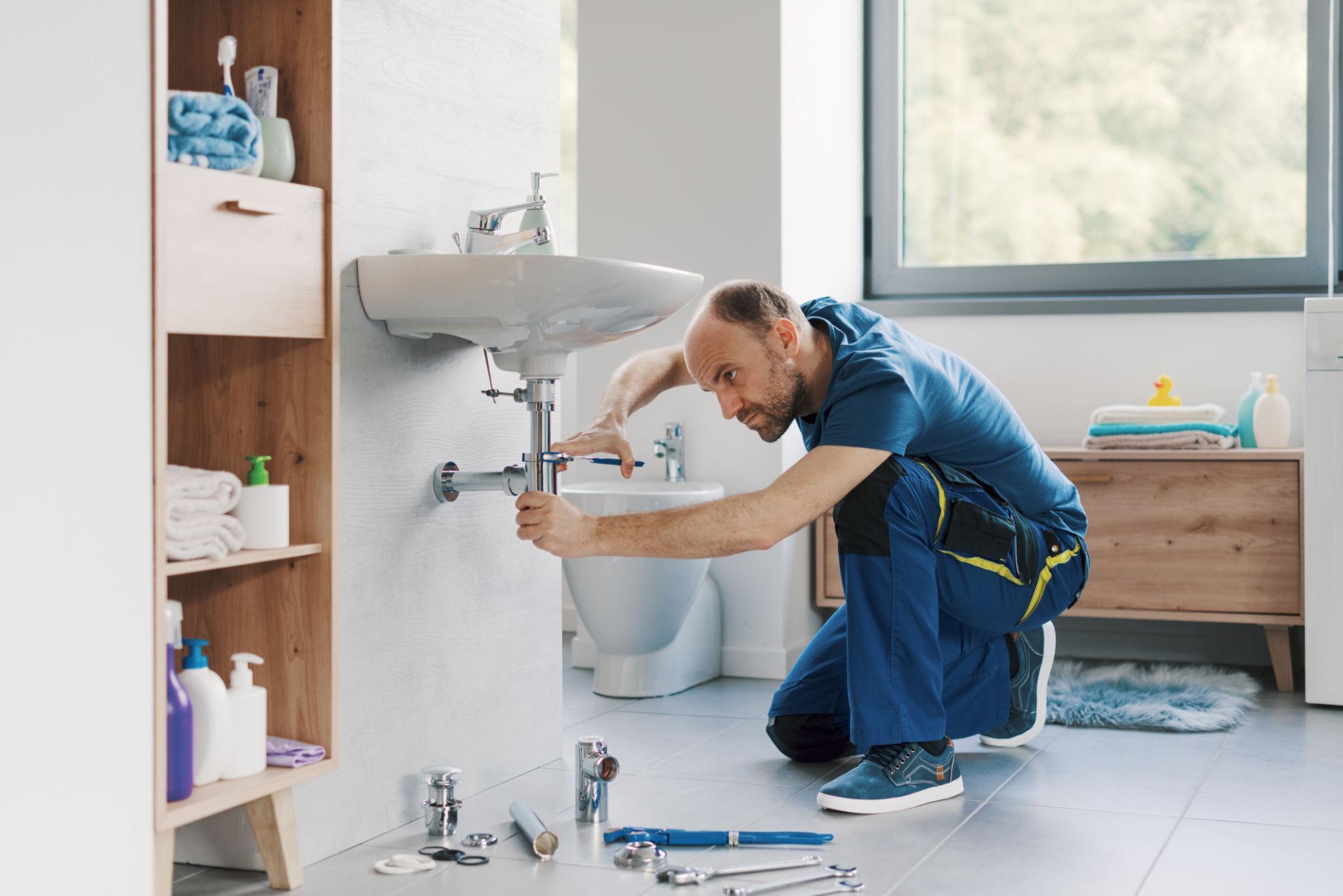
Plumbing problems are among the most common reasons homeowners need assistance.
Italian properties can contain a surprising mixture of old and new installations, particularly in historic buildings that have been renovated several times.
A plumber may be needed for:
- Leaking pipes or taps
- Blocked sinks and drains
- Toilet repairs
- Low water pressure
- Water-heater problems
- Bathroom installations
- Kitchen plumbing
- Damaged valves
- Water leaks inside walls
When contacting an idraulico, explain the problem as precisely as possible.
Photographs or short videos sent through WhatsApp can be extremely helpful. Many tradespeople use WhatsApp to discuss repairs, arrange appointments, and exchange information.
Before the plumber arrives, locate your property’s main water shut-off valve.
Knowing how to stop the water supply can turn a potentially serious leak into a manageable repair.
If water is reaching electrical fittings, avoid touching the affected equipment and have the danger assessed by a qualified professional.
Plumbing in Older Italian Houses
Older homes deserve additional attention.
A leak may originate from a pipe that was installed decades ago or from a connection concealed during a previous renovation.
If you are buying a property, ask about the age and condition of its plumbing before completing the purchase.
Our guide to renting or buying a home in Italy explains why inspecting plumbing, electrical systems, dampness, and heating should be part of your property assessment.
Hiring an Electrician in Italy
Electrical work deserves particular caution.
Italian residential systems may differ from those familiar to newcomers from other countries, and older buildings sometimes have wiring or distribution boards that require inspection or upgrading.
An elettricista can help with:
- Faulty sockets and switches
- Circuit breakers that repeatedly trip
- Lighting installations
- Distribution-board replacements
- Electrical safety inspections
- Additional circuits
- Electrical upgrades during renovation
- Problems with existing wiring
For significant electrical work, use an appropriately authorized installer and ask which compliance documents will be provided.
Do not treat a general handyman as interchangeable with a qualified electrician for regulated electrical installations.
If a circuit repeatedly trips, a socket overheats, or you notice burning smells, stop using the affected equipment and arrange a professional inspection.
Repeatedly resetting a circuit breaker without identifying the fault is not a sensible solution.
Boilers, Heating and Air Conditioning
Heating and hot-water systems are another important part of Italian home maintenance.
Many apartments use an individual gas boiler, or caldaia, while others depend on centralized condominium heating.
Some homes also have heat pumps, electric water heaters, pellet stoves, or air-conditioning systems.
It is important to choose a professional qualified for the specific equipment.
A caldaista specializes in boiler work, while a termoidraulico may work on plumbing and heating systems more broadly.
For manufacturer-specific maintenance, an authorized service center can be useful.
Ask for:
- Details of the work performed
- An invoice
- Any required maintenance report
- Updates to the equipment documentation where applicable
- Information about the next inspection
Inspection and maintenance requirements vary according to system type, power, regional regulations, and the manufacturer’s instructions. Not every appliance follows an identical annual schedule.
If you smell gas, do not operate electrical switches or use flames. Leave the affected area, follow the gas distributor’s emergency instructions, and call the appropriate emergency service from a safe location.
Builders, Painters and Larger Home Repairs
Not every job requires a plumber or electrician.
For masonry repairs, damaged plaster, flooring, walls, and general construction, you may need a muratore or an impresa edile.
A painter is generally an imbianchino, while a tiler is a piastrellista.
For a small project, one tradesperson may be sufficient.
Larger renovations, however, often require several professionals working together.
A bathroom renovation might involve a plumber, electrician, tiler, and builder. Someone must coordinate their work and establish responsibility for the final result.
For structural changes, planning approvals, or substantial alterations, you may also need a geometra, architect, or engineer.
A contractor’s willingness to perform a job does not mean that municipal authorization is unnecessary.
Before beginning substantial work, check the applicable planning and building requirements.
Historic buildings and properties in protected areas may be subject to additional restrictions.
Repairs in a Condominio: Who Is Responsible?
Apartment owners in Italy often discover that the source of a problem is not necessarily inside their own property.
A leak appearing on your ceiling may come from an upstairs apartment, a shared pipe, or the roof.
Determining who pays depends on the circumstances.
Private installations are generally the responsibility of the person legally responsible for the individual property, while common installations and structures are normally managed through the condominium.
However, ownership, maintenance obligations, liability for damage, and insurance coverage must be assessed separately.
If you suspect that a problem involves shared property, contact the amministratore di condominio before authorizing substantial work.
The administrator may need to arrange an inspection, inform other owners, or contact the building’s insurer.
Document the damage with photographs and keep copies of communications.
For a fuller explanation of shared property and building expenses, read Living in an Italian Apartment Building: Condominio Fees, Rules and Responsibilities.
Renting in Italy: Who Pays for Repairs?
Tenants should not automatically assume that every repair is their responsibility.
Under the general framework of the Italian Civil Code, landlords are ordinarily responsible for necessary property repairs other than small repairs that fall to the tenant.
The precise allocation depends on the nature of the problem, its cause, the applicable legal rules, and lawful contractual provisions.
A worn tap washer might be treated differently from an aging water pipe that needs replacement.
Likewise, routine maintenance may fall to the tenant while a major replacement is generally the owner’s responsibility.
Before hiring a contractor, inform your landlord in writing, explain the issue, and ask how the repair should be arranged.
For a genuine emergency, taking reasonable action to prevent immediate damage may be necessary, but document the situation and notify the landlord promptly.
Keep written evidence of authorizations and expenses.
Invoices, VAT and Paying Tradespeople
In Italy, an invoice is called a fattura.
Always request proper documentation for work completed.
A contractor may ask for your codice fiscale, which can be needed for invoicing and tax purposes.
Some small transactions may be documented through a commercial document rather than a full invoice, depending on the nature of the service and the applicable invoicing rules.
For significant repairs and renovations, ask explicitly for a fattura.
Should You Pay in Cash?
Cash is not automatically illegal, provided the transaction complies with applicable payment limits and tax requirements.
However, a traceable payment such as a bank transfer is generally preferable for substantial work.
Avoid undocumented cash payments offered in exchange for a lower price.
Without proper records, disputes over workmanship, guarantees, and payments become much more difficult.
For larger projects, agree on a payment schedule in writing.
A reasonable arrangement might involve an initial payment, one or more payments after clearly defined milestones, and a final payment after completion and inspection.
Avoid paying the full amount before the work has been carried out.
Can Home Repairs Qualify for Tax Deductions?
Some residential renovation and energy-efficiency expenses may qualify for Italian tax deductions.
However, not every repair is eligible.
The distinction between ordinary maintenance, extraordinary maintenance, qualifying renovation work, and energy improvements is important.
Ordinary maintenance performed inside a single private residential unit generally does not qualify for the standard renovation deduction merely because a professional performed the work. Different rules may apply to qualifying ordinary maintenance on condominium common parts.
For eligible 2026 renovation work, current rules generally provide a 36% deduction, potentially increased to 50% for qualifying work on a principal residence when the statutory conditions are satisfied.
Eligibility depends on the taxpayer, property, work, documentation, and other legal requirements.
For qualifying expenses, a special traceable bank transfer, commonly known as bonifico parlante, may be required. An ordinary bank transfer is not always sufficient.
Before paying a contractor, check whether your project qualifies and which payment method is necessary.
The official Agenzia delle Entrate website is the best starting point for current tax guidance.
For substantial renovations, consult a qualified accountant or tax adviser before work begins rather than trying to reconstruct the paperwork afterward.
Recognizing Warning Signs Before Hiring Someone
Most problems can be avoided by checking a few details before work begins.
I would be cautious about a contractor who:
- Refuses to identify the business or provide a VAT number.
- Insists on substantial advance payment without a clear agreement.
- Will not provide an itemized estimate for a significant project.
- Cannot explain the materials being used.
- Claims required qualifications or documents are unnecessary without a credible explanation.
- Changes the agreed price without discussing the additional work.
- Pressures you to make an immediate decision for a nonurgent repair.
- Offers a large discount in exchange for undocumented payment.
A good working relationship depends on clear expectations.
Sometimes a contractor is difficult to reach simply because the business is small and the owner spends most of the day working on site.
Poor communication does not automatically mean poor workmanship. Nevertheless, for expensive projects, you need someone willing to establish prices, responsibilities, and deadlines clearly.
What to Do If the Repair Goes Wrong
Occasionally, repairs do not solve the original problem or workmanship proves defective.
Start by contacting the contractor, explaining the issue, and requesting a remedy.
Put important complaints in writing and include photographs, invoice details, and the original agreement.
Do not immediately hire another company to redo substantial work without documenting the defects and considering how that decision could affect your legal position.
Italian law provides remedies for defects in contracted work, but notification deadlines and limitation periods can depend on the legal classification of the agreement and the nature of the defect.
Ordinary repair disputes are not necessarily governed by the same rules as major construction defects.
For serious disagreements, a consumer association, lawyer, or technical expert may help establish the facts.
Useful organizations include Altroconsumo and Unione Nazionale Consumatori.
Useful Italian Phrases for Home Repairs
Even basic Italian makes dealing with local contractors easier.
| Italian | English |
|---|---|
| Ho una perdita d’acqua. | I have a water leak. |
| Il rubinetto perde. | The tap is leaking. |
| Lo scarico è intasato. | The drain is blocked. |
| Non funziona la caldaia. | The boiler isn’t working. |
| È saltata la corrente. | The power has gone out. |
| Ho bisogno di un elettricista. | I need an electrician. |
| Può venire a fare un sopralluogo? | Can you come to inspect the problem? |
| Mi può fare un preventivo scritto? | Can you provide a written estimate? |
| Il prezzo include l’IVA? | Does the price include VAT? |
| Quanto costa la chiamata? | How much is the call-out charge? |
| Quando può iniziare? | When can you start? |
| Quanto tempo ci vorrà? | How long will it take? |
| Mi può rilasciare la fattura? | Can you issue an invoice? |
| È incluso lo smaltimento dei materiali? | Is waste disposal included? |
| Il lavoro è garantito? | Is the work guaranteed? |
A short message in Italian can often be more effective than a lengthy explanation in English.
For example:
Buongiorno, avrei bisogno di un idraulico per una perdita sotto il lavandino della cucina. È possibile fissare un sopralluogo e ricevere un preventivo? Grazie.
Good morning, I need a plumber for a leak under the kitchen sink. Would it be possible to arrange an inspection and receive an estimate? Thank you.
A Practical Home Maintenance Routine
One of the simplest ways to reduce unexpected repair expenses is to maintain your home regularly.
I recommend keeping a small property file containing:
- Contact information for reliable local tradespeople
- Invoices and maintenance reports
- Boiler and appliance manuals
- Electrical and plumbing certificates
- Photographs of important installations
- Condominium administrator contact details
- Insurance documents
- Renovation plans and relevant permits
It is also worth checking taps, drains, seals, visible pipes, heating equipment, and signs of moisture periodically.
If you own a second home or spend long periods abroad, arrange for someone trustworthy to inspect the property occasionally.
A small water leak that would be noticed immediately in an occupied home can cause extensive damage if a property remains empty for several months.
My Advice for Anyone Setting Up a Home in Italy
I would establish contacts with a plumber and electrician before I actually needed them.
I would ask neighbors for recommendations, obtain the business details, and keep the numbers saved in my telephone.
For small repairs, I would prioritize a dependable local professional who communicates clearly and knows the area.
For major work, I would insist on written estimates, proper authorizations, clear milestones, and complete documentation.
And I would never assume that the lowest price represents the best value.
Living in Italy often means developing relationships with local professionals who become familiar with your property over time. A good plumber, electrician, or builder can be a valuable contact for many years.
Finding one takes a little research, but once you understand the system, managing home repairs in Italy becomes considerably easier.
For more practical advice about housing, utilities, renting, and property ownership, explore our Housing & Where to Live guides and the wider Moving to Italy guide.
External Sources
- Registro Imprese — Official Italian Business Register
- Camera di Commercio di Torino — Guide to Authorized Installers and Declarations of Conformity
- Camera di Commercio di Bologna — Installation of Building Systems
- Agenzia delle Entrate — Official Tax Information
- Altroconsumo — Consumer Rights and Advice
- Unione Nazionale Consumatori
Regulations, tax deductions, and local requirements may change. This guide reflects information available in October 2026 and is intended as general practical information rather than legal, tax, or technical advice.