Puglia is a long region, and trying to see it all in a week can turn a holiday into a sequence of car journeys. This route keeps the focus on the central and southern parts of the region: Bari, the Adriatic coast, the Valle d’Itria and Salento. You’ll see historic towns, coastal scenery and countryside without trying to cover every corner of Puglia.
Use it as a flexible plan. The five-day version is best for a short break, the seven-day route gives you time to linger, and the ten-day version adds a more relaxed pace and a deeper look at Salento.
For a broader overview, start with Italia Mia’s complete guide to Puglia. This itinerary focuses on how to connect the region’s main stops into one trip.
Some links in this article are affiliate links. Italia Mia may earn a commission if you make a purchase or booking, at no additional cost to you.
At a Glance: The Seven-Day Route
- Day 1: Bari
- Day 2: Polignano a Mare and Monopoli
- Day 3: Alberobello and Locorotondo
- Day 4: Martina Franca and Ostuni
- Day 5: Ostuni to Lecce
- Day 6: Lecce
- Day 7: Otranto or Gallipoli
The route works best with a rental car, particularly for the Valle d’Itria and smaller inland towns. You can make parts of it by train, but you’ll need to plan carefully around regional timetables and use buses or taxis for some connections.
Before You Go: Airports, Car Hire and Bases
Bari Karol Wojtyła Airport is a practical arrival point for Bari, Polignano a Mare and Monopoli. Brindisi Airport is convenient for Ostuni, Lecce and Salento. Bari Airport has a rail connection to Bari Centrale, while Brindisi Airport connects with Brindisi railway station by train and bus. Check current services and timetables before you travel.
If you’re flying into one airport and leaving from the other, check whether your rental company allows a one-way drop-off and what fee it charges. Picking up a car on arrival in Bari and returning it in Brindisi can save you from driving back north at the end of the trip.
For a seven-day visit, consider three overnight bases:
- Bari or Monopoli for the first two nights
- Ostuni or another Valle d’Itria town for the next two nights
- Lecce for the final three nights
This reduces packing and unpacking. Monopoli can be a useful base if you want to start near the coast; Bari is a better choice if you arrive late or want time to explore a larger city. For more options and advice on choosing a base, see where to stay in Puglia and other Italian regions.
Compare accommodation for your dates on Expedia’s Puglia hotel page or browse Puglia stays on Trip.com. If you prefer to book by base, compare Bari hotels on Trip.com, Monopoli hotels on Trip.com and Lecce hotels on Trip.com.
Day 1: Bari
Start in Bari rather than picking up a car immediately. The old town is easiest to explore on foot, and you can begin the trip with a relaxed evening after your flight.
Walk through Bari Vecchia, where narrow lanes lead to the Basilica of Saint Nicholas and the Cathedral of San Sabino. You may see residents making orecchiette by hand outside their homes. Follow the seafront promenade, then choose a trattoria for dinner.
If you arrive early, leave time for the Murat district, with its broad streets, shops and cafés. If your flight lands late, stay near Bari Centrale or in the old town and collect the car the next morning.
Day 2: Polignano a Mare and Monopoli
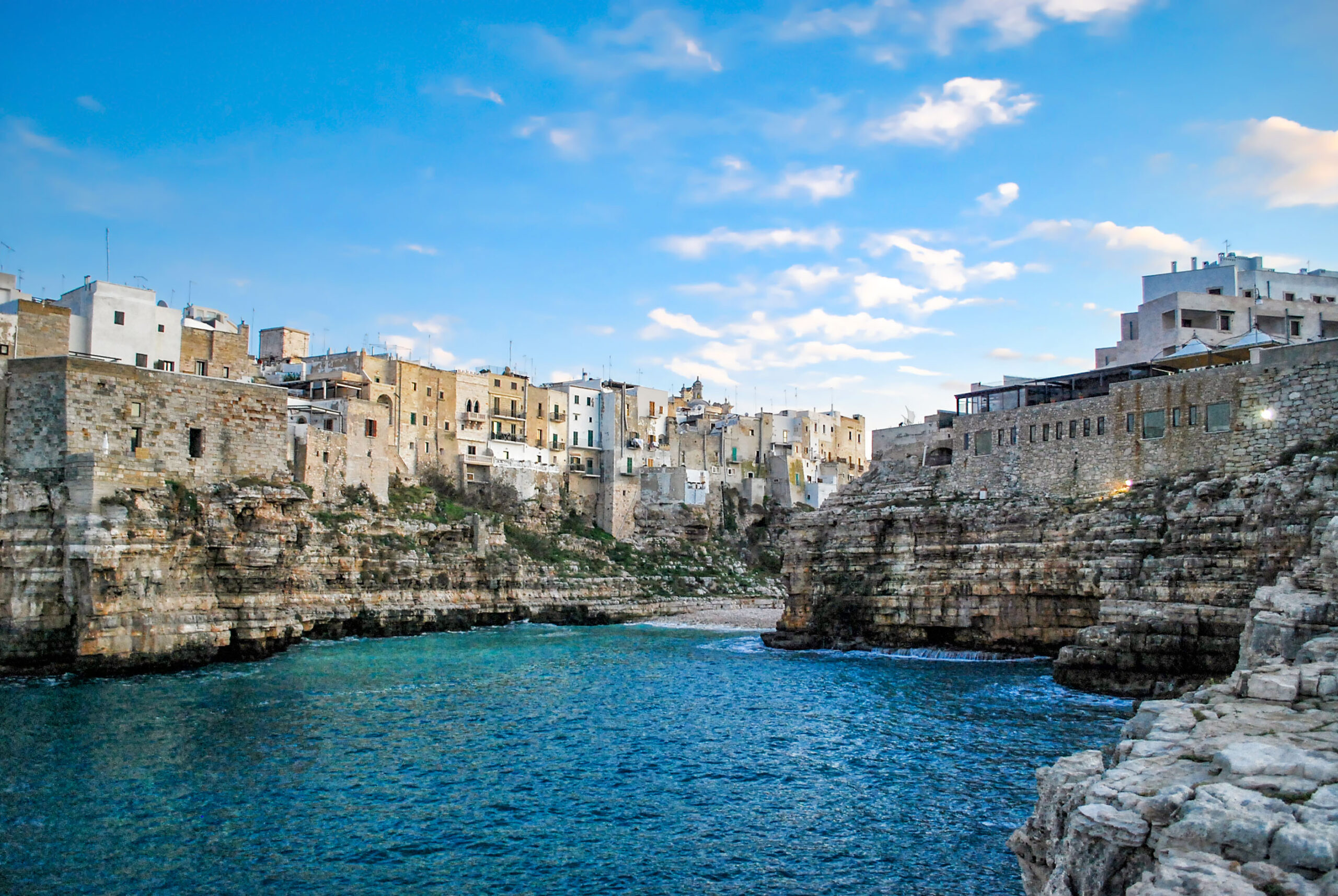
Drive south to Polignano a Mare, a clifftop town known for its old centre and views over the Adriatic. Walk to the terraces overlooking Lama Monachile, then explore the lanes and small piazzas. In summer, arrive early: the centre and the beach below the cliffs can become busy.
Continue to Monopoli for lunch and an afternoon stroll around the old port, castle and waterfront. If you want a swim, look for one of the small coves close to town, or spend more time at a beach outside the centre. For more coastal ideas, see Italia Mia’s guide to the best beaches in Puglia.
You can sleep in Monopoli, return to Bari, or stay in the countryside if you want to begin the next day closer to the Valle d’Itria.
Day 3: Alberobello and Locorotondo
Head inland to Alberobello, famous for its trulli: whitewashed stone houses with conical roofs. The Rione Monti area has many of the best-known examples. Walk through it, but also make time for the quieter Rione Aia Piccola, where the streets feel more residential.
In the afternoon, drive to Locorotondo. Its circular old town, balconies and whitewashed lanes make it a pleasant contrast to the crowds in Alberobello. Stay for an early evening stroll and dinner, or continue to your base for the night.
The Valle d’Itria is a good place to spend more time if small towns and countryside appeal to you. The route can also include Martina Franca or Cisternino, depending on your pace. Italia Mia’s Puglia guide to towns, beaches and hidden gems has more ideas for choosing stops.
Day 4: Martina Franca and Ostuni
Spend the morning in Martina Franca, whose historic centre is known for Baroque architecture, ornate doorways and grand churches. It’s an easy town to explore on foot, with cafés and shops around the old centre.
Continue to Ostuni in the afternoon. Its whitewashed buildings climb the hillside above the olive groves, and the old town is best explored without a strict route. Allow time to walk up to the cathedral and look out over the surrounding landscape.
Stay overnight in or near Ostuni. If you would rather limit hotel changes, you can keep one base in the Valle d’Itria and make this a day trip.
Day 5: Ostuni to Lecce
Drive south to Lecce, leaving time for a stop in Brindisi if you want a seafront walk or a relaxed lunch. Otherwise, go directly to Lecce and settle in before exploring the city.
Lecce’s centre is full of Baroque façades, churches and warm-coloured stone. Start around Piazza del Duomo and continue to Piazza Sant’Oronzo, where Roman remains sit amid the modern city. In the evening, choose a restaurant serving Salento specialities such as ciceri e tria or pasticciotto for dessert.
Park outside the historic centre where possible and walk into town. As in many Italian cities, traffic restrictions and limited parking can make driving into the centre inconvenient.
Day 6: Lecce at Your Own Pace
Give Lecce a full day. Visit a church or museum, take a longer lunch, and leave time to wander the lanes without trying to fit in another distant destination. If you want a short excursion, choose one nearby town rather than driving across Salento and back.
You could also use the day for a beach visit, but check travel time and access for the particular beach you choose. Puglia’s coastline is extensive, and a beach that looks close on a map may take longer to reach than expected. For more planning ideas, read Italia Mia’s guide to the best places to visit in Puglia.
Day 7: Choose Otranto or Gallipoli
On your final day, pick one side of Salento rather than trying to see both.
Choose Otranto for an Adriatic-facing day of history, waterfront views and time by the sea. Its cathedral and old town make a rewarding visit even if the weather isn’t right for swimming.
Choose Gallipoli for a day on the Ionian side. The old town sits on an island connected to the mainland, with a harbour, historic streets and access to beaches nearby.
If you fly home from Brindisi, check your route and allow plenty of time to return the car. Brindisi Airport’s train-and-bus connection with Brindisi railway station is another option when it suits your itinerary.
A Five-Day Puglia Road Trip
With five days, keep the route simple:
- Bari
- Polignano a Mare and Monopoli
- Alberobello and Locorotondo
- Ostuni
- Lecce
You’ll get a taste of the coast, the Valle d’Itria and Salento, but you’ll have less time for beaches and spontaneous stops. To make the trip easier, choose two overnight bases: one around Monopoli or the Valle d’Itria, and one in Lecce.
A Ten-Day Puglia Road Trip
With ten days, keep the seven-day route and add three nights where they interest you most. You might spend an extra day in Bari, add a slower countryside stay around the Valle d’Itria, or give Salento more time for beaches and smaller towns.
A longer trip also makes it more reasonable to include places farther north, such as the Gargano. Avoid adding it as a quick detour: it is a substantial drive from the route described here, so it works better as a separate extension with its own overnight stay.
Can You Do This Route Without a Car?
You can travel between several major towns by train. Trenitalia’s regional services connect Bari with places including Polignano a Mare, Monopoli, Ostuni and Lecce. Connections to other destinations can depend on buses, separate local operators and the day’s timetable.
Without a car, consider staying in Bari and Lecce and making a few carefully chosen day trips. You’ll have fewer options for reaching countryside accommodation, smaller inland villages and beaches away from rail or bus stops. Check each journey for your specific dates, especially in the evening and outside the main summer season.
For a fuller comparison, see Italia Mia’s guide to Italy without a car.
Practical Tips for Driving in Puglia
- Don’t overfill your days. Town centres, meals and parking all take time.
- Check ZTL rules. Historic centres may restrict vehicle access; follow local signs and confirm parking arrangements with your accommodation.
- Park outside old towns. Then explore on foot.
- Book summer accommodation early. Popular coastal towns can have limited availability during peak weeks.
- Use the car for the countryside. A car is most useful for the Valle d’Itria, masserie and beaches without convenient public transport.
- Check current transport details. Timetables and seasonal services can change; verify them for your travel dates.
External Sources
- Trenitalia: Salento Line and regional connections
- Ferrotramviaria: Bari Airport rail connection
- Trenitalia: Brindisi Air&Port Link
- Official Puglia tourism: Getting around