
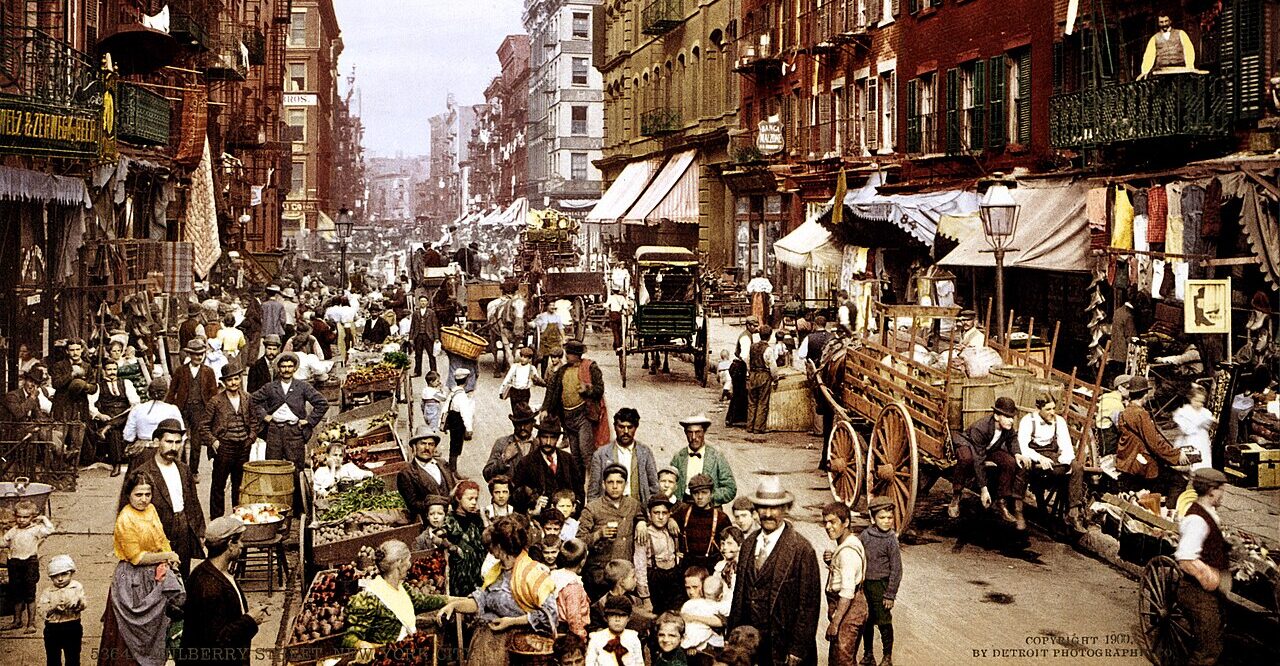
A box of pastries on Grand Street, a bag of fresh ravioli on East 187th Street and a cake from a Sicilian bakery on Brooklyn’s 18th Avenue tell three different stories about Italian New York. In Manhattan, generations of visitors have come to a few blocks where a feast still draws crowds to an immigrant church. In the Bronx, a covered market brings the neighborhood’s food trades under one roof. In Bensonhurst, a bakery and a late-summer feast carry a distinctly Sicilian connection into a Brooklyn neighborhood that has changed around them.
These places share a history of migration, family businesses and parish life. They differ in what draws people back. A walk through each makes those differences easier to see.
Manhattan’s Little Italy begins at the Grand Street counters
Start on Grand Street near Mulberry. Ferrara Bakery & Café traces its history to 1892 and still operates at 195 Grand Street. Coffee and a pastry give you an excuse to sit down and watch the traffic between the tables and the bakery counter. Across Grand Street, Di Palo’s Fine Foods, at No. 200, offers a different way to spend time on the same block. Here the question is what cheese or cured meat to take home. A café table and a grocer’s counter show two ways the old neighborhood still draws people in.
From Grand Street, turn onto Mulberry for the restaurant strip, then make your way around to Baxter Street and the Church of the Most Precious Blood. The Archdiocese of New York identifies it as the national shrine church of San Gennaro. The feast organizers trace the celebration to Neapolitan immigrants who held their first feast on Mulberry Street in 1926. The September stalls and crowds are the most visible part of the celebration. The church and procession explain why it takes place here and why the saint’s name still matters.
Continue south toward Columbus Park and the edges of the old enclave come into view. The National Park Service documents Chinatown and Little Italy as a single historic district, reflecting the history of adjacent immigrant communities whose boundaries shifted over time. Columbus Park offers somewhere to pause near those overlapping streets. The short walk from Grand Street to the park gives a better sense of the district than a dinner reservation on Mulberry alone.
Arthur Avenue’s market and parish anchor Belmont
In the Bronx, begin inside the Arthur Avenue Retail Market at 2344 Arthur Avenue, near East 187th Street. The city opened the market in 1940 in the La Guardia era, when public markets brought pushcart vendors indoors. Today its stalls still put several specialized trades within a few steps of each other. You can buy meat or cheese, stop for a sandwich at Mike’s Deli or take a seat at the Bronx Beer Hall. The hall gives the neighborhood both a place to shop for dinner and somewhere to linger over lunch.
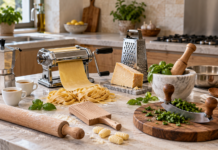
Continue along East 187th Street to Borgatti’s Ravioli & Egg Noodles, at No. 632. The family has made pasta at this address since 1935. Fresh ravioli are an especially good illustration of the difference between eating in Belmont and shopping there. A meal ends at the table. A package of pasta is meant to be carried to another kitchen and cooked for someone else.
Across East 187th Street is Our Lady of Mount Carmel, the neighborhood’s historic Italian national parish. Its proximity to the market and pasta shop makes it possible to see how commerce and worship fit into a few blocks. Families could pick up food, attend Mass and see people they knew on the same outing. Manhattan’s feast makes that connection dramatically visible for a few days each year. In Belmont, the geography makes it easy to picture on an ordinary afternoon.
Bensonhurst’s Sicilian connections run along 18th Avenue
In Brooklyn, start at Villabate Alba, at 7001 18th Avenue. The bakery’s history links its founders to Villabate, near Palermo, and dates their first shop on the avenue to 1979. At the pastry counter, cannoli and marzipan fruit give visitors a tangible connection to Sicilian baking. A pastry box also tells a story about where people gather. The purchases leave the shop for visits, birthdays and family tables throughout Brooklyn and beyond.
The avenue becomes a gathering place itself during the Feast of Santa Rosalia. Known locally as the 18th Avenue Feast, it typically takes place in late summer. Its patron saint belongs to Palermo’s civic and religious life, just as San Gennaro belongs to Naples. The two New York feasts make an important distinction visible. Migrants carried loyalties to particular cities and towns, and those ties could shape the public life of an entire street.
For the parish side of Bensonhurst, visit St. Athanasius Church at 2154 61st Street, a separate stop from the bakery and the feast blocks. The old Santa Rosalia church was demolished, while the feast continued on 18th Avenue. The Italian Enclaves Historical Society documents both the loss of the church and the survival of local traditions. Walk toward 86th Street for another part of the picture, where Chinese groceries and restaurants reflect later waves of immigration. A walk between these places captures more of Bensonhurst than looking for a single historic center.
What the three neighborhoods reveal about Italian New York
In Manhattan, the surviving institutions sit close together in an area many people now encounter as a dining destination. In Belmont, the market still makes a case for visiting with a shopping bag and a plan to cook. Bensonhurst rewards a longer walk because its Italian American landmarks are spread across a residential neighborhood with several immigrant histories. Even the food offers a clue to what each place does best. Sit down for coffee on Grand Street, bring fresh pasta home from the Bronx or take a box of Sicilian pastries to someone in Brooklyn.
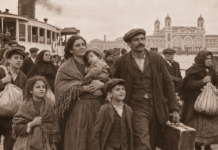
For readers with family ties to New York, the same walk can start with an address on a passenger manifest, an old envelope or a marriage certificate. An address gives you a block to look for, and a parish name may suggest where to look for a record. Italia Mia’s history of why Italians came to America and where they settled explains why so many arrivals followed people they already knew. The Italian genealogy guide shows how to carry the search back to the family’s town in Italy.
External Links
- National Park Service guide to the Chinatown and Little Italy Historic District
- Feast of San Gennaro history and festival information
- NYCEDC visitor information for Arthur Avenue Market
- Bronx Little Italy’s neighborhood and merchant directory
- Italian Enclaves Historical Society’s Bensonhurst profile