
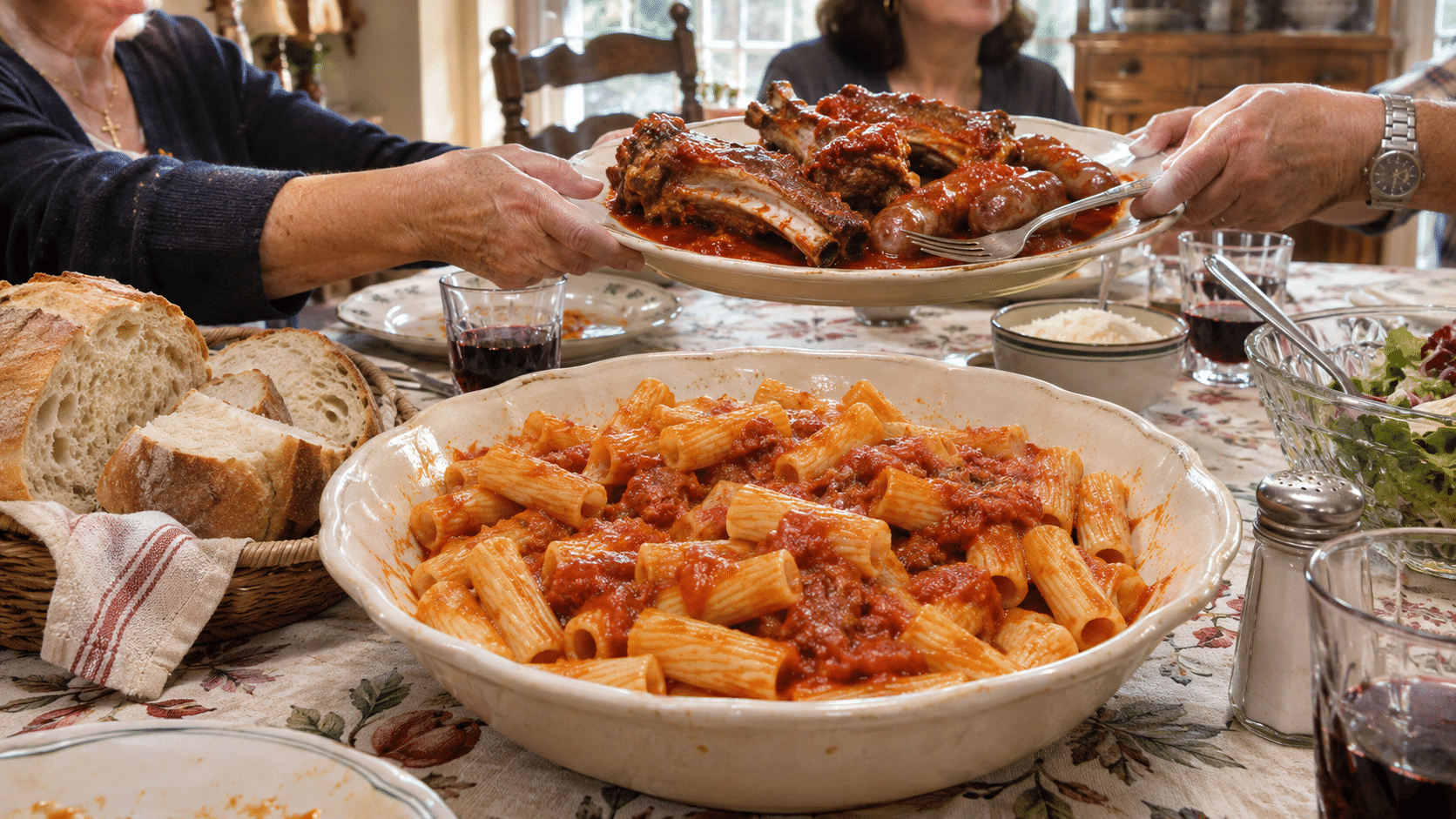
On Sunday mornings in Rhode Island, food writer Susan Russo could smell dinner from the doorstep. She was helping her future husband deliver newspapers. Each customer had a preferred door for the paper, and behind those doors, even at that hour, people were already cooking gravy. Dinner in her neighborhood was at two. In Frank Zeoli’s family in New York, a pot of tomatoes, sausage, ribs, beef rolls and meatballs would have been perfectly familiar. Call it gravy, though, and his grandmother would have wondered where you were keeping the turkey.
Both families knew the dish well enough to tell when it was ready. What differed was the word a child heard when somebody asked for another spoonful.
What makes it Sunday gravy?
In the Italian-American kitchens Russo remembers, gravy meant tomatoes cooked with meat. The pork juices, browned bits on the bottom of the pan and long, gentle simmer gave the word some culinary logic. In Zeoli’s account for the Italian American Community Center, sauce covered precisely that kind of cooking, all the way up to a pot holding four kinds of meat. Counting sausages will never settle the question.
A relative might also call dinner macaroni, even when the box on the counter says rigatoni. Zeoli remembers his Sunday dish that way. A family recipe headed simply “macaroni and sauce” can consequently leave a great deal unsaid. Someone taking it down for the first time would do well to ask which cut of pork went in first, whether the meatballs were fried, and which pieces the cook saved for the platter. Those answers tell you more about the actual dinner than the title does.
How Sunday became the day for the big pot
One Italian ancestor of the dish is Neapolitan ragù, in which substantial pieces of meat cook slowly with tomato. The cook can dress a first course of pasta with the sauce, then bring out the meat for a second course. This is an economical piece of kitchen planning. It also explains something that can look puzzling in a written recipe. You spend hours cooking ribs and then deliberately lift them out just before the pasta goes in.
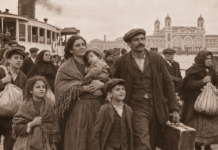
When southern Italians settled in America, the proportions could change. In a WHYY interview, Lidia Bastianich describes how greater access to meat allowed immigrant cooks to put sausage, meatballs and braciole into the same dinner. Serving several kinds of meat carried a meaning of its own for people who remembered having much less. For the larger story of those families and the communities they built, see Why Italians Came to America and Where They Settled.
Russo’s paper route captures how a special meal becomes a weekly appointment. The person cooking had already made a commitment by breakfast. Everyone else knew roughly how long they had before they were expected at the table. A late arrival could find the sauce still warm, but the pasta gave dinner a definite hour. Once someone dropped the macaroni into boiling water, there were only minutes left to fetch the cheese, fill the glasses and sit down.
What goes into the pot?
Pork ribs give the tomato a rounded flavor and leave something substantial to serve afterward. Italian sausage seasons the whole batch, especially if the butcher uses fennel or hot pepper. Meatballs contribute a softer texture. Braciole, thin slices of meat rolled around a filling, give the cook something to slice across the grain at the table. Buying all four makes sense for a holiday crowd. For six people, ribs and sausage make a generous Sunday dinner on their own.
Whole peeled tomatoes are easy to crush by hand and leave a little texture. Passata makes a smoother sauce. Either way, leave the pot loose enough for the meat to settle below the surface. Once the ribs are tender, it takes only a few minutes to lift them out and reduce the liquid to the consistency you like.
Slow-cooked Sunday sauce with pork ribs and Italian sausage
Serves 6. Allow about 30 minutes for preparation and browning, plus 2½ to 3 hours for simmering. Use a heavy pot of at least 5½ quarts (5 liters) and a separate pot for the pasta.
Ingredients
- 1½ pounds (680 g) meaty pork spare ribs, cut into individual ribs
- 1 pound (450 g) fresh sweet or hot Italian pork sausages, left whole
- 2 tablespoons olive oil
- 1 medium yellow onion, finely chopped
- 4 garlic cloves, thinly sliced
- 2 tablespoons tomato paste
- Two 28-ounce cans (about 800 g each) whole peeled tomatoes with their juice
- 1 cup (240 ml) water, plus more as needed
- 1 small handful fresh basil, torn
- Salt and freshly ground black pepper
- 1 pound (450 g) rigatoni or ziti
- Grated Pecorino Romano or Parmigiano Reggiano, for the table
Method
- Brown the ribs. Pat them dry and season lightly with salt and pepper. Heat the oil over medium-high heat. Brown the ribs in two batches, turning to color the meaty sides, about 8 minutes per batch. Transfer to a plate.
- Start the tomatoes. Lower the heat to medium. Leave about 2 tablespoons of fat in the pot. Soften the onion for 5 minutes, then add the garlic. As soon as you can smell it, stir in the tomato paste. Cook for another minute. Crush the tomatoes in a bowl, pour them in with their juice and add the water. Scrape the browned bits off the bottom with a wooden spoon.
- Give the ribs a head start. Return them and their juices to the pot. Bring just to a simmer, then turn the heat low and leave the lid slightly ajar. Cook for 1½ hours, stirring along the bottom occasionally. You want a bubble or two breaking the surface. If a spoon dragged across the bottom leaves a dry trail, add a splash of water.
- Add the sausages. Nestle the whole links into the tomatoes. Simmer for another 60 to 90 minutes, until the rib meat yields to a fork and the pork sausages reach 160°F (71°C) in the center. Lift the meats carefully onto a warm platter. Spoon some sauce over them, cover loosely and let them rest while you cook the pasta. Skim excess fat from the sauce, stir in the basil and taste for salt.
- Dress the pasta and pass the platter. Boil the pasta in salted water until just al dente. Reserve a mug of cooking water before draining. Toss the pasta with enough sauce to coat it, loosening with a little pasta water. Bring extra sauce and grated cheese to the table. Serve the meat alongside or keep the covered platter warm for a second course.
Variations for another Sunday
With meatballs. Replace the sausages with meatballs. Soak ⅓ cup soft breadcrumbs in 3 tablespoons milk. Mix gently with 1 pound (450 g) ground beef, 1 egg, ¼ cup grated cheese, chopped parsley and a pinch of salt. Form about 16 balls and brown them in a separate pan. Lower them into the sauce for the final 35 to 45 minutes. Check that the centers reach 160°F (71°C) and lift them out with a slotted spoon.
With beef braciole. Replace the ribs with four thin slices of beef top round, about 1¼ pounds (570 g) in total, pounded thin. Scatter parsley, grated pecorino, a little minced garlic and a spoonful of breadcrumbs over each. Roll, tie with kitchen string, brown and simmer as you would the ribs. Check for tenderness before serving. Remove the strings and slice each roll crosswise so everyone gets some of the filling.
For a smaller table. Halve the meat, tomatoes and pasta and use a narrower pot that keeps the meat submerged. Start with ½ cup water. The ribs still need time to soften, so keep the same gentle simmer and judge doneness with a fork. One advantage of making the full batch for two is the next day’s sausage sandwich. Save a link whole, split it lengthwise and tuck it into a toasted roll with a spoonful of the thick sauce.
Books for the Sunday table
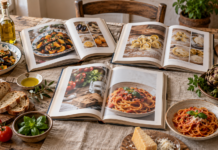
Lidia’s Italian-American Kitchen is a good choice for the cook who wants to explore what comes before and after the pasta in an Italian-American meal. For a reader who knows Sunday gravy through television, The Sopranos Family Cookbook, with recipes by Michele Scicolone, offers a different pleasure. Its fictional New Jersey hosts have strong opinions, and its Sunday gravy gives you a real dinner to cook. For more ideas, browse Italia Mia’s guide to Italian cookbooks.
External Links
As an Amazon Associate, Italia Mia earns from qualifying purchases.
- Lidia’s Italian-American Kitchen — Amazon.com · Amazon.it
- The Sopranos Family Cookbook — Amazon.com · Amazon.it
- Susan Russo remembers her Rhode Island neighborhood’s Sunday dinners — NPR
- Frank Zeoli’s family recipe for Sunday sauce — Italian American Community Center, June 2025 (PDF)
- Lidia Bastianich on how Italian cooking changed in America — WHYY/PBS