

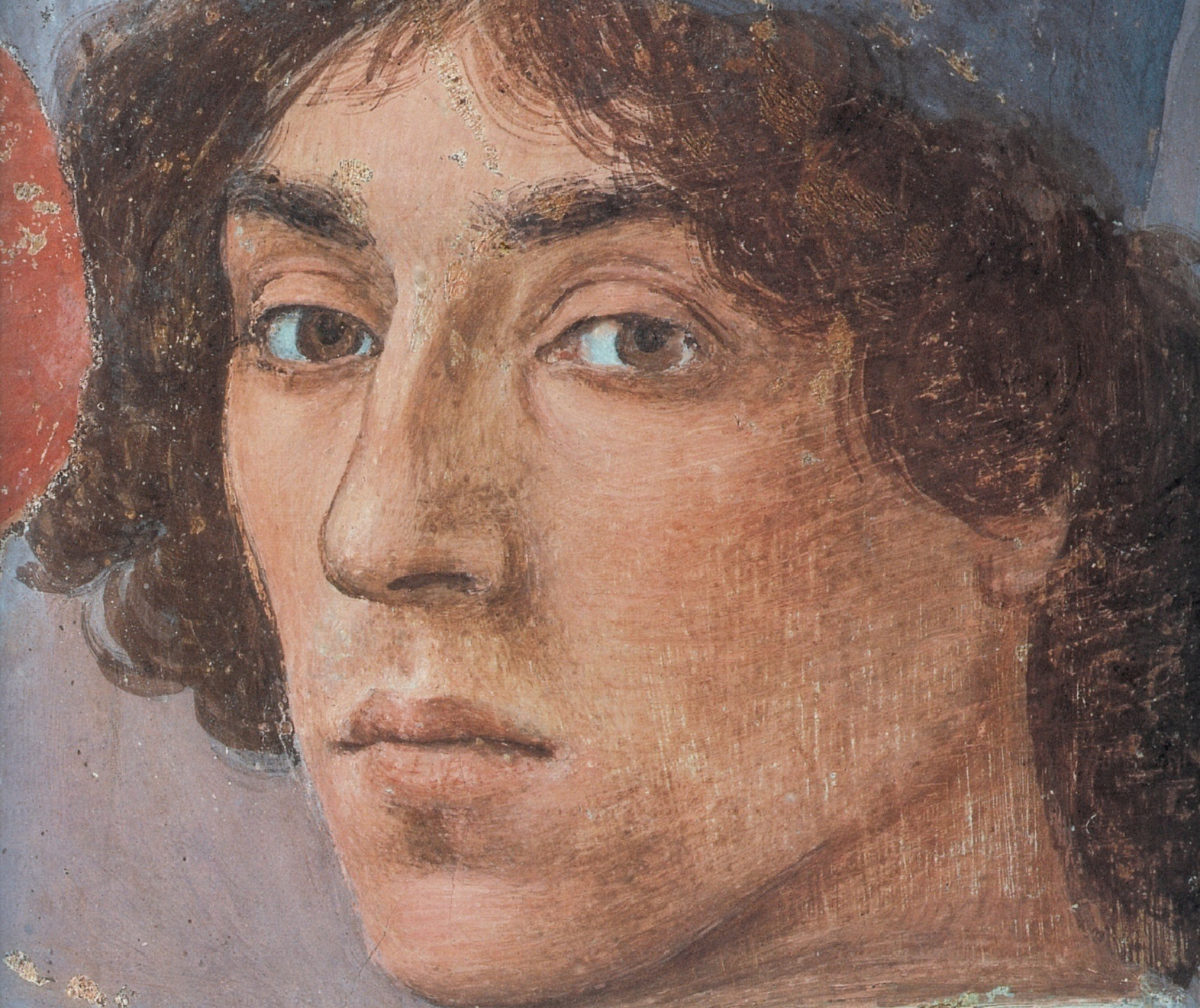
 Fra Filippo Lippi was one of the most original painters of the early Italian Renaissance. A Carmelite friar whose unconventional private life fascinated later biographers, he created religious paintings filled with human emotion, graceful movement and closely observed beauty.
His art occupies an important position between the monumental naturalism of Masaccio and the lyrical elegance of Sandro Botticelli. Lippi learned from the revolution taking place in early 15th-century Florence, but he softened its severity. His Madonnas are not remote theological symbols: they appear as thoughtful young mothers, surrounded by playful children, delicate fabrics and recognizably Tuscan landscapes.
Although stories about his romantic adventures have sometimes overshadowed his art, Lippi was an ambitious and inventive master. He worked for the Medici family, painted monumental fresco cycles in Prato and Spoleto, operated a successful workshop and helped shape the next generation of Florentine artists.
Early Life in Florence
Filippo di Tommaso Lippi was born in Florence around 1406. His mother apparently died soon after his birth, and his father died while Filippo was still a child. With few resources available for his upbringing, he was placed in the Carmelite convent of Santa Maria del Carmine.
Lippi took his religious vows in 1421 and became known as Fra Filippo, meaning Brother Filippo. His entrance into the religious order does not necessarily indicate that he had a strong monastic vocation. For an orphaned child from a poor family, a convent could provide food, shelter and education as well as religious instruction.
Santa Maria del Carmine was one of the most important artistic environments in Florence. Its Brancacci Chapel was decorated by Masolino and Masaccio, whose frescoes introduced a new sense of weight, space, light and human drama into Florentine painting.
Lippi almost certainly studied Masaccio’s work at close range. The solid figures and strong contrasts of light visible in his earliest surviving paintings reveal this influence. Readers interested in the transformation of Italian art during this period can find additional context in Italia Mia’s guide to the Italian Renaissance.
By the early 1430s, Lippi had left the Carmelite community’s regular life, although he continued to use the title “Fra” and sometimes signed his works as a friar. Over the following decades, he combined his religious identity with the independent and frequently unsettled existence of a professional artist.
Separating History from the Lippi Legend
Much of Lippi’s popular image comes from Giorgio Vasari’s Lives of the Artists, written approximately a century later. Vasari portrayed him as a talented but impulsive man whose appetite for romance repeatedly distracted him from his commissions.
The most colorful story claims that Lippi was captured by pirates, taken to North Africa and released after drawing such an impressive portrait of his captor that the man granted him his freedom. No reliable contemporary documentation confirms this episode, and modern accounts generally treat it as legend rather than established biography.
Other aspects of Lippi’s turbulent career are better documented. He encountered financial problems, failed to complete some commissions on schedule and occasionally became involved in legal disputes. Nevertheless, important patrons continued to employ him because his artistic ability was exceptional.
His relationship with the Medici was particularly valuable. Cosimo de’ Medici admired Lippi’s work and helped protect the painter when his personal or financial difficulties threatened to interfere with his career. Medici patronage gave Lippi access to one of Renaissance Florence’s most influential political and cultural circles.
From Masaccio’s Monumentality to Lippi’s Grace
Lippi’s early art demonstrates how carefully he studied Masaccio. His figures possess physical volume, occupy believable spaces and respond emotionally to one another. Yet Lippi gradually developed a more decorative and intimate visual language.
He used flowing contours, luminous colors and delicately rendered fabrics to give sacred subjects a courtly elegance. Faces became gentler and more individualized, while angels often behaved like lively Florentine children rather than distant heavenly beings.
This balance between realism and ideal beauty became one of his greatest achievements. Lippi preserved the spatial discoveries of the early Renaissance while making religious images warmer, more graceful and more immediately accessible.
His paintings also reveal an interest in contemporary clothing, jewelry, architecture and domestic interiors. These details brought biblical stories into the visual world of 15th-century Tuscany. The result was sacred art that could inspire devotion while also appealing to the taste of wealthy Florentine patrons.
Lippi’s combination of natural observation and linear elegance would profoundly influence Sandro Botticelli, who probably trained in his workshop.
The Barbadori Altarpiece
One of Lippi’s early masterpieces is the Barbadori Altarpiece, commissioned for the Church of Santo Spirito in Florence and completed around 1437–1438. The main panel, now in the Louvre, represents the Virgin and Child surrounded by angels with Saints Frediano and Augustine.
Instead of dividing the saints into separate compartments in the medieval manner, Lippi brought the figures together within a unified architectural setting. This approach helped develop the sacra conversazione, or “sacred conversation,” in which the Virgin, saints and angels appear to share the same continuous space.
The work combines sculptural figures derived from Masaccio with graceful gestures, refined colors and decorative detail. It demonstrates that Lippi had already begun to transform the lessons of the previous generation into a distinctive style.
His contemporary Fra Angelico was exploring related ways of bringing sacred figures together, although the two friar-painters created very different emotional atmospheres. Fra Angelico pursued spiritual clarity and contemplative stillness, while Lippi increasingly emphasized movement, personality and human affection.
The Coronation of the Virgin
Lippi’s large Coronation of the Virgin, completed in 1447 for the Church of Sant’Ambrogio in Florence, is now displayed in the Uffizi Gallery.
God the Father crowns the Virgin before an animated assembly of saints, angels, clerics and worshippers. Rather than presenting the event in a remote celestial realm, Lippi fills the composition with recognizable human types, individual expressions and luxurious garments.
The painter included himself near the lower edge of the picture, kneeling and looking outward toward the viewer. An inscription identifies him as the artist. This self-portrait announces his authorship while placing him personally within the sacred gathering.
The crowded composition, rhythmic arrangement of figures and attention to costly textiles show how successfully Lippi combined devotional meaning with the visual splendor expected by Florentine patrons.
Portrait of a Woman with a Man at a Casement
Lippi was also an important figure in the development of Renaissance portraiture. His Portrait of a Woman with a Man at a Casement, painted around 1440 and now in New York’s Metropolitan Museum of Art, is among the earliest surviving Italian double portraits.
A richly dressed woman appears in profile inside a carefully constructed domestic interior. A man looks toward her through an opening behind the room. Their identities remain debated, but the clothing, jewelry and heraldic details indicate that the painting was connected with marriage and social status.
The work is remarkable for the way it transforms a portrait into a subtle narrative. The architectural divisions establish both a relationship and a distance between the two figures. Lippi’s attention to fashionable dress and personal ornament also demonstrates his awareness of artistic developments beyond Florence, particularly the detailed surfaces associated with northern European painting.
Prato, Lucrezia Buti and the Cathedral Frescoes
In 1452 Lippi received one of the most important commissions of his career: the decoration of the main chapel of Prato Cathedral. The project developed slowly and was not completed until the 1460s, but the resulting fresco cycle became one of the great achievements of Tuscan Renaissance painting.
The frescoes narrate episodes from the lives of Saint Stephen and Saint John the Baptist. Lippi organized the stories across the chapel walls using monumental architecture, large groups of figures and convincing transitions between sacred history and contemporary life.
Among the most celebrated scenes is the Feast of Herod. Salome dances before Herod and his guests in a grand ceremonial interior. The elegant movement of her body, the sweeping lines of her garments and the repeated appearance of the figure across the narrative demonstrate Lippi’s skill at turning a biblical story into a sophisticated visual performance.
The cycle culminates in dramatic scenes devoted to the deaths of the two saints. In the Funeral of Saint Stephen, mourners gather around the saint’s body in a vast architectural setting. Their varied gestures and expressions communicate grief without sacrificing the balanced dignity of the composition.
During his years in Prato, Lippi became involved with Lucrezia Buti, a young woman living in the convent of Santa Margherita. Their relationship produced a son, Filippino Lippi, around 1457. Filippino later became an important Renaissance painter in his own right.
The precise legal and religious resolution of Filippo and Lucrezia’s situation remains less certain than older romantic biographies suggest. Traditional accounts state that they were offered a papal dispensation from their vows, but there is no firm evidence that they entered a formal marriage. What is certain is that their relationship became inseparable from Lippi’s reputation and from the artistic history of Prato.
Suggestions that Lucrezia posed for several of Lippi’s Madonnas remain attractive but cannot always be proven. His female figures may reflect observation of individual models, workshop conventions and the Renaissance ideal of beauty rather than a single identifiable woman.
Madonna and Child with Two Angels
Lippi’s most famous panel painting is the Madonna and Child with Two Angels, created around 1460–1465 and now in the Uffizi.
The Virgin appears before a window opening onto a distant landscape. She holds her hands in prayer while two youthful angels lift the Christ Child toward her. The angel in the foreground turns toward the viewer with an unforgettable smile, introducing a playful note into the otherwise tender and contemplative scene.
Mary’s elegant profile, high forehead, transparent veil and elaborate hairstyle reflect contemporary ideals of Florentine beauty. Yet her expression is touched by melancholy, suggesting her awareness of Christ’s future suffering.
The painting compresses the sacred and the familiar into a single image. Mary is both the Virgin of Christian devotion and a believable young mother. The angels are heavenly attendants, but they also possess the energy and individuality of real children.
The flowing contours and refined facial types had a decisive impact on Botticelli. His own Madonnas, mythological figures and windblown draperies developed the lyrical possibilities already present in Lippi’s mature work.
Visitors planning to see the painting can reserve Uffizi Gallery admission through Weekend in Italy. Advance booking is particularly useful during Florence’s busiest travel periods. This is an affiliate link, which may earn Italia Mia a commission without increasing the visitor’s price.
For a wider itinerary, see Italia Mia’s guides to spending a day in Florence and booking museum and attraction tickets in Italy.
The Final Frescoes in Spoleto
During the final years of his life, Lippi traveled to Umbria to decorate the apse of Spoleto Cathedral. The commission focused on episodes from the life of the Virgin, including the Annunciation, Nativity, Death of the Virgin and monumental Coronation of the Virgin.
These frescoes reveal the grandeur of his late style. The figures retain his characteristic grace, but they operate on a larger and more ceremonial scale suited to the cathedral’s architecture. Assistants participated in the project, including Fra Diamante, one of Lippi’s principal collaborators.
Lippi died in Spoleto in October 1469 before every part of the decoration had been completed. He was buried in the cathedral, where his tomb remains. The fresco cycle was finished with the assistance of his workshop.
Later legends claimed that Lippi had been poisoned by relatives of a woman he had seduced, but this dramatic story lacks dependable evidence. His actual cause of death is unknown.
Lippi’s Influence on Botticelli and Filippino Lippi
Fra Filippo Lippi’s influence extended well beyond his lifetime. His most celebrated pupil was Sandro Botticelli, whose elegant contours, expressive faces and poetic female figures owe a substantial debt to Lippi’s example.
Lippi’s son Filippino received his earliest training in his father’s artistic circle. After Filippo’s death, the young painter entered Botticelli’s workshop, creating a direct line of artistic transmission from father to pupil and then back to son.
Filippino eventually developed an imaginative and highly individual style. Among his major accomplishments was the completion of the Brancacci Chapel frescoes—the same artistic environment in which his father had first encountered Masaccio’s revolutionary painting.
Lippi’s broader legacy lies in the humanization of religious art. He helped move Florentine painting away from rigid devotional formulas without abandoning its sacred purpose. His figures inhabit convincing spaces, but their emotional presence is even more important than their physical setting.
Where to See Fra Filippo Lippi’s Art
Several destinations offer an excellent introduction to Lippi’s career:
- Uffizi Gallery, Florence: Madonna and Child with Two Angels, Coronation of the Virgin and other paintings connected with Lippi and his workshop.
- Prato Cathedral: The monumental fresco cycle illustrating the lives of Saint Stephen and Saint John the Baptist.
- Prato Cathedral Museum: Paintings and objects connected with the cathedral, with combined admission options that may include the Lippi frescoes.
- Spoleto Cathedral: Lippi’s final fresco cycle, Stories of the Virgin, as well as his tomb.
- Louvre Museum, Paris: The main panel of the Barbadori Altarpiece.
- National Gallery, London: Paintings by Lippi and his workshop, including versions of the Annunciation and Virgin and Child.
- Metropolitan Museum of Art, New York: Portrait of a Woman with a Man at a Casement and important religious works.
- National Gallery of Art, Washington: Paintings by Lippi and works illustrating his artistic circle and influence.
Italia Mia’s guide to Italy’s greatest art cities can help readers incorporate Florence, Prato and Spoleto into a broader cultural journey.
Books and Art Prints
Readers who want a detailed study of the painter can browse books about Fra Filippo Lippi on Amazon.com. Reproductions of the Uffizi Madonna and other works are also available among Fra Filippo Lippi art prints.
These are affiliate links. Italia Mia may receive a commission from qualifying purchases, at no additional cost to the buyer.
Why Fra Filippo Lippi Still Matters
Fra Filippo Lippi was far more than the rebellious friar described in popular legend. He was a central figure in the development of Florentine Renaissance painting and an essential bridge between Masaccio and Botticelli.
His art united monumental form, convincing space, decorative beauty and psychological tenderness. He gave sacred figures a new humanity while preserving their devotional power. His Madonnas could appear aristocratic yet maternal; his angels could be reverent yet mischievous; and his frescoes could combine solemn religious narratives with the color and movement of contemporary Italian life.
To understand Lippi is to see how the Renaissance entered a more lyrical and emotionally engaging phase. His finest paintings still feel intimate because their beauty rests not only on technical refinement, but also on gestures, glances and relationships that remain immediately recognizable.
For more essential figures, visit Italia Mia’s overview of famous Italian artists and its expanding collection of Italian art guides.
External Sources
- Uffizi Galleries: Madonna and Child with Two Angels
- Uffizi Galleries: Coronation of the Virgin
- Diocesan Museums of Prato: Filippo Lippi
- Prato Tourism: The Lippi Family in Prato
- National Gallery, London: Fra Filippo Lippi
- Metropolitan Museum of Art: Portrait of a Woman with a Man at a Casement
- Louvre Collections: The Barbadori Altarpiece
- Municipality of Spoleto: Cathedral of Santa Maria Assunta