
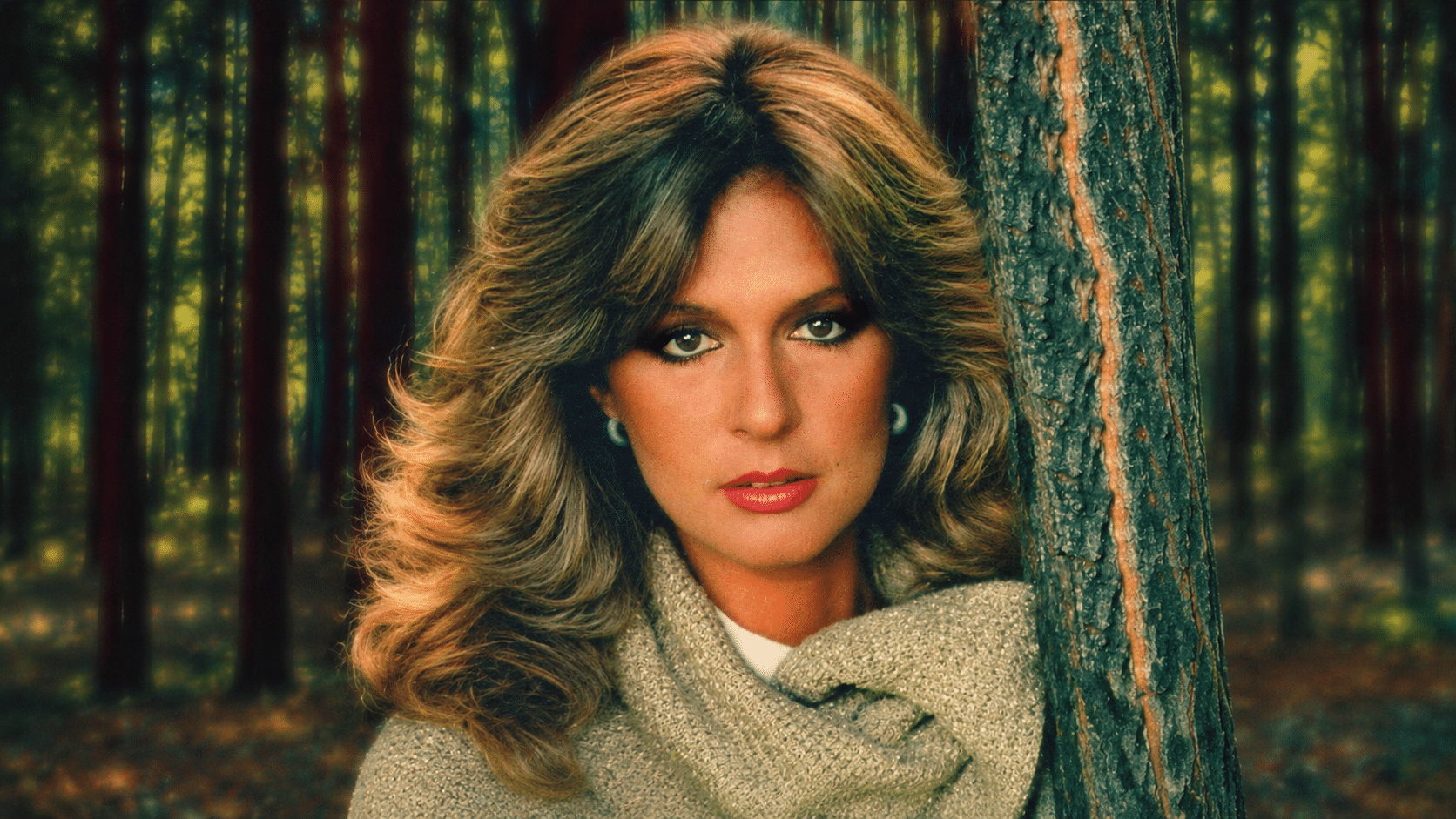
Loretta Goggi changed one word in the title of the song that would follow her for the rest of her career. The proposed title was “Benedetta primavera,” or “Blessed Spring.” Goggi wanted maledetta instead. Listen to the refrain with that choice in mind. The woman singing it knows how little time it takes to fall in love again, and she has good reason to curse the season that makes it possible. In 1981 Goggi took “Maledetta primavera” to Sanremo. Five years later she stood on the same stage and introduced the contestants herself.
Between those two appearances lies a distinction that mattered in Italian television. A woman could be the star everyone tuned in to hear on Saturday night and still have to convince a broadcaster to let her run the show. By the time Goggi took charge at Sanremo, she had already played a heroine in a costume drama, impersonated some of Italy’s most distinctive singers and hosted a quiz bearing her own name.
A Roman childhood on radio and in television drama
Born in Rome on September 29, 1950, Goggi was nine when she partnered with singer Nilla Pizzi on Corrado’s radio competition Disco magico. They won. Radio offered an early education in what a voice alone could communicate. So did dubbing. Italian children who knew the cartoon canary Tweety as Titti heard Goggi sparring with Sylvester the Cat, voiced by Gigi Proietti. Years later, the two actors shared a stage in the Italian production of the musical Stanno suonando la nostra canzone.
Her face became familiar through the sceneggiato, the serialized television drama that brought novels and historical subjects into Italian homes one installment at a time. She played Florrie in Anton Giulio Majano’s La cittadella in 1964 and Beatrice in Vita di Dante the following year. In 1968 came La freccia nera, adapted from Robert Louis Stevenson’s The Black Arrow. An unexpected name in that chapter of Goggi’s career is Fiorella Mannoia. Before becoming one of Italy’s best-known singers, Mannoia doubled for Goggi on the adventure series. Goggi later recalled returning the favor by dubbing Mannoia in a western.
How a Patty Pravo impression opened a door
In a 2020 interview with iO Donna, Goggi traced her break as an impersonator to a moment of improvisation. She tried out Patty Pravo’s voice during a program with Pippo Baudo. Baudo heard the possibilities and invited her onto La freccia d’oro. By the 1972–73 season she was appearing alongside him on Canzonissima, where she also sang the opening number, “Vieni via con me (Taratapunzi-e).” Television viewers could hear her as herself at the start of the evening and as somebody else a little later.
Her repertoire gives some idea of the precision that the work demanded. Mina, Ornella Vanoni and Patty Pravo were all familiar to the same audience, and few Italian listeners would mistake one for another. A costume could establish whose turn it was, but the joke depended on what happened when Goggi opened her mouth. There is an enjoyable way to watch the Mina impression preserved by Rai Teche. Close your eyes for a few seconds, then look again and see how much of the performance you had already recognized.
On Canzonissima she met Alighiero Noschese, the celebrated impersonator who invited her to work with him on Formula 2. Other partnerships brought out different sides of her. In 1976, Dal primo momento che ti ho visto paired her with Massimo Ranieri in a show that mixed a continuing story with musical performances. In 1978 she joined her younger sister Daniela and comic actor Pippo Franco on the satirical variety series Il ribaltone.
The sound of Saturday night
The first season of Fantastico in 1979 captures what an Italian Saturday-night variety show could fit into one broadcast. Beppe Grillo supplied comedy, Heather Parisi danced, and Goggi guided viewers through a quiz about Italian songs. At the end of the program she sang “L’aria del sabato sera.” The title means something like “the feeling of Saturday night.” A song about the very evening people had set aside to watch became one of the records most closely associated with her.
Fantastico also brought her together with principal dancer and choreographer Gianni Brezza, who became her longtime partner and later her husband. Looking back on that period, Goggi recalled wanting time away from television to enjoy the relationship. For someone who had worked in broadcasting since childhood, deciding when to leave the studio was an important kind of independence.
Why “Maledetta primavera” outlasted the contest
Lyricist Paolo Amerigo Cassella and composer Gaetano “Totò” Savio’s ballad had originally been intended as a closing theme for Hello Goggi on Canale 5. At the Festival di Sanremo in 1981, it finished second behind Alice’s “Per Elisa.” After the festival it reached the top of the Italian singles chart.
The recording rewards listening to the verses as closely as the famous chorus. It begins with scraps of an evening remembered the morning after. Goggi leaves room around those details, as if the singer were still sorting through them. When the melody climbs, the feeling she has been trying to explain gets ahead of her. That change in scale gives the chorus its force. It also makes sense of Goggi’s insistence on the title. A blessing would be easier to sing straight. A curse delivered with that much longing gives an actress something to do.
The woman in charge at Sanremo
Goggi’s move into commercial television gave her room to test what broadcasters would entrust to a woman. Hello Goggi put her name on a Canale 5 variety show. On Loretta Goggi in quiz, she took the quizmaster’s place. In interviews she spoke plainly about the frustration behind those choices. Rai had helped raise her, professionally speaking, yet she kept encountering the assumption that a woman needed somebody alongside her to manage a program.
In 1986 she became the first woman entrusted with the principal presenting role at Sanremo. Women had appeared as presenters in earlier editions, and other broadcasters contributed to hers. What changed was who held responsibility for the festival onstage. For viewers who knew Goggi from the 1981 contest, the difference was visible in the work itself. A competing singer has a few minutes to sustain the audience’s attention. The lead presenter has to give that attention away, bring it back and start again with the next artist. Italia Mia’s guide to Italian television hosts and their shows offers a broader view of that profession.
When the impersonator became the judge
After Brezza’s death in 2011, Goggi recalled that Carlo Conti encouraged her to join Tale e quale show. Contestants on the program transform themselves into famous musical performers. Someone who first knew her as a judge could watch an old Formula 2 sketch and discover that the woman behind the desk had once faced precisely the problem the contestants were trying to solve. Where does a singer take a breath? Which gesture will the audience recognize before the first line is over?
In 2023 Goggi returned to prime-time variety with a show called Benedetta primavera. More than forty years after Sanremo, the adjective she had once discarded finally had a use. The ballad had needed a woman exasperated by spring. The television title needed only two words to summon up a voice its audience already knew.
External Links
- Rai Teche – Loretta Goggi’s career in archival performances
- RaiPlay – Watch “Maledetta primavera”
- iO Donna – Goggi on impersonation, television and Gianni Brezza
- ANSA – Forty years of “Maledetta primavera”
- Hit Parade Italia – The single’s Italian chart history