
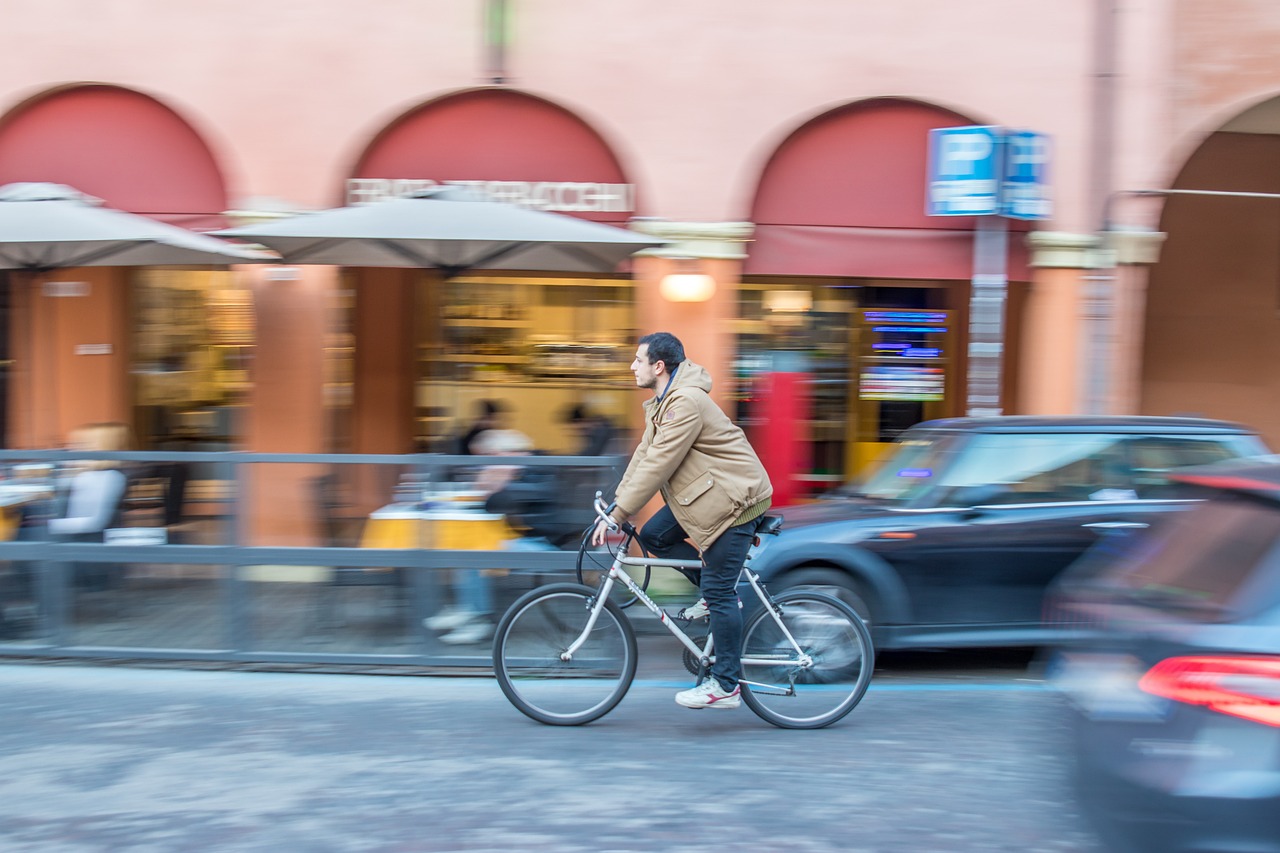
Bicycle culture in Italy connects everyday journeys with some of the most celebrated traditions in sport. A city bike outside a bakery, a group of road cyclists heading into the hills, and a vintage racing bicycle displayed in a museum all belong to the same story.
Yet Italy is not uniformly easy to explore on two wheels. Some towns make cycling feel natural; elsewhere, busy roads, steep gradients, and gaps between cycle lanes demand careful planning. Understanding those differences helps explain both the country’s love of bicycles and the challenges facing people who ride them.
From Ferrara’s everyday cycling to the Giro d’Italia and Tuscany’s vintage-bike gatherings, here is how bicycles fit into Italian life—and how visitors can experience that culture themselves.
The Bicycle’s Place in Italian Life
Italy’s relationship with the bicycle is partly practical and partly emotional.
For everyday riders, a bicycle can mean independence: a quick trip to the shops, a journey to work, or an easy way across a compact town. For sporting cyclists, it can mean training, friendship, equipment, and a familiar climb whose difficulty never quite disappears.
These worlds overlap, but they are not identical. Someone riding an upright city bicycle with shopping in the basket may have little interest in racing. A weekend cyclist with a lightweight road bike may still drive to work during the week.
That distinction matters. Italy’s racing heritage does not automatically translate into comfortable streets for everyone. The quality of a cycling experience depends on the particular town, route, and road conditions.
Cycling also belongs within the wider story of sport in Italy, where local loyalties, famous competitors, and shared memories help give individual disciplines their cultural importance.
Racing Legends and the Appeal of the Giro d’Italia
The Giro d’Italia brings competitive cycling into public life. Roads become viewing areas, towns welcome the race, and landscapes familiar from everyday journeys become the setting for extraordinary athletic effort.
Its most recognizable symbol is the maglia rosa, the pink jersey worn by the leader of the general classification. Introduced in 1931, its color reflects the pages of La Gazzetta dello Sport, the newspaper behind the race.
Italian cycling history also lives through names such as Gino Bartali, Fausto Coppi, and Fiorenzo Magni. At the Museo del Ghisallo in Magreglio, near Lake Como, bicycles associated with these champions turn sporting history into something tangible. Visitors can examine the machines themselves and consider how different racing once looked and felt.
Women belong in this history, too. Alfonsina Strada competed in the 1924 Giro d’Italia, challenging the expectations surrounding women’s participation in endurance sport. Her story offers an essential counterpoint to accounts that present Italian cycling solely through its male champions.
For visitors, watching a race and riding its roads are very different activities. A climb that looks inviting on television may involve sustained effort, fast traffic outside race closures, and a demanding descent. Enjoy the spectacle, then choose your own route according to your experience.
Where Everyday Bicycle Culture Is Easy to See
A useful way to encounter Italian cycling is to spend time in a town where people use bicycles for ordinary errands.
Ferrara is a strong starting point. Its flat setting and established cycling identity make bicycles part of the city’s everyday character. The attraction is not simply a particular trail: it is seeing cycling woven into trips through a historic urban environment.
Lucca offers a different experience. Its walls and historic center allow visitors to combine cycling with sightseeing, although popular shared spaces require a slow pace and consideration for people walking.
Parma also lends itself to exploration by bicycle, with a compact historic center and cultural stops that can be combined into a modest outing. These cities are among those highlighted by Italy’s national tourism portal for exploring art and urban heritage on two wheels.
Larger cities need a more selective approach. Before hiring a bicycle, look at the actual route between your accommodation and the places you want to visit. The presence of a bike-sharing service does not tell you whether that journey has continuous protected lanes.
For Lucca, the official tourism website’s cycling information is a useful starting point for local rides and planning.
Choosing a Ride That Matches Your Experience
The best ride is not necessarily the most famous. A short, manageable outing often reveals more than a demanding route spent worrying about the next climb.
| Experience | A useful starting point | What to check |
|---|---|---|
| Everyday city cycling | Ferrara | Local access signs, junctions, and bicycle parking |
| A short sightseeing ride | Lucca’s walls and nearby streets | Pedestrians, shared-space rules, and rental return times |
| A longer lowland outing | A selected section of the Ciclovia del Sole in Emilia-Romagna | Exact start and finish, road connections, and return transport |
| Vintage cycling culture | L’Eroica in Gaiole in Chianti | Entry requirements, bicycle eligibility, and route difficulty |
| A more demanding scenic ride | Ponale routes above Riva del Garda | Climbing, surface, exposure, and current access conditions |
Understand what a named cycle route includes
A line on a national or European cycling map does not necessarily represent a continuous, protected cycle path. Long-distance itineraries can combine dedicated tracks, ordinary roads, temporary connections, and sections with different surfaces.
The Ciclovia del Sole in Emilia-Romagna provides a useful example. Its official route information distinguishes specific sections and connections, including the approach toward Bologna. Use the published map and GPX track for the stretch you intend to ride, rather than assuming that the whole itinerary has identical conditions.
Do not confuse beautiful scenery with an easy route
The Ponale area above Lake Garda offers striking views, but route choice matters. Garda Trentino classifies its Ponale Gravel Tour as intermediate, and the itinerary includes climbing and shared sections used by walkers. That is a more useful description than calling it a relaxed lakeside ride suitable for everyone.
The same planning principle applies elsewhere: inspect elevation gain, surfaces, road exposure, and descent difficulty before deciding that a route suits beginners.
L’Eroica and the Attraction of Vintage Cycling
In Gaiole in Chianti, L’Eroica celebrates cycling’s heritage through vintage bicycles, period clothing, and rides across the Tuscan landscape.
Its official regulations describe it as a noncompetitive historical cycling event, rather than a conventional race. The emphasis includes sociability and discovering the territory, making it a particularly revealing expression of Italian bicycle culture.
However, noncompetitive does not mean effortless. The organizer offers routes with substantial distances and elevation gain. Participants should select a course that matches their preparation and check the current equipment and entry rules.
For someone interested in craftsmanship and design, the bicycles can be as compelling as the riding. Their frames, components, and repairs show how sporting equipment becomes a treasured object, maintained and passed between generations.
Italian Bicycle Brands and Craftsmanship
Bicycle manufacturing is another important part of the story. Bianchi traces its origins to Edoardo Bianchi’s work in Milan in 1885, giving the company a history that stretches across several eras of transport and competitive sport.
Names such as Bianchi, Colnago, and Pinarello are closely associated with Italian cycling. For enthusiasts, a bicycle can carry associations with a rider, a particular race, or a period in design history.
For buyers, however, brand heritage and the manufacturing origin of a particular product are separate questions. If Italian production matters to you, check the details of the specific frame or complete bicycle rather than relying on the nationality of the brand.
A visitor does not need an expensive racing machine to participate in this culture. For a short city outing, comfort, correct sizing, reliable brakes, and a suitable route matter much more.
Taking a Bicycle on Italian Trains
Combining cycling with rail travel can make a longer outing practical, but bicycle carriage should be checked before booking.
Trenitalia allows assembled bicycles on eligible regional services marked with the bicycle symbol, subject to available space and applicable conditions. A supplement may be required, with regional arrangements affecting the details.
Folding or suitably dismantled bicycles are handled under separate conditions. Some Intercity services offer designated bicycle spaces, while other trains have different requirements.
Check the exact service in both directions, including any replacement buses or transfers. A passenger ticket alone should not be treated as confirmation that your assembled bicycle can travel. Consult Trenitalia’s bicycle transport guidance when planning.
For a single afternoon, renting near the route may be simpler than transporting a bicycle across the country.
Riding Considerately and Preparing Well
A successful ride starts with a bicycle that fits and a realistic plan. Before leaving a rental shop, test the brakes, gears, saddle position, and lights. Ask about the surface of the suggested route and how to obtain help if something goes wrong.
Wear a properly fitted helmet, carry water, and leave enough time to return before conditions deteriorate. With an e-bike, ask how the assistance works and how the planned climbs may affect battery range.
On shared paths, slow down around pedestrians and leave room when passing. In busy historic centers, walking the bicycle may be the most comfortable option.
Italian road rules also include a specific visibility requirement: cyclists must wear a high-visibility reflective vest or braces in tunnels and, outside built-up areas, from half an hour after sunset until half an hour before sunrise. Check the current Article 182 guidance published by ACI for the legal wording.
How to Experience Italian Cycling Without Planning a Cycling Holiday
You do not need to organize a week of riding to appreciate this part of Italy.
Rent a bicycle for a short outing in Lucca. Spend time observing everyday cycling in Ferrara. Visit the Museo del Ghisallo if your interests lean toward sporting history. Or plan a manageable section of a signed route, leaving time for lunch and a stop in a town along the way.
Choose the season according to the destination rather than a nationwide rule. Mountain routes, lowland paths, and coastal outings have different weather considerations. Check local conditions close to departure.
Above all, allow the ride to have its own pace. Bicycle culture in Italy includes elite competition, but it also includes the pleasure of making an ordinary journey under your own power.
External Sources
- Italia.it: Italian art cities to explore by bicycle
- Giro d’Italia: History of the pink jersey
- Museo del Ghisallo
- Biblioteca Salaborsa: Alfonsina Strada at the 1924 Giro
- Ciclovia del Sole: Official route information
- L’Eroica: Official regulations
- Garda Trentino: Ponale Gravel Tour
- Trenitalia: Taking your bicycle on the train
- ACI: Article 182—Cycling rules