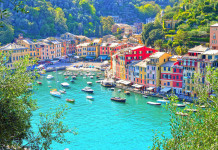

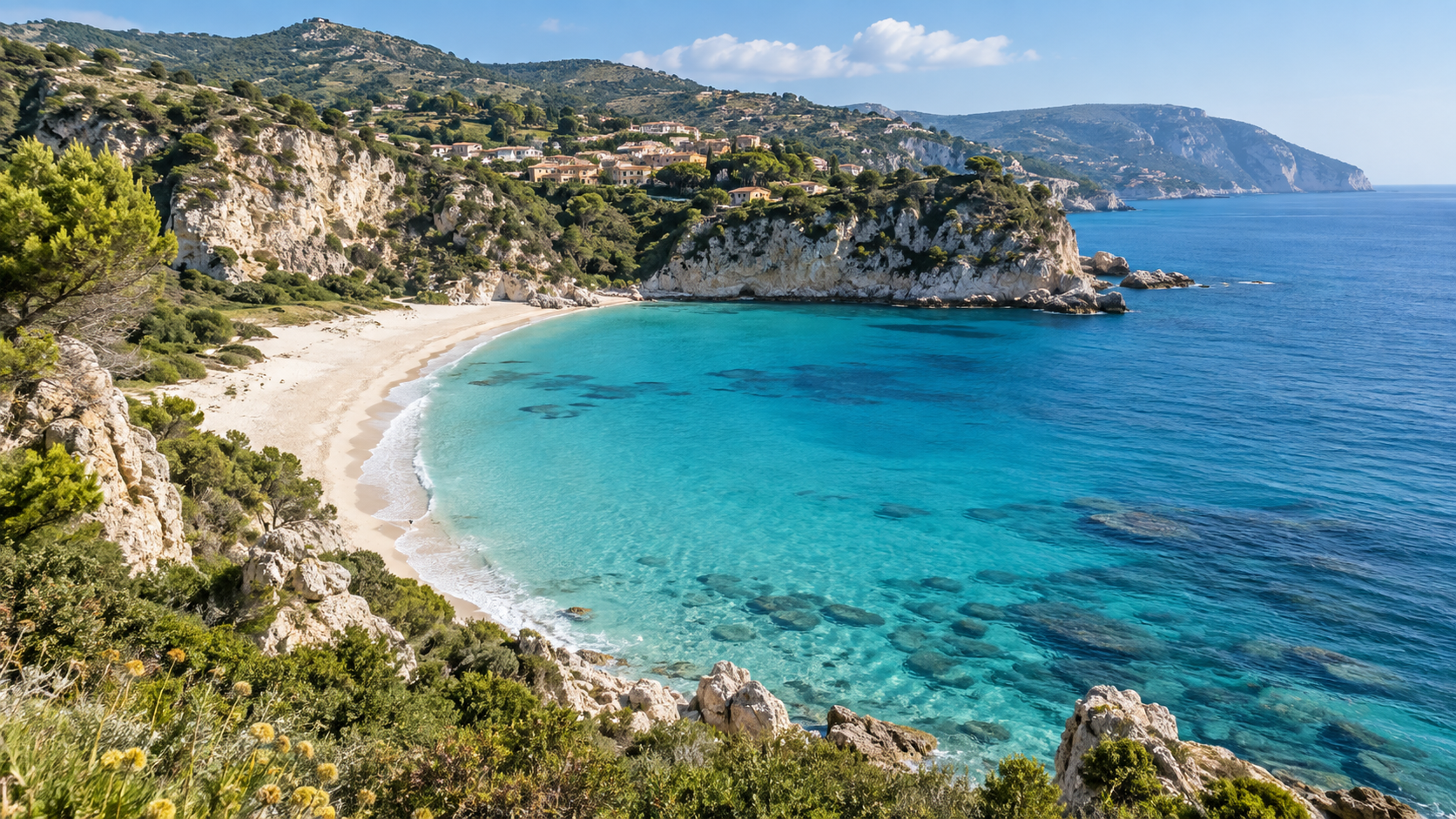
 Italy has nearly 8,000 kilometers of coastline, stretching from the Italian Riviera to the southern tip of Calabria and continuing around Sicily and Sardinia. Along the way, the scenery changes constantly: sheltered sandy bays, limestone coves, volcanic islands, lively seaside resorts and wild beaches accessible only on foot or by boat.
Choosing Italy’s “best” beaches is inevitably subjective. Some travelers want soft sand and shallow water, while others prefer dramatic cliffs, snorkeling or a beautiful town within walking distance. This guide brings together 20 exceptional beaches representing different parts of the country—and different styles of seaside vacation.
For a broader journey around the peninsula, see our guide to the best coastal cities and towns in Italy.
1. Baia del Silenzio, Liguria
Baia del Silenzio lies beside the historic center of Sestri Levante, where pastel-colored houses surround a graceful crescent-shaped bay. Its protected position generally creates calmer water than you will find on more exposed stretches of the Ligurian coast.
The beach is relatively small, so it becomes crowded during summer weekends. Staying overnight in Sestri Levante gives you the opportunity to visit early in the morning or toward sunset, after many day-trippers have left.
Best for: Couples, swimming and picturesque coastal towns
Nearest base: Sestri Levante
Find hotels in Liguria on Trip.com
Learn more about the region in our complete Liguria travel guide.
2. San Fruttuoso, Liguria
Hidden between Camogli and Portofino, San Fruttuoso combines a pebble beach, transparent water and a historic abbey in an exceptionally atmospheric cove.
There is no road into the village. Most visitors arrive by ferry from Camogli, Portofino or another nearby coastal town. Experienced walkers can also reach the bay using the trails through Portofino Regional Park.
The protected marine environment makes San Fruttuoso especially appealing for snorkeling and diving. The submerged Christ of the Abyss statue stands offshore at a depth of approximately 17 meters.
Best for: Hiking, history, snorkeling and boat excursions
Nearest bases: Camogli, Portofino and Santa Margherita Ligure
Compare Liguria hotels on Trip.com
3. Monterosso al Mare, Liguria
Monterosso has the largest and most accessible beach in the Cinque Terre. Fegina Beach extends beside the railway station and promenade, making it considerably easier to reach than many of Italy’s remote coves.
The shore is a mixture of sand and small pebbles, with both private beach clubs and limited public sections. Monterosso is an excellent choice for travelers who want to combine swimming with village walks, local restaurants and train travel between the five Cinque Terre communities.
Best for: First-time visitors, train travelers and beach facilities
Nearest base: Monterosso al Mare
Search for Cinque Terre accommodation on Trip.com
4. Spiaggia delle Ghiaie, Elba, Tuscany
A short walk from Portoferraio, Le Ghiaie is known for its smooth white pebbles and exceptionally clear water. The seabed becomes vivid when sunlight reflects from the pale stones, making the area particularly attractive for swimming and snorkeling.
Unlike some of Elba’s isolated beaches, Le Ghiaie is easy to reach without undertaking a long hike or boat trip. Portoferraio also provides restaurants, shops and ferry connections with the Tuscan mainland.
Best for: Snorkeling, clear water and travelers without a car
Nearest base: Portoferraio
Find hotels in Tuscany on Trip.com
Our Tuscany travel guide covers the region’s art cities, countryside and coastline.
5. Cala del Gesso, Tuscany
Cala del Gesso is one of the most beautiful coves on Monte Argentario. Its transparent blue-green water, rocky seabed and views toward the small island of Argentarola make it a memorable place for snorkeling.
Reaching the cove requires walking down a long path and numerous steps from the road above. The return climb can be demanding in hot weather, so carry water and avoid the middle of the day.
Best for: Snorkeling and quiet natural scenery
Nearest bases: Porto Santo Stefano and Monte Argentario
Check accommodation in Tuscany on Trip.com
6. Spiaggia delle Due Sorelle, Marche
The dramatic white cliffs of Monte Conero provide the backdrop to one of the Adriatic coast’s most recognizable beaches. The beach takes its name from two sea stacks rising from the water just offshore.
Due Sorelle is a protected natural location without conventional beach facilities. Access conditions can change, but visitors generally reach it by authorized boat service, kayak or other permitted sea access from Numana and nearby locations. Always check current regulations and sea conditions before departing.
Best for: Wild scenery, kayaking and boat trips
Nearest bases: Sirolo and Numana
Find hotels in the Marche on Trip.com
7. Spiaggia Grande, Positano, Campania
Spiaggia Grande is not Italy’s quietest beach, but few coastal settings are as immediately recognizable. Positano’s colorful buildings climb steeply above the shore, while ferries and excursion boats connect the town with Amalfi, Capri and other destinations.
The beach has a mixture of private establishments and public space. Prices can be high during the main season, but the central location makes it convenient for travelers staying in town.
For a quieter alternative, follow the coastal path to nearby Fornillo Beach.
Best for: Iconic scenery, restaurants and boat connections
Nearest base: Positano
Find hotels in Campania on Trip.com
See our Campania regional guide for more ideas around Naples, Capri and the Amalfi Coast.
8. Marina Piccola, Capri, Campania
Marina Piccola occupies a sheltered position on the southern side of Capri, facing the Faraglioni sea stacks. The shore is divided into small pebble beaches and bathing platforms, with both public access areas and private establishments.
The bay’s scenery is outstanding, although available space is limited. Arrive early during summer and bring suitable footwear for the pebbles and rocky sections.
Best for: Swimming with Faraglioni views
Nearest base: Capri Town
Compare Capri and Campania hotels on Trip.com
9. Marina di Camerota, Campania
The Cilento coast offers a more relaxed alternative to the busiest parts of the Amalfi Coast. Around Marina di Camerota, travelers can choose between sandy beaches, rocky coves, sea caves and boat-accessible stretches of protected coastline.
Cala Bianca and Baia degli Infreschi are among the area’s most celebrated natural destinations, while beaches closer to town provide easier access for families.
Best for: Nature, families and coastal boat tours
Nearest base: Marina di Camerota
Find accommodation in Campania on Trip.com
10. Tropea Beach, Calabria
Tropea’s old town stands on a high cliff above a sweep of pale sand and intensely blue Tyrrhenian water. The Sanctuary of Santa Maria dell’Isola, perched on a rocky promontory, gives the shoreline its distinctive appearance.
The central beaches are accessible from town, while additional bays extend along the surrounding Coast of the Gods. On particularly clear evenings, the volcanic island of Stromboli may be visible on the horizon.
Best for: Town-and-beach vacations, sunsets and food
Nearest base: Tropea
Find hotels in Calabria on Trip.com
Discover more of the region with our Calabria travel guide.
11. Arco Magno, Calabria
Near San Nicola Arcella, a natural rock arch frames a small cove with remarkably clear water. The setting is compact and dramatic, especially when sunlight passes through the opening in the cliff.
Visitors can reach Arco Magno using a steep coastal path or arrive by small boat, subject to local access rules and sea conditions. Because of the cove’s limited size, visiting outside peak hours makes a substantial difference.
Best for: Photography, swimming and natural rock formations
Nearest base: San Nicola Arcella
Search Calabria accommodation on Trip.com
12. Baia dei Turchi, Puglia
Baia dei Turchi lies north of Otranto, along a beautiful section of the Salento coastline. A pine forest separates the beach from the inland road, while the shallow, clear water makes the bay popular with families.
Access usually involves parking away from the shore and walking or using a seasonal shuttle. Some sections offer beach services, while others retain a more natural atmosphere.
Best for: Families, swimming and nature
Nearest base: Otranto
Find hotels in Puglia on Trip.com
For more regional inspiration, read Best Places to Visit in Puglia and our guide to the best beaches in Puglia.
13. Torre dell’Orso, Puglia
Torre dell’Orso combines a long sandy beach with clear Adriatic water and two distinctive sea stacks known as Le Due Sorelle. The gently shelving shore makes it a popular option for families, although it becomes extremely busy in July and August.
The town has restaurants, vacation rentals and beach facilities, while nearby attractions include the Grotta della Poesia and the coastal village of Roca Vecchia.
Best for: Families, sandy beaches and local excursions
Nearest bases: Torre dell’Orso and Otranto
Compare Puglia hotels on Trip.com
14. Marina di Pescoluse, Puglia
The southern Salento coast around Pescoluse is known for long stretches of pale sand and shallow Ionian water. It is often promoted as the “Maldives of Salento,” although its real appeal lies in being a comfortable Mediterranean beach destination with plenty of space and good family facilities.
Private beach clubs occupy parts of the coastline, but public sections remain available. The shallow water is especially suitable for children.
Best for: Families, soft sand and shallow water
Nearest bases: Pescoluse, Salve and Santa Maria di Leuca
Find Puglia accommodation on Trip.com
15. San Vito Lo Capo, Sicily
San Vito Lo Capo has one of Sicily’s most inviting town beaches: a broad arc of pale sand beneath the imposing outline of Monte Monaco. The water is usually shallow near the shore, and restaurants, accommodations and services are all within walking distance.
The destination becomes busy during summer and during the annual Cous Cous Fest. For a quieter experience, consider late May, June or September.
Best for: Families, food and car-free beach vacations
Nearest base: San Vito Lo Capo
Find hotels in Sicily on Trip.com
16. Cala Rossa, Favignana, Sicily
Cala Rossa is a rocky cove on the island of Favignana, part of the Egadi archipelago. Former tufa quarries, angular rock formations and brilliant blue water create a landscape unlike a conventional sandy beach.
Entry into the water can be uneven, so water shoes are useful. Favignana is easily explored by bicycle or scooter, although summer demand makes advance reservations advisable.
Best for: Snorkeling, cycling and island scenery
Nearest base: Favignana
Compare Sicily hotels on Trip.com
17. Spiaggia dei Conigli, Lampedusa, Sicily
Spiaggia dei Conigli is located within a protected nature reserve on Lampedusa. Its pale sand, shallow turquoise water and largely undeveloped surroundings have made it one of Italy’s most celebrated beaches.
Access is by land through the reserve, followed by a walk down to the shore—not exclusively by boat, as some older guides incorrectly state. Visitor numbers may be controlled during the main season, so check reservation requirements before your trip.
The protected area is also important for loggerhead sea turtles, and visitors must respect all conservation rules.
Best for: Natural beauty, swimming and protected landscapes
Nearest base: Lampedusa
Search for accommodation in Sicily on Trip.com
Explore more destinations in our complete Sicily travel guide.
18. Cala Goloritzé, Sardinia
Cala Goloritzé sits beneath towering limestone cliffs on the Gulf of Orosei. A natural stone arch, a slender rock pinnacle and exceptionally transparent water create one of Sardinia’s most dramatic coastal landscapes.
The beach can be reached by a demanding hiking trail from the Golgo plateau. Sea access is regulated to protect the cove, and boats cannot simply land directly on the beach. Visitor limits and advance reservations may apply, so consult current local information before setting out.
Best for: Experienced hikers and exceptional scenery
Nearest bases: Baunei and Santa Maria Navarrese
Find hotels in Sardinia on Trip.com
19. Cala Mariolu, Sardinia
Also located on the Gulf of Orosei, Cala Mariolu is known for its tiny pale pebbles, limestone cliffs and clear water rich in shades of turquoise and blue.
Most visitors arrive on organized boat excursions from Cala Gonone, Arbatax or Santa Maria Navarrese. Reaching it on foot requires a difficult route suitable only for properly equipped and experienced hikers.
Bring water shoes, snorkeling equipment and sun protection. Natural shade is limited, and the pebble surface becomes hot during the afternoon.
Best for: Boat excursions and snorkeling
Nearest bases: Cala Gonone, Baunei and Santa Maria Navarrese
Compare Sardinia accommodation on Trip.com
20. Tuerredda, Sardinia
Tuerredda lies on Sardinia’s southern coast, between Chia and Teulada. Its sheltered shape, fine sand and shallow turquoise water make it one of the island’s most inviting swimming beaches.
The beach is extremely popular, and controlled entry or advance booking may apply during the summer. Verify the current arrangements before driving there, particularly in July and August.
Best for: Swimming, couples and classic Sardinian scenery
Nearest bases: Chia, Teulada and Santa Margherita di Pula
Find hotels in Sardinia on Trip.com
Our Sardinia travel guide provides more ideas for exploring the island.
Which Italian Beach Is Right for You?
The best choice depends on how you want to travel.
- For soft sand and shallow water: San Vito Lo Capo, Pescoluse, Torre dell’Orso and Tuerredda
- For dramatic natural scenery: Cala Goloritzé, Arco Magno and Due Sorelle
- For snorkeling: Cala Mariolu, Cala Rossa, Le Ghiaie and San Fruttuoso
- For beaches beside beautiful towns: Tropea, Positano, Monterosso and Baia del Silenzio
- For families: San Vito Lo Capo, Pescoluse, Baia dei Turchi and Torre dell’Orso
- For hiking and adventure: Cala Goloritzé and San Fruttuoso
The Best Time for an Italian Beach Vacation
July and August bring the warmest weather, the largest selection of services and the greatest crowds. Beach-club prices and accommodation rates also reach their highest levels during these months.
For many travelers, June and September offer a better balance. The weather is generally warm, the sea is suitable for swimming and the most famous destinations are less congested. In southern Italy, Sicily and Sardinia, pleasant beach conditions can sometimes continue into early October.
May is excellent for coastal walks and sightseeing, although sea temperatures may still feel cool.
Practical Advice Before You Go
Reserve protected beaches in advance
Several environmentally sensitive beaches limit daily visitor numbers or regulate access. Requirements can change from one season to another, so consult municipal, park or reserve websites shortly before your visit.
Understand public and private beaches
Italian beaches commonly contain both free areas, called spiagge libere, and private establishments known as stabilimenti balneari or lidi. Private facilities usually charge for umbrellas and sunbeds but may also provide changing rooms, showers, toilets, bars and restaurants.
Carry suitable footwear
Many of Italy’s most beautiful beaches are pebbly or rocky. Water shoes can make entering the sea considerably more comfortable, while proper walking shoes are essential for remote coves reached by trail.
Do not rely entirely on a car
Parking near famous beaches can be scarce and expensive. Trains work well for destinations such as Monterosso and Sestri Levante, while ferries and local boats are often the most practical way to reach island beaches and protected coves.
Before planning a rail-based journey, consult our guide to traveling around Italy by train.
Check weather and sea conditions
Boat services can be delayed or canceled when the sea is rough. Conditions can also affect kayaking, swimming and access to remote bays. Confirm schedules with the operator on the day of travel.
Protect the coastline
Do not remove sand, shells or pebbles. Taking sand from protected beaches is illegal in some regions, including Sardinia. Use marked paths, carry waste away with you and respect restrictions intended to protect dunes, wildlife and marine habitats.
Where to Stay for an Italian Beach Vacation
Italy’s most famous beaches are often easier to enjoy when you stay nearby and visit early in the morning. Regional Trip.com searches can help you compare coastal hotels, apartments and resorts:
- Hotels in Liguria
- Hotels in Tuscany
- Hotels in the Marche
- Hotels in Campania
- Hotels in Calabria
- Hotels in Puglia
- Hotels in Sicily
- Hotels in Sardinia
Hotel availability, seasonal services and access arrangements can change. Always verify current conditions and cancellation policies before booking.
Final Thoughts
Italy’s coastline cannot be reduced to a single style of beach. Liguria offers colorful villages and intimate pebble bays; Tuscany and the Marche combine nature with accessible seaside towns; Campania and Calabria provide dramatic cliffs and warm southern landscapes; Puglia is ideal for long sandy shores; and Sicily and Sardinia deliver some of the clearest water in the Mediterranean.
Rather than trying to visit as many beaches as possible, choose one coastal area and explore it slowly. An early swim, lunch in a nearby town and an evening walk beside the sea often create a more memorable Italian vacation than an overfilled itinerary.
External Sources
- Italia.it: 15 Italian Beaches You Cannot Miss
- Italia.it: Cala Goloritzé
- Italia.it: Due Sorelle Beach
- Italia.it: San Fruttuoso Bay
- Cinque Terre National Park
- Conero Regional Park
Some accommodation links in this article are affiliate links. If you make a booking through one of these links, Italia Mia may receive a commission at no additional cost to you.