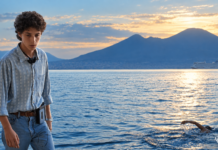
 Io capitano (2023), directed by Matteo Garrone, follows two Senegalese teenagers who leave Dakar hoping to reach Europe. Their journey becomes a test of friendship, courage, and responsibility. Through their eyes, Garrone brings viewers closer to the people behind familiar images of Mediterranean crossings.
The film combines the scale of an adventure with an intimate focus on its young characters. It also asks an uncomfortable question: why can some teenagers explore the world freely while others must risk their lives to do so?
For readers exploring the range of Italian filmmaking, Io capitano makes a compelling companion to our guide to the best Italian movies of all time.
The Story
Spoiler notice: This section discusses the journey and its final stage. The film includes distressing scenes of violence, torture, exploitation, and death.
Seydou and his cousin Moussa live in Dakar, Senegal. They imagine a future beyond the world they know and decide to travel toward Europe. Their destination promises opportunity, but the route exposes them to dangers they cannot fully anticipate.
Garrone begins with the boys’ lives and ambitions. This choice matters. Before viewers encounter the hazards of migration, they meet two young people with personalities, attachments, and hopes.
The journey takes them across the Sahara and into Libya. Along the way, distance becomes only one of their problems. They must also survive people who exploit their lack of protection. Detention and violence turn the dream of travel into a struggle to stay alive.
Eventually, Seydou must steer an overcrowded boat toward Italy despite his lack of experience. The title, which translates as “I, Captain,” gains its full weight here. A teenager assumes responsibility for the lives of others.
The ending leaves his future unresolved. Reaching European waters cannot erase what has happened, and the film offers no comfortable account of what comes next.
That uncertainty gives the final moments their force. Seydou’s achievement deserves recognition, yet the circumstances that demanded it remain deeply troubling. We can feel relief for him without mistaking survival for a complete happy ending.
Cast and Characters
The cast gives Io capitano its emotional strength. The performances keep an expansive story grounded in individual faces and relationships.
Seydou Sarr plays Seydou, the film’s central character. His performance makes room for fear, tenderness, and determination. He does not need long speeches to communicate the pressure placed on him. Often, a pause or a searching expression carries the scene.
Moustapha Fall plays Moussa, Seydou’s cousin and traveling companion. Their connection gives the journey a personal foundation. Viewers have a relationship to follow through the changing locations and dangers.
The supporting cast includes Issaka Sawadogo as Martin and Hichem Yacoubi as Ahmed. Their characters belong to the wider world the boys encounter beyond home.
Sarr’s greatest achievement is the balance he maintains between vulnerability and resolve. Seydou’s growing responsibility never makes his youth disappear. As a result, the film’s most demanding moments carry two emotions at once: admiration for what he manages and anger that he must manage it at all.
The performances also resist reducing the characters to symbols. Their predicament has a wider meaning, but their immediate concerns remain personal. That closeness helps the film reach viewers who might otherwise approach the subject only through politics or news coverage.
Awards and Recognition
Io capitano received major recognition in Italy and abroad.
At the 2023 Venice Film Festival, Matteo Garrone won the Silver Lion for Best Director. Seydou Sarr received the Marcello Mastroianni Award for Best Young Actor, a striking achievement for his lead performance.
The film then earned a nomination for Best International Feature Film at the 2024 Academy Awards, representing Italy. The Oscar went to The Zone of Interest.
It also received a 2024 Golden Globe nomination for Best Motion Picture, Non-English Language.
At the 2024 David di Donatello Awards, Io capitano won seven prizes:
- Best Film
- Best Director
- Best Producer
- Best Cinematography
- Best Editing
- Best Sound
- Best Visual Effects
These wins followed 15 nominations. They recognized both Garrone’s direction and the craft that gives the journey its visual and emotional impact.
The range of awards is significant. The film’s reputation rests on more than its subject. Acting, images, editing, and sound all contribute to the experience.
How the Film Was Made
Although its characters are fictional, Io capitano draws on accounts from people who made journeys from Africa to Europe. Garrone developed the screenplay with Massimo Gaudioso, Massimo Ceccherini, and Andrea Tagliaferri.
Mamadou Kouassi served as a key consultant. People with experience of migration contributed to the production, helping the filmmakers shape the story and its details.
Filming took place in Senegal, Morocco, and off the coast of Sicily. The production followed the story in chronological order. Garrone also withheld the complete screenplay from the two leads, allowing them to discover events as filming progressed.
The film’s principal languages are Wolof and French. Paolo Carnera handled the cinematography, while Marco Spoletini edited the film and Andrea Farri composed its music.
Visually, Garrone balances the scale of the landscape with the vulnerability of the people moving through it. Wide spaces do not necessarily offer freedom. They can also make shelter, help, and safety seem painfully distant.
The film’s beauty can therefore feel unsettling. An impressive image does not remove the danger within it. Instead, the contrast asks viewers to look longer and consider what the image contains.
There is also an important distinction between testimony and drama. Io capitano draws on real experiences, but it remains a constructed story. Its characters cannot represent every person who migrates, and its route cannot stand for every journey. Its strength lies in making one particular experience emotionally accessible.
Why It Still Matters
Io capitano matters because it asks viewers to spend time with people whose lives are often compressed into numbers or brief reports.
Garrone gives the journey duration. We follow the characters through uncertainty rather than meeting them only at the point of arrival. Consequently, reaching the sea feels like one stage of a much longer ordeal.
The film also makes ambition a serious subject. Wanting opportunity, independence, or a wider life is familiar to many viewers. Recognizing that desire creates a connection before the story asks us to confront suffering.
Its strongest moral question concerns responsibility. Seydou’s courage is moving, but courage should not be a condition for surviving a journey. Admiring him also means recognizing the failure of the circumstances around him.
At the same time, the film invites discussion about representation. An Italian director tells a story centered on Senegalese characters. That choice makes collaboration and perspective essential subjects for viewers to consider. Listening to people whose experiences informed the production adds another dimension to the film.
There is room to debate its emotional approach, too. Some viewers may find its broad dramatic form especially effective. Others may question whether such a form can fully convey the complexity of migration. Both responses can lead to a useful conversation about what cinema reveals and what it leaves outside the frame.
Within Italian cinema, Io capitano expands the geographical space of the national story. Italy is the hoped-for destination, while much of the drama takes place elsewhere. The film asks Italian audiences to consider the lives already unfolding before anyone reaches their shores.
Above all, it gives Seydou a presence that outlasts the plot. His face becomes the lasting image of a journey whose meaning cannot be contained in the word “arrival.”
Where to Watch or Buy
Availability checked on October 5, 2026. Catalogs, prices, and subtitle options can change. Check the individual listing before subscribing or paying.
Affiliate disclosure: Italia Mia may earn a commission from qualifying purchases through the Amazon and NordVPN links below, at no additional cost to you.
United States: subscription streaming
Current U.S. listings include Philo, Fandor Amazon Channel, Cohen Media Amazon Channel, and Cineverse Amazon Channel. Amazon channel subscriptions are separate from a standard Prime membership.
United States: digital rental or purchase
The film is listed for rental or purchase through Amazon Video, Apple TV Store, and Fandango at Home. See the current U.S. viewing options.
United States: physical editions
DVD and Blu-ray editions are listed in the U.S. market. Browse Io Capitano DVD and Blu-ray editions on Amazon.com. Check the edition’s region compatibility and English subtitles before ordering.
Italy: subscription streaming
Current Italian listings include Netflix, HBO Max, and HBO Max Amazon Channel. You can visit the Italian Netflix page for Io Capitano or compare the current Italian viewing options.
Italy: digital rental or purchase
Amazon Video, Apple TV Store, and Rakuten TV list rental or purchase options. These transactions are separate from subscription access.
Italy: physical editions
An Italian DVD edition is available in retailer catalogs. Browse Io Capitano DVDs on Amazon.it. English-speaking viewers should check the subtitle details, since Italian editions may offer different language options from U.S. releases.
Watching while traveling
If you use public Wi-Fi while traveling, NordVPN is an optional privacy tool. It does not include a film subscription or guarantee access to an Italian streaming catalog. Follow your streaming provider’s terms and check its travel rules.
External Sources
- La Biennale di Venezia: Io Capitano film profile
- Venice Film Festival: official 2023 awards
- Cohen Media Group: film details and viewing links
- Cohen Media Group: production notes
- Academy Awards: 2024 nominees and winners
- Italian Ministry of Culture: 2024 David di Donatello results