
 Abruzzo is one of Italy’s most rewarding regions for travelers who want mountains, medieval villages, traditional food and Adriatic scenery without the crowds found in better-known destinations.
Located east of Rome, Abruzzo stretches from the highest peaks of the Apennines to a long coastline of beaches, marine reserves and historic fishing platforms called trabocchi. Between them lie fortified hill towns, remote hermitages, castles, vineyards and landscapes that still feel closely connected to pastoral traditions.
The region is sometimes described as Italy’s “greenest” because of its extensive parks and protected areas. Abruzzo contains three national parks, a regional park and numerous nature reserves. Its scenery supports wildlife including the Apennine wolf, Abruzzo chamois and the rare Marsican brown bear.
This guide introduces 20 of the best places to visit in Abruzzo. It includes the region’s principal cities and famous attractions, but also smaller communities that many international visitors overlook.
For a broader introduction before planning your itinerary, see Italia Mia’s existing Abruzzo regional travel guide.
Abruzzo at a Glance
| Essential information | Details |
|---|---|
| Regional capital | L’Aquila |
| Principal coastal city | Pescara |
| Provinces | L’Aquila, Teramo, Pescara and Chieti |
| Coast | Adriatic Sea |
| Major mountain areas | Gran Sasso, Majella and Sirente-Velino |
| Best for | Villages, hiking, wildlife, food, beaches and road trips |
| Suggested stay | Five to seven days |
| Best general periods | Late spring and early autumn |
| Airports | Abruzzo Airport near Pescara; Rome airports for western Abruzzo |
| Car recommended? | Yes, particularly for villages, parks and mountain areas |
Why Visit Abruzzo?
Abruzzo offers an unusual concentration of very different landscapes.
In the morning, you can walk across the Campo Imperatore plateau beneath the Gran Sasso. By afternoon, you can be looking over the Adriatic from a fishing platform on the Costa dei Trabocchi.
The region is especially attractive to travelers interested in:
- Medieval and Renaissance towns
- Mountain hiking and outdoor activities
- Wildlife and protected landscapes
- Traditional, regional Italian cooking
- Quiet beaches and coastal reserves
- Castles, abbeys and hermitages
- Road trips away from mass-tourism routes
- Italian-American family history and genealogy
Abruzzo also works well for a return trip to Italy. Travelers who have already visited Rome, Florence, Venice and Tuscany can experience a different side of the country while remaining within reach of Rome.
Hotels and accommodation in Abruzzo — Compare seaside hotels, mountain retreats and holiday properties near Pescara, Vasto, Roccaraso, Sulmona and Abruzzo’s national parks.
Find hotels throughout Abruzzo with Expedia
The 20 Best Places to Visit in Abruzzo
1. L’Aquila
L’Aquila is Abruzzo’s regional capital and one of central Italy’s most fascinating cities.
Founded during the Middle Ages and surrounded by mountains, L’Aquila combines Romanesque churches, Renaissance palaces, broad squares and an unmistakable Apennine atmosphere. The city suffered devastating damage during the 2009 earthquake, but years of restoration have returned many important monuments and streets to public life.
Begin in Piazza del Duomo, the city’s central gathering place. Visit the Basilica of Santa Maria di Collemaggio, known for its distinctive pink-and-white stone façade and its association with Pope Celestine V.
The Basilica of San Bernardino contains an elaborate Renaissance façade, while the Spanish Fortress houses cultural institutions and provides one of the city’s most recognizable landmarks. Another symbol is the Fountain of the 99 Spouts, traditionally linked to the castles that participated in L’Aquila’s foundation.
Allow at least one full day, because L’Aquila deserves more than a hurried stop on the way to the mountains.
Best for: History, architecture and regional culture
Allow: One or two days
2. Sulmona
Sulmona occupies a beautiful position surrounded by the mountains of the Majella National Park.
The city is known internationally for confetti: sugar-coated almonds traditionally given at weddings, baptisms and other celebrations. Shops display them in colorful arrangements resembling flowers and bouquets.
Sulmona is much more than its famous confectionery. Its historic center contains elegant palaces, churches and long views toward the surrounding mountains. Piazza Garibaldi is crossed by a medieval aqueduct and becomes the setting for markets, festivals and public events.
The city was also the birthplace of the Roman poet Ovid. Visitors interested in literature can find monuments and references to him throughout Sulmona.
Sulmona makes an excellent base for visiting Pacentro, the Majella, the Sagittario Valley and several of Abruzzo’s most beautiful villages.
Best for: Architecture, food and day trips
Allow: One or two days
3. Scanno
Scanno is one of Abruzzo’s most photogenic mountain towns.
Its historic center unfolds through steep lanes, stone stairways, arches and closely packed houses. The town’s traditional costumes and distinctive jewelry have attracted artists and photographers, including Henri Cartier-Bresson.
Below the town, heart-shaped Lake Scanno is surrounded by wooded hills. Visitors can walk along parts of the shoreline, rent small boats during the appropriate season or follow trails to panoramic viewpoints.
Scanno is reached through the dramatic Sagittario Gorge, making the journey almost as memorable as the destination.
Come early or remain overnight to experience the old streets after most day visitors have left.
Best for: Photography, mountain scenery and romantic walks
Allow: One full day or an overnight stay
4. Santo Stefano di Sessanio
Santo Stefano di Sessanio is a beautifully preserved stone village near the Campo Imperatore plateau.
Its narrow lanes pass beneath arches and between limestone houses built in a restrained mountain style. For centuries, the village participated in the wool trade and was connected to the Medici family, whose emblem can still be seen above the Porta Medicea.
Santo Stefano is also associated with the modern albergo diffuso concept, in which restored buildings throughout an old village become rooms and hospitality spaces rather than forming a conventional hotel.
The village is an excellent base for exploring Rocca Calascio, Castel del Monte and the Gran Sasso.
Italia Mia also features Santo Stefano in its guide to Italy’s best-kept secret places.
Best for: Atmosphere, architecture and peaceful overnight stays
Allow: Half a day or one night
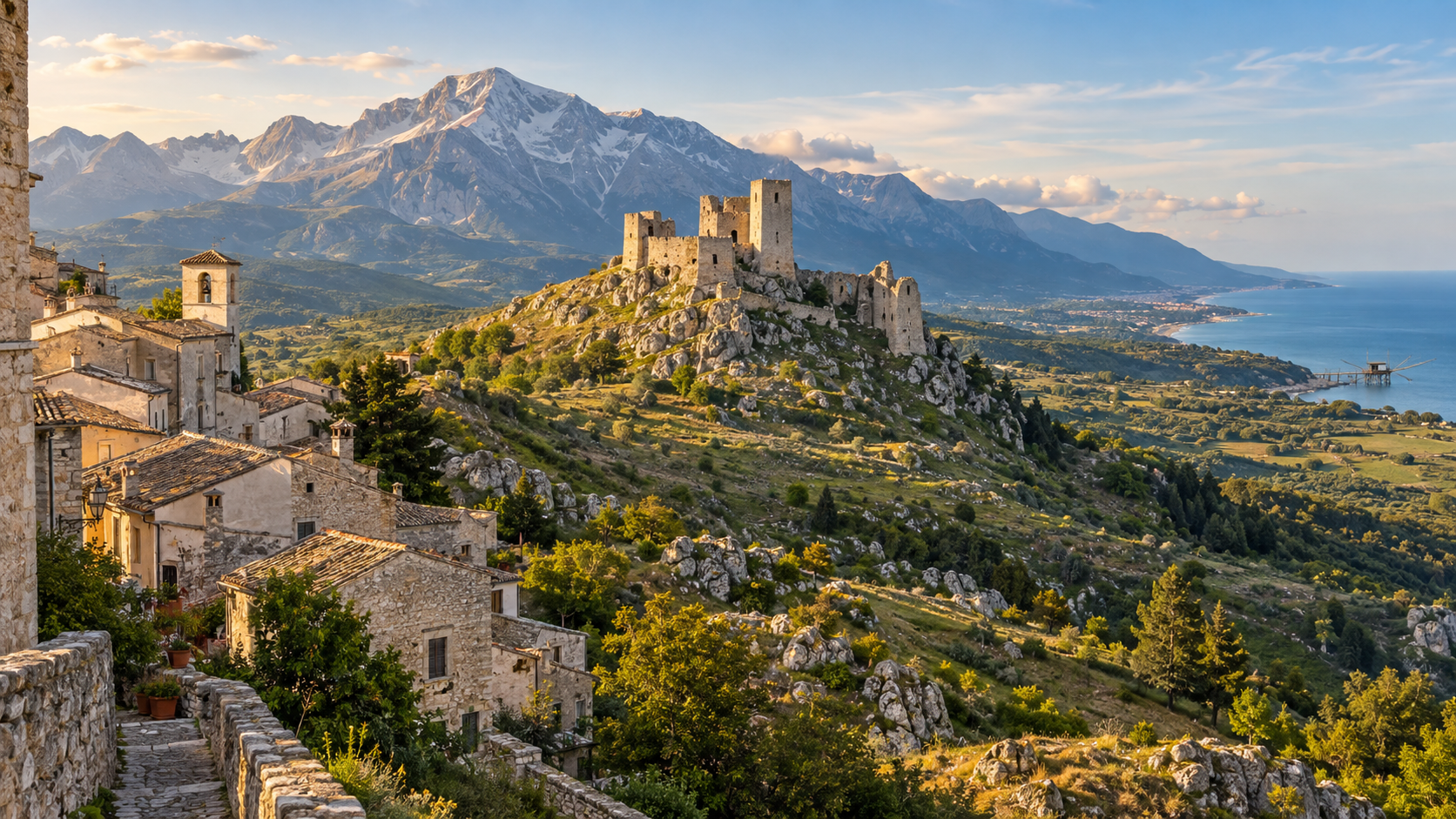
5. Rocca Calascio
Rocca Calascio is one of Italy’s most dramatically situated fortresses.
The ruined medieval stronghold stands high above the surrounding valleys, with panoramic views across the Gran Sasso landscape. Below it is the octagonal Church of Santa Maria della Pietà, while the partially abandoned settlement of Calascio descends along the ridge.
The final approach normally requires walking uphill. The route is not exceptionally long, but the altitude, uneven surface and exposure to sun or wind can make it more demanding than expected.
Weather changes quickly in the mountains, so bring appropriate footwear and an extra layer even when the valleys are warm.
Parking and vehicle-access arrangements can change according to season and visitor numbers. Check current local information before setting out.
Best for: Panoramas, castles and photography
Allow: Two to four hours
6. Campo Imperatore
Campo Imperatore is a vast mountain plateau within the Gran Sasso and Monti della Laga National Park.
Often called the “Little Tibet of Italy,” its open grasslands, distant peaks and grazing animals create a landscape unlike most other parts of the country. The plateau is particularly beautiful when seasonal flowers appear or when late-afternoon light moves across the mountains.
The area provides access to hiking routes, scenic drives and high-altitude landscapes. Campo Imperatore is also associated with the history of Benito Mussolini, who was held at the hotel near the upper cable-car station in 1943 before being rescued by German forces.
Road access can be affected by snow, weather and seasonal closures. Consult the Gran Sasso and Monti della Laga National Park and local authorities before planning a mountain drive.
Best for: Scenic driving, hiking and landscapes
Allow: One full day
7. Gran Sasso and Corno Grande
Corno Grande reaches 2,912 meters and is the highest summit in the Apennines.
The wider Gran Sasso massif offers everything from gentle walks to demanding alpine routes. Experienced hikers can consider summit itineraries, while casual visitors can enjoy shorter excursions and views from Campo Imperatore.
This is serious mountain terrain. Snow can remain well beyond winter, weather can change rapidly and some routes require appropriate experience and equipment. Visitors should select a trail suited to their ability and check official conditions before departure.
For more outdoor inspiration, see Italia Mia’s guides to Italy’s national parks and walking and hiking in Italy.
Best for: Hiking, climbing and high-mountain scenery
Allow: One or more days
8. Castel del Monte
Not to be confused with the famous castle of the same name in Puglia, Abruzzo’s Castel del Monte is a stone village within the Gran Sasso National Park.
Its compact historic center contains covered passageways, defensive architecture and houses adapted to severe mountain winters. The village’s pastoral traditions remain closely linked to sheep farming, wool and seasonal transhumance.
Castel del Monte has also appeared as a setting in films, thanks to its remarkably preserved streets and powerful surrounding landscape.
Combine it with Campo Imperatore, Santo Stefano di Sessanio and Rocca Calascio, but avoid trying to rush all four places if you want time to walk and explore.
Best for: Mountain culture and historic architecture
Allow: Half a day
9. Pescasseroli
Pescasseroli is one of the most convenient bases for exploring the Abruzzo, Lazio and Molise National Park.
The town offers hotels, restaurants and visitor services while remaining surrounded by forests and mountains. Numerous walks begin in or near the area, ranging from easy family excursions to more demanding routes.
The national park protects one of Italy’s most important wildlife environments. It is associated particularly with the Marsican brown bear, Apennine wolf and Abruzzo chamois.
Wild animals should always be observed from a safe distance. Never approach, follow or feed them, and remember that seeing a bear is never guaranteed.
Several old-growth beech forests inside the park form part of a transnational UNESCO World Heritage property recognizing Europe’s ancient and primeval beech forests.
Best for: Wildlife, forests and family-friendly mountain stays
Allow: Two or more days
10. Majella National Park
Majella National Park protects a rugged massif between the provinces of L’Aquila, Chieti and Pescara.
The Majella is sometimes described as Abruzzo’s sacred mountain because of its remarkable collection of hermitages, caves and remote religious sites. Hiking routes cross forests, high plateaus and steep valleys.
Among its best-known destinations are the hermitages associated with Pietro da Morrone, who later became Pope Celestine V. Some require uphill walking on rocky or exposed paths.
The park also encompasses towns and villages such as Guardiagrele, Caramanico Terme and Pacentro, making it possible to combine nature with architecture, local cuisine and traditional crafts.
Best for: Hiking, hermitages and wilderness
Allow: One to three days
11. Pacentro
Pacentro rises on a hillside near Sulmona, beneath the Majella mountains.
The village is dominated by the towers of Caldora Castle. Below them, narrow streets, stone houses and small squares descend through the historic center.
Pacentro is especially meaningful to some Italian-American visitors because it was the birthplace of Madonna’s paternal grandparents. More broadly, it represents the small Abruzzese communities from which many families emigrated during the late 19th and early 20th centuries.
Combine Pacentro with Sulmona or use it as an entrance point for exploring the western side of the Majella.
Best for: Castles, genealogy and village atmosphere
Allow: Half a day
12. Pescocostanzo
Pescocostanzo is an elegant mountain town known for Renaissance and Baroque architecture, traditional crafts and carefully preserved streets.
Its historic prosperity can be seen in stone portals, churches and palaces. The Basilica of Santa Maria del Colle is one of its principal monuments, while artisan traditions include lace, woodwork and wrought iron.
The town sits near the popular mountain destinations of Rivisondoli and Roccaraso. In winter, the surrounding area becomes one of central Italy’s principal skiing zones. Outside ski season, it offers walking, cooler temperatures and easy access to the Alto Sangro landscape.
Best for: Art, architecture and mountain holidays
Allow: Half a day or an overnight stay
13. Civitella del Tronto
Civitella del Tronto stands near Abruzzo’s northern border with Marche.
Its enormous fortress occupies a strategic ridge above the town and commands far-reaching views. The stronghold became particularly famous for its resistance during the final stages of Italian unification.
Below the fortress, the old town contains stone lanes, churches and passages, including a narrow alley traditionally promoted as one of the narrowest streets in Italy.
Civitella is a rewarding detour for travelers moving between Ascoli Piceno, Teramo and the northern Abruzzo coast.
Best for: Military history, views and fortified towns
Allow: Half a day
14. Atri
Atri is one of Abruzzo’s most historically important hill towns.
Its principal monument is the Cathedral of Santa Maria Assunta, which contains an exceptional Renaissance fresco cycle by Andrea De Litio. The historic center also includes palaces, churches, courtyards and viewpoints extending toward both the mountains and the Adriatic.
Outside town, the Calanchi di Atri Nature Reserve protects a striking landscape of eroded clay formations. Walking routes reveal ridges, ravines and unusual geological shapes, especially beautiful in softer morning or evening light.
Best for: Art, architecture and unusual landscapes
Allow: One full day
15. Guardiagrele
Guardiagrele stands on the eastern slopes of the Majella and offers broad views toward the Adriatic.
The town has long been associated with metalworking and other artisan traditions. Its historic center contains medieval streets, stone buildings and the Cathedral of Santa Maria Maggiore.
Guardiagrele is also known for a pastry called sise delle monache, made from soft sponge cake filled with custard and dusted with sugar.
It makes a convenient cultural stop when traveling between the Majella and the province of Chieti.
Best for: Crafts, food and views
Allow: Half a day
16. Bominaco
Bominaco is a small village hiding one of Abruzzo’s most impressive medieval religious complexes.
The Oratory of San Pellegrino contains richly colored 13th-century frescoes covering its interior. Nearby, the Romanesque Church of Santa Maria Assunta presents a quieter but equally rewarding architectural experience.
A ruined castle overlooks the settlement from the hill above.
Because opening arrangements for smaller monuments can vary, verify access before making a dedicated journey. Bominaco combines particularly well with L’Aquila or the Navelli plateau.
Best for: Medieval art and little-known cultural sites
Allow: Two or three hours
17. Stiffe Caves
The Grotte di Stiffe are a system of caves created by an underground river near the village of Stiffe.
Guided visits reveal rock chambers, waterfalls and passages shaped by water. Conditions inside are cool and damp throughout the year, so sturdy footwear and a light jacket are advisable even during summer.
Tours and accessible sections may vary because of water levels, maintenance or weather. Reservations and current information should be checked through the official Stiffe Caves website.
Italia Mia also includes the site in its guide to the most beautiful caves in Italy.
Best for: Geology, families and rainy-day alternatives
Allow: Half a day
18. Pescara
Pescara is Abruzzo’s largest urban center and principal coastal gateway.
Although it lacks the medieval appearance of many inland towns, Pescara offers a long waterfront, extensive beaches, restaurants, shops and transport connections. It is often the most practical arrival point for travelers flying into Abruzzo or using the Adriatic railway.
The city was the birthplace of writer Gabriele D’Annunzio, whose former home is now a museum. The modern Ponte del Mare provides an attractive pedestrian and cycling crossing near the port.
Pescara works well as a convenient base, particularly for visitors who want to combine beaches with day trips into the hills.
Best for: Transport, nightlife and an urban beach base
Allow: One day
19. Costa dei Trabocchi
The Costa dei Trabocchi extends along the province of Chieti and takes its name from traditional wooden fishing platforms built above the sea.
Some trabocchi have been restored as restaurants, while others remain historic structures admired from the shore. The coastline alternates between pebble beaches, small bays, cliffs and seaside communities.
The Via Verde cycling and walking route follows much of the former coastal railway corridor, providing a leisurely way to experience the landscape.
San Vito Chietino, Fossacesia, Rocca San Giovanni and Ortona make useful stops. The coast can also be combined with the Abbey of San Giovanni in Venere, which occupies an elevated position overlooking the Adriatic.
The official Italian tourism portal recommends an itinerary connecting Ortona, San Vito Chietino, the Trabocchi Coast and Majella National Park.
A separate Italia Mia guide to the best beaches in Abruzzo will explore the coast in greater detail.
Best for: Cycling, seafood and Adriatic scenery
Allow: One or two days
20. Vasto and Punta Aderci
Vasto combines a graceful historic center with beaches and coastal panoramas.
From the old town, terraces look across the Adriatic and the broad sands of Marina di Vasto. Palazzo d’Avalos contains museums and gardens, while the surrounding streets are ideal for an evening walk.
North of Vasto, Punta Aderci Nature Reserve protects one of the most attractive natural sections of the Abruzzo coast. Fields and low cliffs descend toward beaches including Punta Penna and Mottagrossa.
Facilities and shade can be limited in protected coastal areas, so bring water and sun protection while respecting signs, paths and reserve regulations.
Best for: Beaches, nature and coastal towns
Allow: One full day or an overnight stay
Additional Abruzzo Places Worth Considering
If you have more time, add some of these destinations:
- Ortona: A coastal town with a castle, cathedral and important Second World War history.
- Chieti: One of Italy’s oldest cities and home to the National Archaeological Museum of Abruzzo.
- Teramo: A provincial capital with Roman remains and the Cathedral of Santa Maria Assunta.
- Roccascalegna: A dramatic castle built along a rocky ridge.
- Caramanico Terme: A historic spa town and base for exploring the Majella.
- Capestrano: Known for its castle and the nearby Church of San Pietro ad Oratorium.
- Navelli: A hill town surrounded by fields associated with prized Abruzzo saffron.
- Cocullo: Known for the traditional Festival of the Serpari.
- Ovindoli: A mountain destination for skiing, hiking and summer escapes.
- Pietracamela: A small stone village beneath the Gran Sasso.
Best Places in Abruzzo by Interest
| If you want… | Consider visiting… |
|---|---|
| Medieval villages | Santo Stefano di Sessanio, Scanno, Pacentro, Pescocostanzo |
| Mountain scenery | Campo Imperatore, Gran Sasso, Majella |
| Castles | Rocca Calascio, Civitella del Tronto, Pacentro, Roccascalegna |
| Wildlife | Pescasseroli and the Abruzzo, Lazio and Molise National Park |
| Art and architecture | L’Aquila, Sulmona, Atri, Bominaco |
| Beaches | Costa dei Trabocchi, Vasto and Punta Aderci |
| Food | Sulmona, Guardiagrele, Pescara and the Trabocchi Coast |
| Photography | Scanno, Rocca Calascio, Campo Imperatore |
| Family activities | Stiffe Caves, Lake Scanno, Pescara |
| Quiet escapes | Castel del Monte, Santo Stefano di Sessanio, Bominaco |
A Suggested Seven-Day Abruzzo Itinerary
Day 1: L’Aquila
Explore Piazza del Duomo, Santa Maria di Collemaggio, San Bernardino, the Spanish Fortress and the Fountain of the 99 Spouts.
Day 2: Campo Imperatore and Gran Sasso Villages
Drive through the Campo Imperatore landscape, stopping at Santo Stefano di Sessanio and Castel del Monte.
Day 3: Rocca Calascio and Bominaco
Visit Rocca Calascio early, then continue to the medieval religious complex at Bominaco.
Day 4: Sulmona and Pacentro
Explore Sulmona’s historic center and confetti shops before visiting nearby Pacentro.
Day 5: Scanno and the National Park
Drive through the Sagittario Gorge to Scanno and Lake Scanno. Continue toward Pescasseroli for the night.
Day 6: Majella and Guardiagrele
Choose an appropriate Majella walk or cultural site, then visit Guardiagrele.
Day 7: Costa dei Trabocchi and Vasto
Follow the Adriatic coast, stopping at the Abbey of San Giovanni in Venere, one or more trabocchi and Punta Aderci before finishing in Vasto.
This itinerary is best completed by car. Mountain roads can be winding, and travel times are often longer than distances suggest.
Before driving, read Italia Mia’s guide to driving in Italy and plan a flexible schedule rather than attempting to cover too many places each day.
How Many Days Do You Need in Abruzzo?
A minimum of three days allows you to sample either the mountains or the coast, but not both in depth.
Five to seven days is better for a first visit:
- Three days: L’Aquila, Gran Sasso villages and Sulmona
- Five days: Add Scanno, the national park or Majella
- Seven days: Combine the mountains, historic towns and coast
- Ten days: Travel slowly and include hikes, smaller villages and beach time
Abruzzo rewards unhurried travel. Driving directly from attraction to attraction misses much of what makes the region special: the changing landscapes, village cafés, mountain roads and family-run restaurants encountered along the way.
When Is the Best Time to Visit Abruzzo?
Spring
Late April through June is excellent for green landscapes, villages and lower-elevation walking. High mountain routes may still have snow, especially early in the season.
Summer
Summer is best for the Adriatic beaches and high-altitude escapes. Coastal resorts become busiest in July and August, while mountain areas provide relief from the heat.
Autumn
September and early October can combine warm weather, food festivals, hiking and fewer coastal crowds. Conditions become more variable later in the season.
Winter
Abruzzo becomes a winter-sports destination, particularly around Roccaraso, Ovindoli and Campo Felice. Some mountain roads, hiking routes and seasonal attractions may be closed.
For a detailed comparison, consult Italia Mia’s month-by-month guide to the best time to visit Italy.
Getting to Abruzzo
By Air
Abruzzo Airport is located near Pescara and is the region’s principal airport.
Rome Fiumicino and Rome Ciampino can also be useful, especially for L’Aquila and western Abruzzo. Travelers arriving in Rome can continue by rental car or bus.
By Train
The Adriatic railway serves Pescara, Giulianova, Ortona and Vasto. Sulmona is an important inland railway junction.
Rail service is less convenient for many mountain villages and parks, so travelers relying entirely on public transportation should plan carefully.
By Car
A car provides the greatest flexibility, especially for:
- Campo Imperatore
- Rocca Calascio
- Santo Stefano di Sessanio
- Scanno
- Majella National Park
- Smaller hill towns
- Rural accommodation
Historic centers may have limited traffic zones, narrow streets and restricted parking. Leave the car in designated areas and explore on foot.
What to Eat in Abruzzo
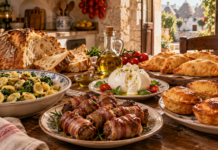
Abruzzo’s cuisine reflects both pastoral mountain traditions and the Adriatic coast.
Look for:
- Arrosticini: Small skewers traditionally made from sheep meat and grilled over a narrow brazier.
- Maccheroni alla chitarra: Square-cut egg pasta made using a stringed wooden tool called a chitarra.
- Pallotte cace e ove: Cheese-and-egg balls usually served in tomato sauce.
- Scrippelle ’mbusse: Thin crepes rolled with cheese and served in broth.
- Brodetto: A coastal fish stew with local variations.
- Confetti di Sulmona: Decorated sugar-coated almonds.
- Zafferano dell’Aquila: Saffron traditionally grown around the Navelli plateau.
- Montepulciano d’Abruzzo: The region’s best-known red wine.
- Trebbiano d’Abruzzo: A regional white wine.
- Centerbe: A powerful herbal liqueur associated with the Majella area.
Food alone provides a compelling reason to travel slowly through the region rather than treating Abruzzo as a single day trip from Rome.
Practical Tips for Visiting Abruzzo
- Rent a car if you plan to visit mountain villages and national parks.
- Avoid estimating travel time solely by distance; mountain roads can be slow.
- Carry water, sun protection and an extra layer when visiting high elevations.
- Wear shoes with good grip in stone villages and around castles.
- Do not depend on every restaurant remaining open throughout the afternoon.
- Reserve accommodation early for August, ski periods and major festivals.
- Check weather, trail and road conditions before mountain excursions.
- Respect wildlife restrictions and never feed wild animals.
- Verify monument hours, as smaller churches and museums may have limited opening schedules.
- Allow room for spontaneous stops—the unplanned village may become the highlight of your trip.
Frequently Asked Questions About Abruzzo
Is Abruzzo worth visiting?
Yes. Abruzzo is particularly worthwhile for travelers interested in nature, villages, regional cuisine and less-crowded destinations. It offers a combination of high mountains and Adriatic coastline within a relatively compact area.
What is the most beautiful town in Abruzzo?
Scanno, Santo Stefano di Sessanio, Pacentro and Pescocostanzo are among the strongest candidates. The answer depends on whether you prefer dramatic mountain scenery, intact medieval streets or more refined historic architecture.
What is Abruzzo best known for?
Abruzzo is known for its national parks, Apennine mountains, medieval villages, arrosticini, Montepulciano d’Abruzzo wine and the Costa dei Trabocchi.
Can you visit Abruzzo from Rome?
Yes. L’Aquila and western Abruzzo can be reached from Rome relatively easily, but a day trip only provides a limited introduction. Staying for several nights makes it possible to explore the region properly.
Do you need a car in Abruzzo?
A car is strongly recommended for national parks, remote villages and scenic routes. Pescara and other Adriatic towns are accessible by train, but public transportation does not reach every rural attraction conveniently.
Does Abruzzo have good beaches?
Yes. Abruzzo has sandy resort beaches, pebble coves and protected coastal landscapes. The Costa dei Trabocchi and Punta Aderci are especially distinctive. Italia Mia’s forthcoming Abruzzo beaches guide will cover them individually.
Is Abruzzo in northern or southern Italy?
Abruzzo lies in central Italy geographically, although it has historical, cultural and economic connections with southern Italy. It borders Marche, Lazio and Molise and faces the Adriatic Sea.
Recommended Abruzzo Travel Books and Maps
These Amazon links lead to current search results, allowing readers to compare available editions, formats and prices:
- Abruzzo travel guides on Amazon.com
- Abruzzo, Lazio and Molise travel books
- Abruzzo hiking guides
- Abruzzo road maps
- Italian national parks travel books
- Abruzzo cookbooks
As an Amazon Associate, Italia Mia may earn from qualifying purchases.
Why Abruzzo Deserves More Than a Day Trip
Abruzzo’s greatest attraction is not one castle, beach or mountain. It is the relationship between all of them.
Centuries-old towns remain connected to pastureland and mountain routes. Coastal cooking changes as you move inland. Fortresses overlook enormous plateaus, while hermitages hide in forested valleys. Less than a few hours away, wooden trabocchi extend over the Adriatic.
Travelers who slow down will find a region that feels coherent, authentic and surprisingly varied.
Visit L’Aquila and Sulmona for history. Walk through Santo Stefano di Sessanio and Scanno for atmosphere. Explore Gran Sasso and Majella for wilderness. Finish beside the sea along the Costa dei Trabocchi.
Abruzzo may still be described as one of Italy’s hidden regions, but it offers everything required for an unforgettable Italian journey.
Related Italia Mia Guides
- Region of Abruzzo: Complete Travel Guide
- Italy’s Best-Kept Secret Places
- Best Mountain Destinations in Italy in Summer
- Discovering Italy’s National Parks
- Walking in Italy: The Best Hiking Trails
- The Most Beautiful Caves in Italy
- Best Time to Visit Italy
- Italy for First-Time Visitors
- Tips for an Unforgettable Italian Road Trip
- Best Hotels in Italy in Every Region
External Links
- Official Italian Tourism Portal: Abruzzo
- Abruzzo Regional Tourism Portal
- Gran Sasso and Monti della Laga National Park
- Majella National Park
- Abruzzo, Lazio and Molise National Park
- Sirente-Velino Regional Park
- Official Stiffe Caves Website
- UNESCO: Transhumance
- UNESCO: Ancient and Primeval Beech Forests
- Trenitalia