

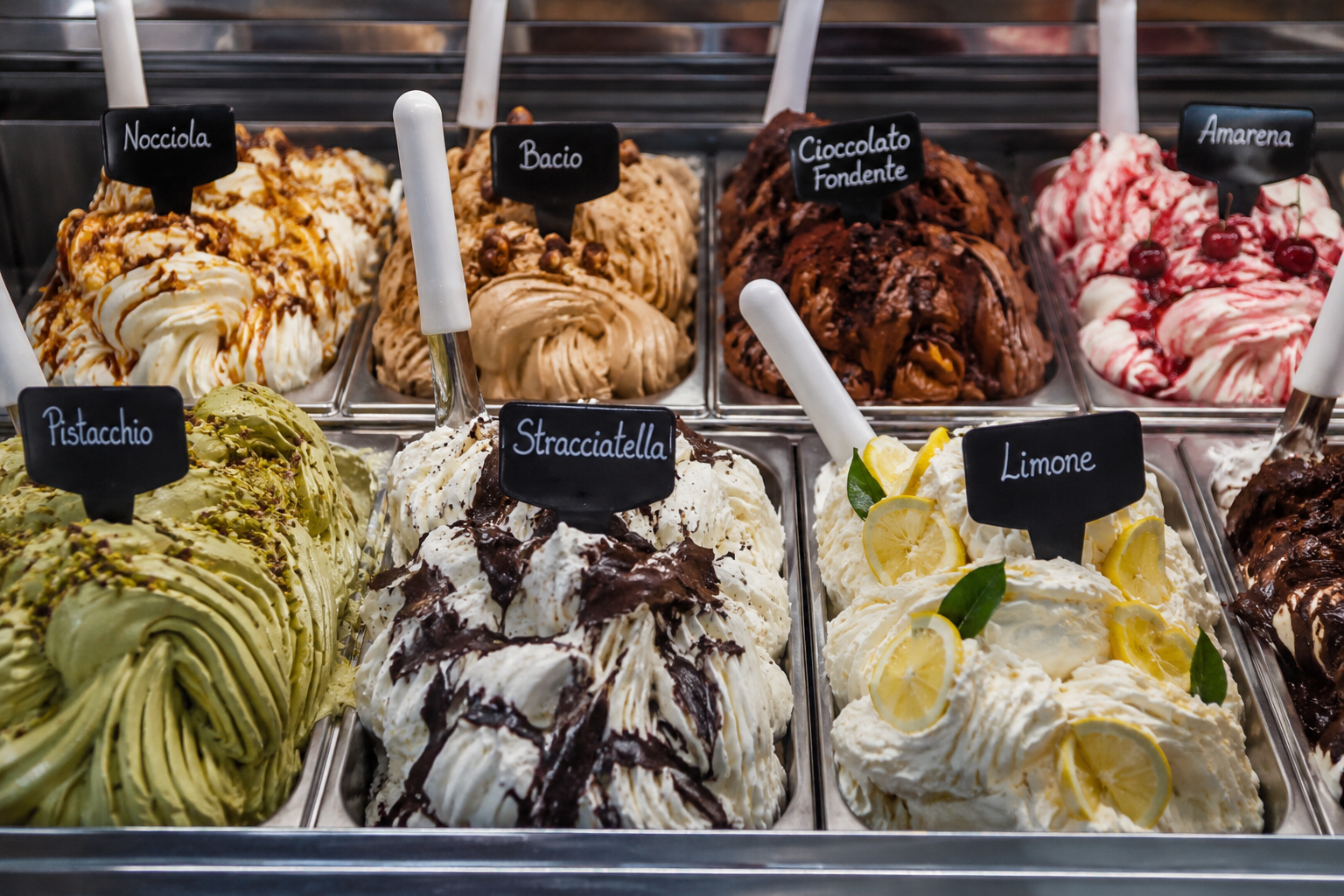
Few foods represent Italy as perfectly as gelato. Rich, creamy, intensely flavorful, and made fresh every day, authentic Italian gelato is one of the country’s greatest culinary treasures. While visitors often compare it to ice cream, Italians know that gelato is an entirely different experience.
Its story stretches back thousands of years, blending ancient traditions with Renaissance innovation and modern craftsmanship. Every region has contributed something unique, creating an extraordinary variety of flavors and styles that make traveling through Italy even sweeter.
Ancient Origins: Ice Before Refrigeration
Long before refrigeration existed, civilizations found ingenious ways to enjoy frozen desserts.
The ancient Greeks collected mountain snow and mixed it with honey and fruit juices. The Romans improved the idea by transporting snow from the Apennine Mountains to wealthy villas in Rome, where it was combined with fruit, herbs, and wine.
Roman Emperor Nero is said to have servants bring snow from nearby mountains to create primitive frozen delicacies. Although these were not gelato as we know it today, they laid the foundation for frozen desserts.
In Sicily, Arab rule between the 9th and 11th centuries introduced sugar cane cultivation, citrus fruits, almonds, and sophisticated cooling techniques. These innovations would later transform Sicily into one of Italy’s great centers of frozen desserts.
Florence: The Birthplace of Modern Gelato
Most historians credit Florence as the birthplace of modern gelato.
During the Renaissance, architect and stage designer Bernardo Buontalenti created a frozen dessert for the court of the Catherine de’ Medici and the powerful Medici family in the 16th century.
His recipe combined:
- Milk
- Cream
- Eggs
- Sugar
- Honey
- Citrus
- Wine
Unlike earlier frozen desserts made from flavored snow, Buontalenti’s creation had a creamy texture remarkably similar to today’s gelato.
The flavor “Crema Fiorentina” or “Buontalenti” remains one of Florence’s signature gelato flavors.
Sicily: The Island That Perfected Frozen Desserts
If Florence gave birth to modern gelato, Sicily perfected frozen desserts.
Thanks to Mount Etna and the island’s high mountains, snow could be collected during winter and stored inside stone ice houses called neviere.
Sicilians developed:
- Granita
- Sorbetto
- Almond gelato
- Lemon gelato
- Pistachio gelato
Today, Sicilian pistachio from Bronte is considered among the finest in the world.
Unlike many northern gelati, Sicilian recipes traditionally contain less cream and more fruit or nuts, creating lighter yet intensely flavored desserts.
Another uniquely Sicilian tradition is eating gelato inside a freshly baked brioche known as brioche col tuppo—a breakfast enjoyed throughout the island during summer.
Venice: International Gateway of Sweet Flavors
Venice became one of Europe’s first international centers for sugar, spices, chocolate, vanilla, and exotic ingredients.
As merchants returned from Asia and the Middle East, Venetian confectioners experimented with:
- Cinnamon
- Vanilla
- Cocoa
- Coffee
- Pistachios
- Candied fruits
Venetian cafés became famous during the 18th century, serving elegant frozen desserts to nobles, artists, and travelers from across Europe.
The city’s cosmopolitan influences helped spread Italian gelato far beyond Italy.
Turin: Chocolate Meets Gelato
Northern Italy added another chapter to gelato history through chocolate.
Turin, already famous for chocolate and hazelnuts, inspired classic flavors including:
- Gianduia
- Bacio
- Hazelnut
- Dark chocolate
The combination of Piedmont hazelnuts and premium cocoa remains one of Italy’s greatest culinary achievements.
Bologna: The Capital of Gelato Education
Today, Bologna is considered one of the world’s leading centers for professional gelato training.
Many of Italy’s finest gelato makers study modern production techniques here, balancing traditional craftsmanship with food science.
What Makes Italian Gelato Different?
Visitors often assume gelato is simply Italian ice cream, but the differences are significant.
Less Fat
Traditional gelato contains around 4–8% butterfat compared to 10–18% for many ice creams.
Less Air
Ice cream is whipped with much more air during production.
Gelato contains considerably less air, making it denser and richer despite having less fat.
Warmer Serving Temperature
Gelato is served slightly warmer than ice cream.
This allows flavors to become more aromatic and intense immediately upon tasting.
Fresh Ingredients
Authentic artisan gelaterie often prepare gelato daily using:
- Fresh milk
- Seasonal fruit
- Local nuts
- Natural chocolate
- Real vanilla
Artificial colors are generally avoided in high-quality gelato.
Regional Styles Across Italy
Sicily
Signature flavors include:
- Bronte pistachio
- Almond
- Lemon
- Mulberry
- Blood orange
- Jasmine
- Fig
Gelato is often served with brioche.
Florence (Tuscany)
Traditional specialties:
- Buontalenti
- Crema Fiorentina
- Vin Santo
- Ricotta and pear
Rich dairy flavors dominate.
Venice (Veneto)
Popular flavors include:
- Tiramisu
- Zabaglione
- Coffee
- Chocolate
- Amarena cherry
Elegant combinations reflect centuries of international trade.
Piedmont
Famous for:
- Gianduia
- Hazelnut
- Chocolate
- Marron glacé
Emilia-Romagna
Known for:
- Parmigiano experiments
- Mascarpone
- Traditional custards
- Local fruit
Campania
Highlights include:
- Amalfi lemon
- Buffalo milk cream
- Walnut
- Fig
Puglia
Traditional ingredients include:
- Almond
- Fig
- Olive oil
- Local citrus
Sardinia
Unique flavors:
- Myrtle
- Honey
- Pecorino-inspired creations
- Local herbs
Italy’s Most Popular Gelato Flavors
Some flavors are found in nearly every artisan gelateria:
- Pistachio
- Stracciatella
- Hazelnut
- Dark Chocolate
- Fior di Latte
- Lemon
- Coffee
- Tiramisu
- Amarena Cherry
- Salted Caramel
- Coconut
- Mango
- Yogurt
- Ricotta and Fig
- Sicilian Cannolo
Seasonal flavors often feature peaches, apricots, figs, grapes, chestnuts, and fresh berries.
How to Recognize Authentic Artisan Gelato
Not every colorful display window indicates quality.
Signs of excellent gelato include:
- Natural-looking colors rather than fluorescent shades.
- Covered metal containers (pozzetti) or modestly filled trays.
- Seasonal fruit flavors that change throughout the year.
- Clear labeling of ingredients.
- Small daily batches.
- Dense, smooth texture without excessive fluffiness.
Bright blue “Smurf” gelato or towering mountains of vividly colored gelato often indicate industrial production rather than artisan craftsmanship.
Best Gelaterie in Italy: North to South

Gelateria Alberto Marchetti
Widely respected for traditional Piedmontese flavors, especially hazelnut and gianduia.
La Romana
A beloved name known for creamy classics and high-quality ingredients.
Suso Gelatoteca
One of Venice’s most acclaimed artisan gelato shops, famous for inventive recipes alongside Venetian classics.
Central Italy
Vivoli
Operating since 1930, Vivoli is one of Florence’s historic gelaterie and is especially renowned for its creamy specialties and affogato.
Gelateria Dondoli
Located in the medieval hill town of San Gimignano, this award-winning gelateria is celebrated for imaginative flavors inspired by Tuscan ingredients.
Southern Italy
Gay-Odin
Better known for chocolate, Gay-Odin also serves outstanding chocolate-based gelato made with recipes that date back more than a century.
Bamm Bar
Internationally famous for Sicilian granita, brioche, and exceptional fruit-based frozen desserts that showcase the island’s citrus, almonds, and pistachios.
Gelato Around the World
Italian immigrants carried gelato traditions throughout Europe, the Americas, Australia, and beyond during the late 19th and early 20th centuries.
Today, artisan gelato is enjoyed worldwide, but many gelato makers still travel to Italy to learn traditional techniques and source premium ingredients such as Sicilian pistachios, Piedmont hazelnuts, and Tuscan dairy products.
A Sweet Symbol of Italian Culture
Gelato is much more than a dessert in Italy—it is a daily ritual, a social tradition, and a reflection of regional identity. Whether enjoyed on a bustling Venetian canal, beneath Florence’s Renaissance architecture, or while watching the sunset over a Sicilian beach, each scoop tells a story of local ingredients, centuries of craftsmanship, and a passion for flavor.
From the snow of ancient Roman mountains to today’s artisan gelaterie, Italian gelato has evolved into one of the world’s most beloved culinary creations. Exploring Italy one gelato at a time is not only delicious—it is one of the most authentic ways to experience the country’s rich history and extraordinary regional diversity.