
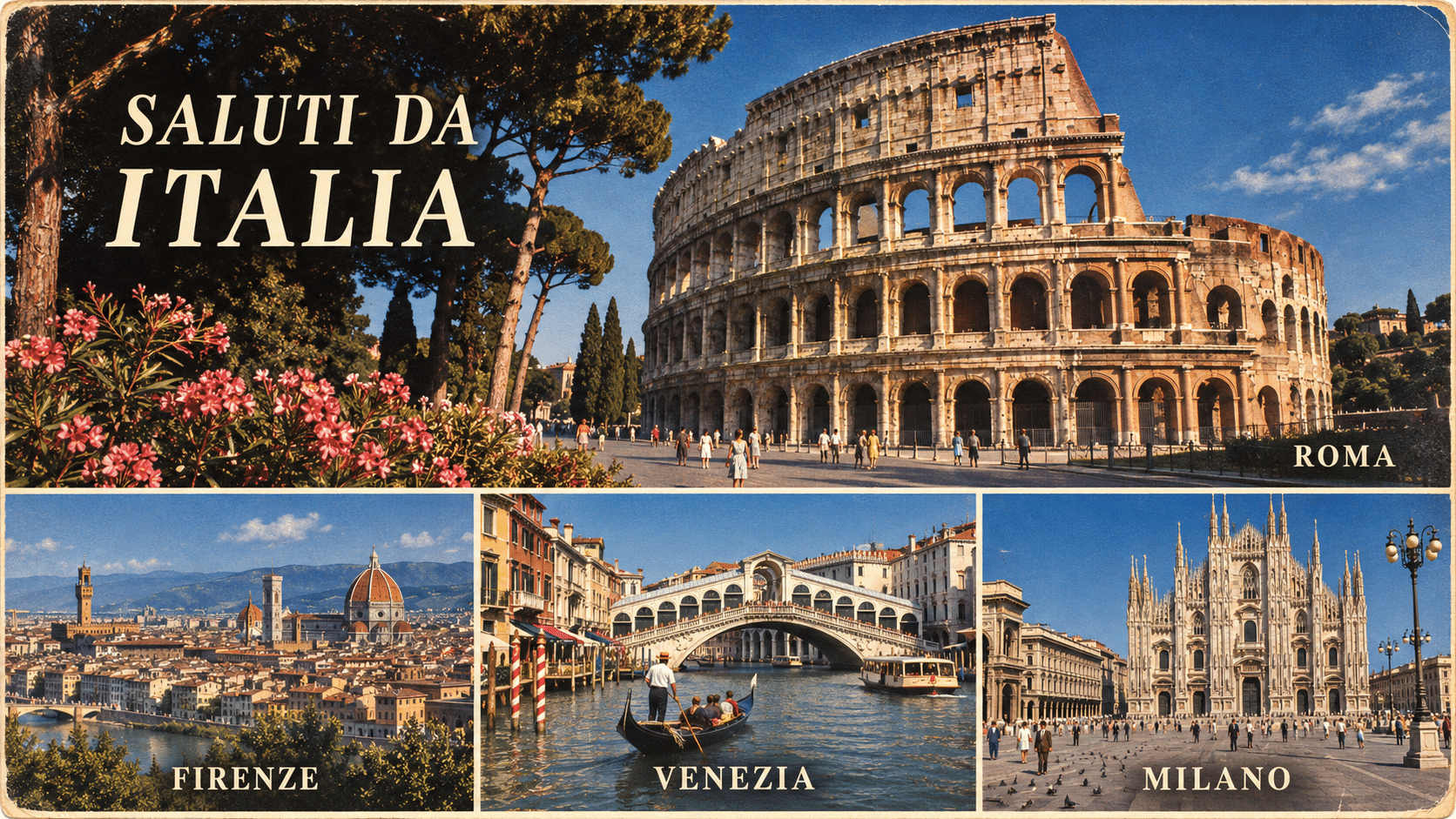
On a first trip to Italy, the Colosseum, Florence’s Duomo and Venice’s Grand Canal are worth building a route around. But some of the places you’ll remember most may be a mosaic-covered basilica in Ravenna, a cathedral above the rooftops of Orvieto, or a street of conical stone houses in Alberobello. The trick is to pick a few landmarks that fit together geographically and give yourself time to see what makes each one special.
If you have a week, make Rome, Florence and Venice the backbone of your trip. If you’ve already visited those cities, follow a different thread through Italy: Roman ruins around Naples, medieval towns in Tuscany and Umbria, or Norman-era churches and Greek temples in Sicily. For help with the broader logistics, see Italia Mia’s guide to Italy for first-time visitors.
Rome and Vatican City: The essential landmarks
- Colosseum and Roman Forum. Start with the amphitheater for a sense of the scale of ancient Rome, then walk through the Forum for a sense of how the city worked. Its temples, basilicas and public spaces are easier to make sense of with a map or an audio guide. Give the Colosseum, Forum and Palatine Hill most of a morning, and book your Colosseum entry through the official archaeological park.
- Pantheon. Go inside and look up. The open oculus makes the sun and sky part of the building, and the light moves across the dome as the day goes on. The Pantheon is a ticketed visit and fits naturally into a walk through Rome’s historic center.
- Trevi Fountain. Follow the narrow streets until they open onto the fountain’s theatrical façade. The square offers a view of the whole composition, while the municipal ticket covers access to the inner perimeter closest to the water during the applicable hours.
- St. Peter’s Basilica and the Sistine Chapel. Set aside a separate half-day for Vatican City. St. Peter’s is the stop for Michelangelo’s Pietà and the scale of the basilica interior. The Sistine Chapel is part of the Vatican Museums visit, with a separate entrance on a different side of the Vatican walls. Reserve the museums in advance and leave time for the walk between entrances and for security.
With just one full day in Rome, I’d book the Colosseum first, then walk to the Pantheon and Trevi Fountain in the afternoon. Give the Vatican its own morning if you have a second day.
Florence: The Duomo, the art and the Arno
Start in Piazza del Duomo to see the cathedral, Giotto’s bell tower and the Baptistery together. Brunelleschi’s dome is the landmark you’ll keep spotting across town. If you want to climb it, choose the pass with a dome reservation and check the stairs and entry conditions on the Opera del Duomo ticket page.
Continue through Piazza della Signoria, where the tower of Palazzo Vecchio rises over the square and the Loggia dei Lanzi brings sculpture out into the open. From there, it’s a short walk through the Uffizi courtyard to Ponte Vecchio. For a good view of the bridge and the shops built across it, walk over to Ponte Santa Trinita and look back upriver.
If you have room for one museum, choose the Uffizi for Botticelli and Renaissance painting or the Accademia to see Michelangelo’s David. Save the other for a second day or a return trip.
Venice: St. Mark’s Square and the Grand Canal
St. Mark’s Basilica and the Doge’s Palace stand next to each other, and the two visits make sense together. Inside the basilica, look up at the gold mosaics. At the palace, the grand chambers show how the Venetian Republic presented its power. The familiar exterior view of the Bridge of Sighs is from Ponte della Paglia, on the waterfront beside the palace.
See the Grand Canal from the water. A vaporetto ride from Santa Lucia station toward San Marco takes you past palaces built to be approached by boat and under the Rialto Bridge. If you’re staying overnight, return to the Rialto area early, when boats are unloading and the market streets are getting ready for the day. The canal makes as much sense as a working street as it does as a famous view.
Milan: The cathedral rooftops and Leonardo’s Last Supper
At the Duomo, the rooftop terraces are the place to appreciate the details: gargoyles, pinnacles and stonework that you can barely make out from the square. Check your ticket for terrace access and whether your route involves stairs. Next door, walk through the Galleria Vittorio Emanuele II and pause under the glass dome before continuing to Piazza della Scala.
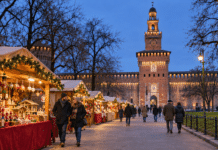
The Last Supper is across the center in the former refectory of Santa Maria delle Grazie. Its timed visits can shape the rest of your day, so look for a slot before fixing your itinerary. If you have the afternoon to spare, continue to Castello Sforzesco and walk through to Parco Sempione. Italia Mia’s Milan travel guide covers the surrounding neighborhoods and where to stay.
Other major cities worth a stop
- Naples. Start at Piazza del Plebiscito for the Royal Palace and the sweeping colonnade opposite it. Then head into the historic center for a different scale of monument: the marble Veiled Christ in Cappella Sansevero. If you’re visiting Pompeii too, the National Archaeological Museum in Naples helps put what you see at the ruins in context.
- Bologna. Begin at Piazza Maggiore, between the Basilica of San Petronio and the streets branching off into the old market quarter. Bologna’s porticoes are best experienced on foot. For a longer walk, follow the uphill portico toward the Sanctuary of San Luca.
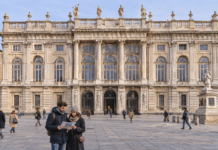
- Turin. See the Mole Antonelliana for the spire that defines Turin’s skyline and the National Museum of Cinema inside. Then walk through Piazza Castello to the Royal Palace for a sense of the city’s Savoy past.
- Verona. The Arena is the first stop, especially if you can attend a performance. From Piazza Bra, cross the old center toward Ponte Pietra for a view of the river bend and the hills beyond it.
- Palermo. Build your visit around the Palatine Chapel, where gold mosaics meet a carved and painted wooden ceiling. Walk from the Norman Palace to Palermo Cathedral, then make time for Monreale Cathedral on a separate outing if you want to see the mosaics on an even larger scale.
Smaller towns and cities with landmarks worth the journey
| Destination | What to see | How to fit it in |
|---|---|---|
| Pisa, Tuscany | Leaning Tower and Piazza dei Miracoli. Step back to see how the tower, cathedral and Baptistery sit together. | An easy rail outing from Florence. Reserve the tower climb if it matters to you. |
| Siena, Tuscany | Piazza del Campo and Siena Cathedral. See the fan-shaped square before climbing the streets to the cathedral’s striped marble interior. | Give Siena a full day. The center is hilly, and the two main stops reward time inside. |
| San Gimignano, Tuscany | Medieval towers. View the skyline from outside the center, then climb Torre Grossa if you want to see the town from above. | Check the connection via Poggibonsi if traveling by public transport. Allow time for the transfer. |
| Assisi, Umbria | Basilica of St. Francis. Visit the lower and upper churches to appreciate the contrast between their spaces and frescoes. | Stay overnight if you want to walk through the town early. The station is below the historic center. |
| Orvieto, Umbria | Orvieto Cathedral. Look closely at the façade’s reliefs, then go inside for the frescoes in the Chapel of San Brizio. | A practical rail stop from Rome. A funicular connects the station area with the hilltop town. |
| Ravenna, Emilia-Romagna | San Vitale and the Mausoleum of Galla Placidia. Compare the imperial mosaics in the basilica with the starry ceiling in the much smaller mausoleum. | A rewarding day from Bologna. Start with these neighboring monuments and add other mosaic sites if time allows. |
| Matera, Basilicata | The Sassi. See the cave dwellings and churches from a viewpoint, then descend into the stone lanes for a closer look. | Stay overnight if you can. Check your accommodation’s access route if you have luggage or want to minimize stairs. |
| Alberobello, Puglia | The trulli. Walk through Rione Monti for the familiar rooflines, then visit Aia Piccola to see a more residential part of the old town. | Pair it with a stay in the Valle d’Itria. Check return services before committing to a day trip without a car. |
| Cefalù, Sicily | Cefalù Cathedral. The mosaic of Christ dominates the apse, while the cathedral steps give you a good view of the square. | An easy rail outing from Palermo. Leave time to walk down to the old waterfront. |
For more short excursions, use Italia Mia’s guide to Italian towns within 90 minutes of Rome, Florence or Milan.
Ancient sites worth planning around
Pompeii and Herculaneum, Campania. Pompeii gives you the scale of a Roman city, from the Forum to houses and shops along its streets. Allow at least half a day and pick a few areas before entering. Herculaneum is more compact and gives you a closer look at individual houses and interiors. Both work from Naples, though visiting them on separate days gives each site more time.
Valley of the Temples, Agrigento, Sicily. The Temple of Concordia is the standout, but the walk along the ridge is what puts it in context. Look back along the line of temples and across the landscape to see how prominently the buildings once stood. The site is exposed, so a morning or late-afternoon visit is often more comfortable in warm weather.
Su Nuraxi, Barumini, Sardinia. This Bronze Age complex of stone towers and the remains of a surrounding settlement offers a look at Sardinia’s Nuragic civilization. The approach across inland Sardinia is part of the trip. Check guided entry times and how you’ll get back before setting out.
How to put the landmarks together
- One week on a first visit. Spend three nights in Rome, two in Florence and two in Venice. Choose one major timed visit per day and build nearby squares, bridges and walks around it.
- Ten days with a smaller-town stop. Use this Rome, Florence and Venice rail itinerary as a base. Add Orvieto for a hill town or Pisa if the Leaning Tower is a priority.
- A return trip for art and architecture. Choose Bologna and Ravenna for porticoes and mosaics, or pair Palermo with Monreale and Cefalù for Sicily’s Norman-era churches. If archaeological sites are your priority, base yourself in Naples for Pompeii and Herculaneum.
Reserve the sights where the time slot determines your day, especially the Colosseum, Vatican Museums, Florence dome and Last Supper. Leave the spaces between them open. The walk from the Pantheon to Trevi, the first glimpse of Siena’s cathedral and the Grand Canal from a boat are part of the visit.
Book Your Italy Stay and Experiences
Once you’ve reserved any essential monument visits, choose accommodation that makes the route easy. A hotel near Florence’s Santa Maria Novella station is practical if you’re using Florence for day trips. In Venice, check the walking route from your vaporetto stop if you’re bringing heavy luggage. In Matera, ask the property how to reach the door from the nearest road.
Use the official venue links below for admission. For hotels and trains, you can compare Italy stays on Trip.com or check Italo high-speed train routes. Italia Mia may earn a commission through affiliate links.
External Links
- Colosseum, Roman Forum and Palatine Hill tickets
- Pantheon visitor information from Italy’s Ministry of Culture
- Trevi Fountain access information
- Vatican Museums
- Florence Cathedral complex tickets
- Uffizi Galleries
- Doge’s Palace
- Milan Cathedral
- Leonardo’s Last Supper museum
- Pompeii Archaeological Park
- UNESCO World Heritage sites in Italy