
 Italy was not born as a unified country. Long before the modern Italian nation existed, the peninsula was divided among independent peoples, city-states, and regional cultures. Then, over several centuries, one city changed its destiny: Rome.
What began as a relatively small settlement beside the Tiber River developed into the center of a political system that eventually controlled the Mediterranean and territories far beyond it. The transformation was neither immediate nor peaceful. It involved conquest, shifting alliances, political compromise, rebellion, and the gradual extension of Roman citizenship.
Yet the history of Roman Italy is more than the story of emperors, senators, and armies. It is also the history of farmers cultivating the countryside, merchants conducting business in busy ports, craftsmen producing goods, and ordinary families living in towns that still exist today.
From Rome and Pompeii to Verona, Bologna, and Aquileia, traces of the Roman world remain deeply embedded in the Italian landscape.
Understanding Roman Italy helps explain why the country’s cities, roads, legal traditions, language, and cultural identity developed as they did.
From a Small Settlement to a Powerful Republic
According to Roman tradition, Romulus founded Rome in 753 BCE. Ancient writers described the city as a monarchy ruled by seven kings before the establishment of the Roman Republic in 509 BCE.
These dates belong partly to tradition rather than securely documented political history. Archaeological discoveries nevertheless confirm that settlements existed around Rome’s hills during the early first millennium BCE and gradually developed into an important urban center.
Rome’s geographical position offered several advantages.
The Tiber provided a connection between inland communities and the Tyrrhenian Sea. Nearby agricultural land supported a growing population, while the surrounding hills offered defensible positions.
Rome also stood where different cultures interacted.
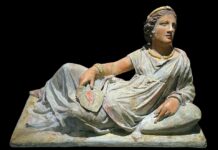
The Latins occupied much of the surrounding region, while the Etruscans controlled important cities to the north. Greek settlements flourished farther south, especially along the coasts of Campania, Calabria, and Sicily.
Rome learned from these neighbors. Etruscan and Greek traditions influenced its religion, architecture, artistic production, and public institutions.
For a closer look at one of Rome’s most important early neighbors, read our guide to the Etruscans in Italy.
The Roman Republic gradually developed a political system centered on elected magistrates, assemblies, and the Senate.
It was not a democracy in the modern sense. Political power was concentrated among wealthy families, and access to public office depended heavily on status and connections.
Nevertheless, republican institutions created a durable framework through which Rome could organize armies, negotiate alliances, and expand its influence.
How Rome Conquered the Italian Peninsula
Rome did not conquer Italy in a single campaign. Its domination developed through a succession of wars and diplomatic agreements over several centuries.
During the fourth century BCE, Rome consolidated its control over Latium and confronted the Samnites, a powerful group of peoples occupying large areas of the central and southern Apennines.
The Samnite Wars demonstrated how difficult it would be to dominate the peninsula. Rome faced experienced opponents who understood the mountainous terrain and defended their independence fiercely.
The Romans ultimately prevailed, strengthening their position in central Italy.
To the north, Etruscan cities gradually came under Roman influence or control. To the south, Rome encountered Greek-speaking cities with strong commercial and cultural connections to the wider Mediterranean.
The conflict with Tarentum, modern Taranto, brought King Pyrrhus of Epirus into southern Italy in 280 BCE.
Pyrrhus won important battles against the Romans, but his victories came at enormous cost. His eventual withdrawal helped clear the way for Roman dominance.
By the middle of the third century BCE, Rome controlled most of peninsular Italy south of the Po Valley, although the incorporation of northern territories continued later.
But Roman rule did not mean that every community immediately became Roman in the same way.
Some cities received Roman citizenship. Others obtained more limited legal rights. Many remained allied communities, required to contribute soldiers while retaining a degree of local administration.
This flexible but unequal system helped Rome mobilize resources on an extraordinary scale.
It also created tensions that would eventually threaten the Republic itself.
The Punic Wars and Italy’s Place in the Mediterranean
Once Rome had become the dominant power in much of Italy, its ambitions brought it into conflict with Carthage, the major maritime power of the western Mediterranean.
The three Punic Wars, fought between 264 and 146 BCE, transformed Rome from an Italian power into a Mediterranean empire.
The most dramatic confrontation for Italy occurred during the Second Punic War.
In 218 BCE, the Carthaginian commander Hannibal invaded Italy after crossing the Alps with his army.
Over the following years, Roman forces suffered devastating defeats, including the Battle of Cannae in 216 BCE.
The war exposed the fragility of Rome’s alliances. Several Italian communities abandoned Rome and supported Hannibal, while others remained loyal.
Large areas of the countryside experienced destruction, displacement, and economic disruption.
Rome eventually defeated Carthage, but victory had profound consequences for Italian society.
Military campaigns increased Rome’s wealth and international influence. They also brought large numbers of enslaved people into the Roman world and intensified competition over agricultural land.
Conquest abroad was reshaping life at home.
Italy increasingly became the political and military center of a much larger Mediterranean system.
The Social War: When Italians Demanded Roman Citizenship
One of the most important episodes in the history of Roman Italy is surprisingly unfamiliar to many readers.
The Social War, beginning in 91 BCE, was fought between Rome and many of its Italian allies.
The word Social comes from the Latin socii, meaning allies. It had nothing to do with modern social movements.
For generations, allied Italian communities had supplied troops to Roman armies. Their soldiers had fought in major campaigns and contributed to the expansion of Roman power.
Yet many of these communities did not enjoy full Roman citizenship or equal political rights.
The growing inequality created resentment.
When attempts to extend citizenship failed, rebellion broke out across central and southern Italy.
The conflict was particularly fierce among peoples such as the Marsi and Samnites.
Some rebels established their own political institutions and issued coins expressing an alternative Italian political identity.
Rome eventually suppressed the rebellion, but military success did not restore the previous political system.
Instead, legislation enacted in 90 and 89 BCE opened Roman citizenship to large numbers of Rome’s Italian allies.
The transformation was fundamental.
Many communities that had previously been subordinated allies became municipalities of Roman citizens.
The process continued in northern Italy, where the inhabitants of Transpadane communities received citizenship in 49 BCE.
For the first time, much of Italy was connected not simply by military domination but by a broadly shared Roman civic status.
This did not create equality in the modern sense. Women were excluded from voting and public office, enslaved people remained outside the citizen body, and wealth continued to shape political influence.
However, the extension of citizenship substantially changed the political relationship between Rome and the Italian peninsula.
It marked one of the decisive stages in the formation of Roman Italy.
Julius Caesar, Civil War, and the End of the Republic
Rome’s expanding territories brought wealth, but they also produced political competition and serious internal instability.
Generals commanded armies that had developed strong personal loyalties. Disputes over land, political office, citizenship, and the distribution of resources divided the ruling elite.
The final decades of the Republic were marked by repeated conflicts.
In 49 BCE, Julius Caesar crossed the Rubicon River with his army, defying the authority of his political opponents and beginning another civil war.
The Rubicon was significant because it marked a boundary associated with Roman Italy and Caesar’s provincial command.
Crossing it with troops was therefore a direct political challenge.
Caesar emerged victorious and concentrated unprecedented power in his hands.
His assassination in 44 BCE did not restore the traditional Republic. Instead, Rome descended into further struggles among rival leaders.
The decisive turning point came in 31 BCE, when Octavian defeated the forces of Mark Antony and Cleopatra at the Battle of Actium.
Four years later, in 27 BCE, Octavian received the title Augustus.
Although republican institutions formally survived, real political authority increasingly centered on the emperor.
The Roman Empire had begun.
Augustus and the Organization of Roman Italy
Augustus transformed the government of Rome while presenting himself as the restorer of political stability.
His reign initiated a long period of imperial rule during which Italy enjoyed an especially important position.
Unlike most conquered territories, Italy was not organized as an ordinary Roman province.
Its municipalities possessed a privileged relationship with the central government, and Italian land generally enjoyed exemptions from certain provincial taxes.
Augustus also divided Italy into eleven geographical regions, often called the regiones Augustae.
These included areas corresponding broadly to Latium and Campania, Etruria, Umbria, Samnium, Apulia, Lucania, Liguria, Venetia, and other northern territories.
The eleven regions were not equivalent to Italy’s twenty modern administrative regions.
Nevertheless, they reflected the growing idea of Italy as a recognizable geographical and political unit within the Roman state.
Cities retained local institutions, but they operated within a shared imperial framework.
The emperor also promoted construction, urban development, and improvements to infrastructure.
Under Augustus and his successors, Rome became the monumental capital most people now associate with the ancient world.
Public squares, temples, theatres, aqueducts, and imperial residences transformed its appearance.
Yet the Roman Empire was never simply the city of Rome enlarged.
It was a complex network of communities linked through law, taxation, military organization, commerce, and cultural exchange.
Italy occupied a privileged position at the center of that network.
Roman Roads: The Infrastructure That Connected Italy
One of Rome’s most enduring achievements was its transportation network.
The Romans did not invent roads, but they developed an extensive system of engineered routes capable of serving military, administrative, and commercial needs.
Among the most famous was the Via Appia, begun in 312 BCE.
Originally connecting Rome with Capua, it was gradually extended toward southern Italy and ultimately Brundisium, today’s Brindisi.
The road became known as the Regina Viarum, or Queen of Roads.
Other major routes included the Via Flaminia, connecting Rome with the Adriatic side of the peninsula, and the Via Aemilia, which helped organize transportation and settlement across the northern plains.
Roman roads enabled armies to move more efficiently, but their importance extended far beyond military campaigns.
They connected agricultural estates to markets, facilitated the movement of officials and travelers, and encouraged the growth of towns along major routes.
Roads were accompanied by bridges, milestones, stopping places, and other infrastructure.
The remains of ancient Roman routes can still be seen in Italy today.
The Via Appia itself was added to the UNESCO World Heritage List in 2024.
Its survival illustrates how Roman engineering shaped the Italian landscape for centuries after imperial rule ended.
Cities, Forums, and Everyday Life in Roman Italy
The Roman world was strongly urban, although much of its population lived and worked in the countryside.
Across Italy, cities developed around public spaces where administration, business, religion, and social interaction took place.
The forum was generally the civic center.
It could contain temples, government buildings, commercial facilities, and monuments celebrating important individuals or public events.
The Roman forum helped establish a tradition of public urban space that continued to influence Italian cities.
Our article about the history of the Italian piazza explores how communal spaces remained important throughout later Italian history.
Roman cities also contained public baths, markets, theatres, fountains, and, in some cases, amphitheatres.
The famous Colosseum in Rome was constructed under the Flavian emperors during the first century CE.
Other Italian cities developed impressive public buildings, including Verona, whose Roman amphitheatre survives as one of the country’s most recognizable ancient monuments.
But not everyone experienced Roman urban life in the same way.
Wealthy families might occupy spacious houses with courtyards, gardens, mosaics, and wall paintings.
People with fewer resources lived in more modest accommodation, including crowded multi-storey buildings in some large cities.
Urban households depended on many forms of labor, from artisans and merchants to domestic servants and enslaved workers.
Women participated in household management, economic activities, religious life, and, in some circumstances, property ownership. Their opportunities nevertheless varied greatly according to social status and legal circumstances.
For many inhabitants, daily life revolved around work, food, family responsibilities, and the local community rather than imperial politics.
Pompeii: A Roman City Preserved in Time
Pompeii provides an extraordinary opportunity to understand this everyday world.
When Mount Vesuvius erupted in 79 CE, volcanic material buried Pompeii and nearby Herculaneum.
The disaster killed many inhabitants, but it also preserved buildings, objects, inscriptions, and paintings that reveal the organization of Roman society.
Visitors can still explore streets, houses, commercial premises, bathing facilities, and public spaces.
Pompeii’s political inscriptions and informal graffiti offer glimpses of ordinary concerns, humor, disagreements, and civic competition.
Its archaeology reminds us that Roman Italy was inhabited by real people with everyday problems and ambitions.
It was not simply a collection of marble monuments and imperial ceremonies.
Agriculture, Trade, and the Roman Economy
Despite the importance of its cities, Roman Italy depended heavily on agriculture.
The countryside produced grain, olives, wine, vegetables, fruit, and livestock.
Small family farms existed alongside much larger estates belonging to wealthy landowners.
Some estates relied extensively on enslaved labor, while others employed tenants, seasonal workers, or a mixture of labor arrangements.
Land ownership became a major source of economic and political power.
As Rome expanded, the concentration of property contributed to social conflict, particularly during the late Republic.
The reforms proposed by Tiberius and Gaius Gracchus in the second century BCE attempted to address aspects of these inequalities.
The Italian economy was also deeply integrated into Mediterranean trade.
Products arrived from across the empire, including grain from North Africa and Egypt, luxury goods from the eastern Mediterranean, and raw materials from distant provinces.
Italian workshops exported products of their own, including pottery, wine, metalwork, and manufactured goods.
Major ports played a vital role.
Ostia and the port facilities serving Rome handled supplies intended for the enormous urban population of the capital.
Trade connected local markets with imperial networks, creating economic opportunities but also exposing Italian producers to competition from other regions.
The countryside was therefore not isolated from the empire.
It formed part of an interconnected commercial system in which political power, transport infrastructure, and agricultural production reinforced one another.
Language, Religion, and Cultural Diversity
The expansion of Rome transformed the cultural landscape of Italy, but it did not instantly erase local traditions.
Latin became increasingly important in administration, public life, law, and communication.
Over time, it displaced many earlier languages across the peninsula.
However, Greek continued to play an important role, particularly in southern Italy and among educated elites.
Regional religious practices, artistic traditions, and local customs also survived, sometimes merging with Roman forms.
The term Romanization is frequently used to describe these changes.
It is useful, provided we remember that cultural transformation did not proceed identically everywhere.
Roman identity evolved through interaction among conquered communities and was influenced by the very cultures Rome incorporated.
The peninsula consequently developed a shared political and cultural framework without becoming completely uniform.
Latin’s long-term importance is especially visible in the development of Italian.
The modern Italian language emerged over many centuries from varieties of spoken Latin, shaped by regional differences and later historical influences.
For that longer story, see our guide to the Italian language, its history, and dialects.
Religion underwent an equally remarkable transformation.
For much of Roman history, religious life included traditional Roman deities, local cults, household rituals, and religious traditions introduced through contact with other Mediterranean societies.
Christianity developed within this diverse religious environment.
Early Christian communities faced periods of persecution, although their treatment varied over time and across the empire.
In 313 CE, the agreement commonly called the Edict of Milan, associated with Constantine and Licinius, established toleration for Christianity and other religious practices.
Later emperors increasingly supported Christianity.
In 380 CE, Theodosius I and his imperial colleagues endorsed Nicene Christianity through the Edict of Thessalonica.
The transformation was gradual and uneven, but the growing Christian Church became one of the most influential institutions in late Roman Italy.
Rome eventually emerged as a particularly important center of Western Christianity.
The Crisis of the Roman Empire
The first two centuries of imperial rule are often associated with stability, prosperity, and the Pax Romana.
This should not be confused with an absence of warfare or social conflict.
Nevertheless, the imperial government maintained a relatively durable political system across an enormous territory.
During the third century CE, the empire experienced serious instability.
Emperors rose and fell rapidly. Rival armies supported competing rulers. Frontier pressures, economic difficulties, and disruptions to trade affected many parts of the Roman world.
Italy was no longer protected from the consequences of imperial military crises.
At the same time, the empire had become increasingly international.
Powerful families, soldiers, administrators, and emperors emerged from provinces beyond Italy.
The special political position of Italy gradually diminished.
A major change had already occurred in 212 CE, when Emperor Caracalla extended Roman citizenship to nearly all free inhabitants of the empire.
Citizenship could no longer distinguish Italy’s population from the majority of free provincial inhabitants as it once had.
Later administrative reforms further reduced the peninsula’s earlier exceptional status.
Under Diocletian and his successors, imperial government became more centralized and bureaucratically complex.
Rome remained symbolically important, but emperors increasingly governed from other cities.
Mediolanum, modern Milan, became a major imperial residence.
In the early fifth century, Ravenna became the principal residence of the Western Roman imperial court.
These changes reflected the strategic and administrative needs of a changing empire.
They also marked the end of Rome’s exclusive position as the practical center of imperial government.
The Fall of the Western Roman Empire
The fifth century brought another period of severe political and military disruption.
In 410 CE, the Visigoths under Alaric sacked Rome.
The event shocked contemporaries because the city retained enormous symbolic significance, even though the Western imperial court was based elsewhere.
Rome was attacked again in 455 CE, this time by the Vandals.
Meanwhile, Western imperial authority weakened as military commanders, regional powers, and external groups competed for territory and influence.
The conventional date marking the end of the Western Roman Empire is 476 CE.
That year, Odoacer deposed the young Western emperor Romulus Augustulus.
However, the event did not mean that Roman civilization suddenly disappeared.
The Eastern Roman Empire continued to exist, governed from Constantinople.
In Italy, many Roman institutions, administrative practices, religious structures, and patterns of everyday life persisted under new rulers.
Cities remained inhabited. Latin continued to be spoken in changing local forms. Christian institutions became increasingly influential.
The political system had transformed, but its cultural inheritance survived.
The end of Western imperial rule therefore represents a major historical turning point rather than a complete break between two civilizations.
Italy was entering the complex period that historians describe as Late Antiquity and the early Middle Ages.
Where Roman Italy Can Still Be Seen Today
One of the most rewarding aspects of studying Roman Italy is that so much of its history remains visible.
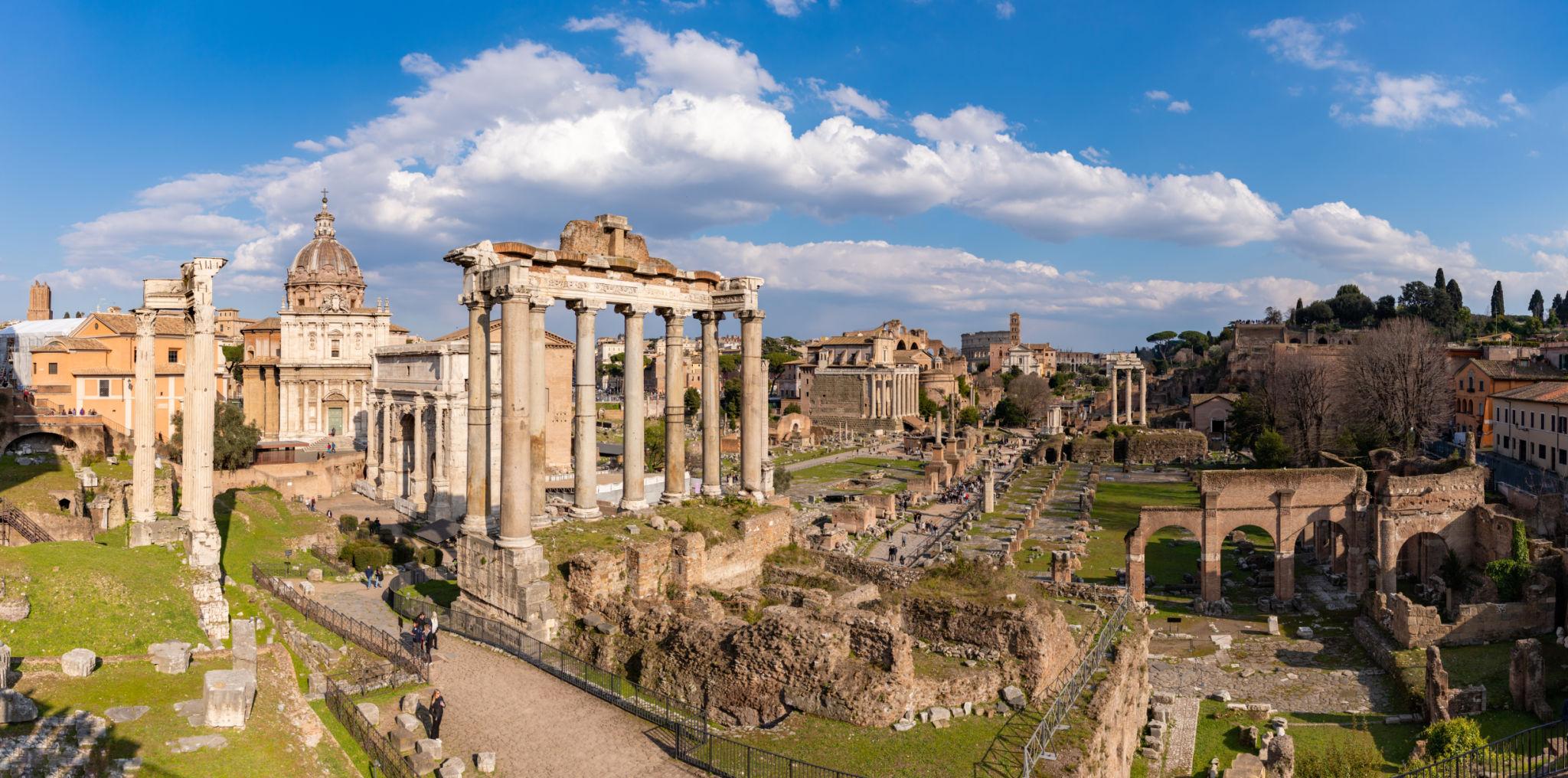
In Rome, the Roman Forum, Palatine Hill, Pantheon, and Colosseum provide different perspectives on the city’s political, religious, and architectural history.
Pompeii and Herculaneum reveal everyday urban life with an intimacy that monumental ruins rarely provide.
Ostia Antica preserves the remains of streets, baths, warehouses, apartment buildings, and public spaces associated with Rome’s commercial world.
In northern Italy, Verona’s Arena demonstrates the architectural ambitions of an important Roman city.
Aquileia, in Friuli-Venezia Giulia, preserves evidence of a major Roman settlement and its transition into an important early Christian center.
Aosta retains striking elements of its Roman urban layout, including monumental gateways and a theatre.
Benevento in Campania is another fascinating destination, particularly for its Roman arch dedicated to Emperor Trajan.
Even where major monuments have disappeared, Roman history survives in less obvious forms.
The routes of roads, the arrangement of agricultural land, the foundations of buildings, and the names of settlements frequently preserve traces of ancient decisions.
Italy’s modern landscape is consequently layered with Roman history.
Visitors often encounter medieval churches, Renaissance palaces, and modern streets standing directly above or beside much older structures.
That continuity is one of the country’s defining characteristics.
Why Roman Italy Still Matters
Roman Italy was an extraordinary historical experiment.
A peninsula inhabited by diverse peoples gradually became the center of a political system whose influence extended across much of Europe, North Africa, and the Near East.
Its development depended on conquest, military organization, diplomacy, and the extension of citizenship.
It also depended on the daily activities of people who rarely appear in historical narratives: farmers, builders, merchants, craftspeople, laborers, women managing households, and enslaved individuals whose work supported Roman society.
The Roman legacy survives in architecture, infrastructure, legal concepts, language, and urban life.
But Roman Italy also reminds us that political integration is rarely simple.
Rome created common institutions while preserving important regional differences. It expanded citizenship while maintaining profound inequalities. It produced extraordinary cultural achievements through a system that also relied on warfare, exploitation, and slavery.
That complexity makes its history worth understanding.
Modern Italy is not the Roman Empire, and the ancient inhabitants of the peninsula did not share the national identity that developed many centuries later.
Nevertheless, the Roman period created lasting connections among territories and communities that would eventually form the Italian nation.
For a broader view of what happened afterward, read our history of Italy from the Roman Empire to the modern Republic.
The next chapter begins after the disappearance of Western imperial rule, when new kingdoms, Christianity, and surviving Roman institutions reshaped the peninsula.
Roman power declined, but Roman Italy never completely vanished. Its history continued within the cities, landscapes, and cultures of the country we know today.
External Sources
- Treccani — Italia: Ancient and Roman History
- World History Encyclopedia — The Social War
- UNESCO — Via Appia, Regina Viarum
- UNESCO — Archaeological Areas of Pompeii, Herculaneum and Torre Annunziata
- Parco archeologico del Colosseo — Official Website
- Museo Nazionale Atestino — Transition to Roman Italy