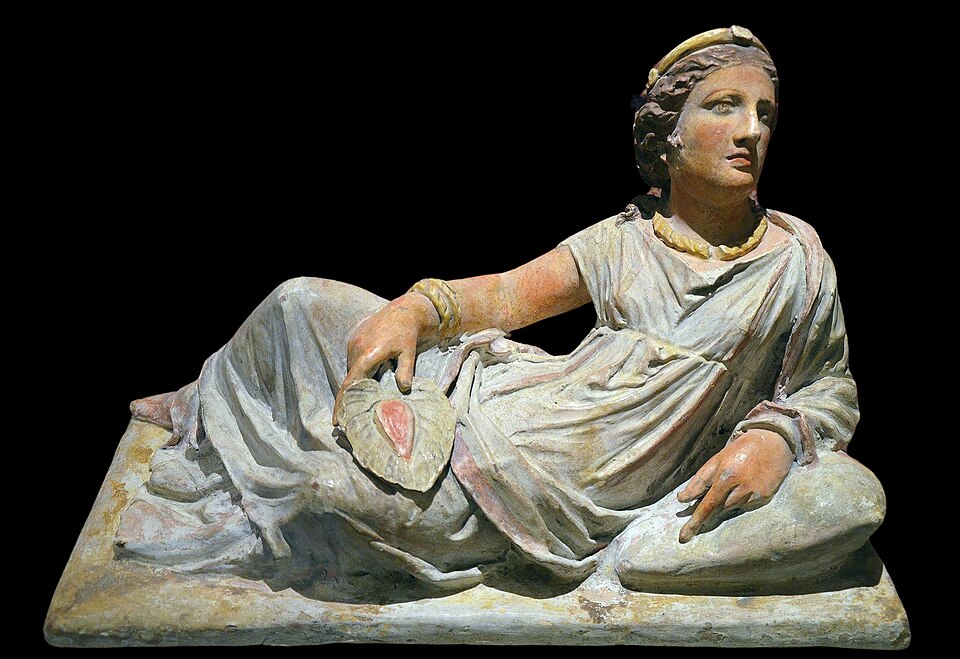
 Long before Rome became the dominant power of the Italian peninsula, central Italy was home to one of the ancient Mediterranean’s most fascinating civilizations: the Etruscans.
Their cities once occupied much of present-day Tuscany, northern Lazio and western Umbria. Today, travelers can still walk through Etruscan necropolises, enter tombs painted more than 2,000 years ago, pass through ancient city gates and see extraordinary bronzes, pottery and jewelry in some of Italy’s best archaeological museums.
For travelers interested in history, the Etruscans also provide a compelling reason to venture beyond Italy’s most famous Renaissance and Roman monuments. Many of the greatest Etruscan sites are located in destinations already worth visiting, including Rome, Tuscany, Florence, Cortona, Volterra, Orvieto and Perugia.
This guide explains who the Etruscans were, the most important places to visit, which museums should not be missed, and how to build an Etruscan itinerary through central Italy.
Who Were the Etruscans?
The Etruscans emerged as a major civilization in central Italy during the first millennium BC, centuries before Rome controlled the Italian peninsula.
Their homeland, known as Etruria, extended roughly across modern Tuscany, northern Lazio and parts of Umbria.
Rather than forming a single unified kingdom, the Etruscans lived in a network of powerful city-states. Important centers included Tarquinia, Cerveteri, Veii, Vulci, Volterra, Chiusi, Cortona, Arezzo, Perugia and Orvieto.
They were skilled metalworkers, merchants, farmers, engineers and artists. Etruscan cities traded throughout the Mediterranean, particularly with the Greeks and Phoenicians.
Their influence on Rome was profound. Religious practices, symbols of political authority, engineering techniques, gladiatorial traditions and aspects of Roman urban life all developed in a world in which Roman and Etruscan cultures interacted.
Eventually, Rome conquered the Etruscan cities and incorporated their territories into the expanding Roman state.
The civilization disappeared as a separate political and linguistic entity, but thousands of objects, tombs and archaeological sites survived.
Where to See the Etruscans in Italy
The heart of Etruscan Italy lies between Rome and central Tuscany.
That makes it surprisingly easy to incorporate Etruscan archaeology into a conventional Italian vacation.
If you are planning your first trip, our Italy for First-Time Visitors guide explains how Rome and Florence can serve as the anchors of a longer itinerary.
For a trip devoted specifically to the Etruscans, however, I would prioritize the following destinations.
Tarquinia: Italy’s Greatest Etruscan Painted Tombs
If you visit only one major Etruscan archaeological destination, Tarquinia should be near the top of the list.
The great attraction is the Necropolis of Monterozzi, one of the most important surviving Etruscan burial grounds.
Thousands of tombs were carved into the rock here. The most extraordinary contain wall paintings depicting banquets, musicians, dancers, animals, athletic contests and religious ceremonies.
Descending into these chambers is completely different from seeing Etruscan objects inside a museum.
Suddenly the civilization feels human.
The paintings show clothing, food, entertainment and social rituals. They offer glimpses into how members of Etruscan society wanted themselves and their families to be remembered.
Tarquinia’s necropolis and Cerveteri’s Banditaccia necropolis together form a UNESCO World Heritage Site.
National Archaeological Museum of Tarquinia
Do not leave after seeing the tombs.
The Museo Archeologico Nazionale di Tarquinia, housed in Palazzo Vitelleschi, contains important discoveries from the necropolis and surrounding territory.
Visiting both the museum and tombs gives you a much better understanding of ancient Tarquinia.
Visit Tarquinia from Rome
Tarquinia can also be incorporated into a longer stay in Rome.
Weekend in Italy offers an organized excursion dedicated to the Etruscans and Tarquinia that currently includes the necropolis, museum and historic center.
Book the Etruscans and Tarquinia excursion with Weekend in Italy
Affiliate disclosure: Italia Mia may earn a commission from qualifying bookings made through Weekend in Italy links, at no additional cost to you.
Cerveteri: Walk Through an Etruscan City of the Dead
Cerveteri offers a very different experience.
The Necropoli della Banditaccia resembles a city built for the dead.
Roads run between burial areas. Enormous circular tumuli rise from the landscape. Some tomb interiors were carved to imitate Etruscan houses, complete with architectural details and spaces resembling rooms.
That is important because relatively little Etruscan domestic architecture survives above ground.
The tombs consequently help archaeologists understand not only Etruscan burial practices but also aspects of everyday life.
Cerveteri is close enough to Rome to work as a day trip, making it particularly useful for readers who do not want to undertake an entire archaeological road trip.
Rome: National Etruscan Museum of Villa Giulia
One of the best introductions to Etruscan civilization is actually in Rome.
The Museo Nazionale Etrusco di Villa Giulia contains one of the world’s most important collections of Etruscan art and archaeology.
The museum occupies the beautiful Renaissance Villa Giulia and preserves discoveries from major Etruscan centers including Cerveteri and Veii.
For someone beginning an Etruscan journey in Rome, I would visit Villa Giulia first and the archaeological sites afterward.
It provides the historical context that makes Tarquinia and Cerveteri much easier to understand.
Villa Giulia Tickets
Weekend in Italy offers advance reservations for the National Etruscan Museum.
Reserve Villa Giulia Etruscan Museum tickets with Weekend in Italy
Affiliate disclosure: Italia Mia may earn a commission from qualifying bookings made through Weekend in Italy links, at no additional cost to you.
Veii: Rome’s Powerful Etruscan Rival
Just north of Rome lies ancient Veii, once one of Rome’s most important rivals.
The struggle between Rome and Veii became a major episode in Rome’s early expansion.
Today the archaeological landscape is much quieter than Rome’s monumental ancient center, but historically it is extremely important.
Veii is particularly interesting after visiting Villa Giulia because many archaeological discoveries from the ancient city are preserved in the museum.
Vulci: Archaeology in the Countryside
Travel north from Rome toward the Tuscan border and you reach another great Etruscan center: Vulci.
Vulci became prosperous through agriculture, craftsmanship and international trade.
Today the archaeological park combines ruins, tombs, ancient roads and countryside.
Unlike a city museum, Vulci allows you to understand how an Etruscan city related to the surrounding landscape.
A car makes exploring this part of Lazio considerably easier.
Volterra: Etruscan Tuscany
Volterra is one of my favorite choices for combining archaeology with a classic Tuscan hill town.
Known to the Etruscans as Velathri, it was an important northern Etruscan city.
Parts of its ancient defenses remain visible, most famously the Porta all’Arco, incorporated into the later city walls.
The essential stop is the Museo Etrusco Guarnacci, one of Italy’s oldest archaeological museums.
Its collections include hundreds of funerary urns and the extraordinary elongated bronze figure known as the Ombra della Sera, or Evening Shadow.
Volterra deserves more than an archaeological stop. Our guide to the 25 Best Places to Visit in Tuscany includes Volterra among the region’s most rewarding destinations.
Spend time walking its medieval streets and enjoying the views over the Tuscan countryside after visiting the museum.
Chiusi: Tombs and Underground Etruria
Ancient Clevsin, modern Chiusi, was another major Etruscan center.
The National Etruscan Museum of Chiusi preserves material discovered in the surrounding territory, while nearby tombs and underground structures make Chiusi particularly interesting for travelers fascinated by Etruscan burial culture.
Chiusi also occupies an excellent position for exploring southern Tuscany.
You can combine it with Montepulciano, Pienza, the Val d’Orcia and Cortona rather than making it an isolated archaeological excursion.
Cortona: Etruscan History Above the Val di Chiana
Cortona is famous for its hilltop position and views across the Val di Chiana, but its history extends far beyond the Middle Ages.
Ancient Cortona was an important Etruscan settlement.
The MAEC — Museo dell’Accademia Etrusca e della Città di Cortona provides an excellent introduction to that history.
Archaeological remains outside the historic center reveal additional evidence of Etruscan Cortona.
Cortona is also one of the best places to use as a base in eastern Tuscany. Our guide to Where to Stay in Tuscany recommends it for travelers interested in both Tuscany and neighboring Umbria.
Florence: See the Chimera of Arezzo
Most visitors associate Florence with Michelangelo, Botticelli and the Renaissance.
But Florence also contains one of Italy’s most important archaeological collections.
The National Archaeological Museum of Florence houses major Etruscan works, including the magnificent Chimera of Arezzo.
The bronze sculpture, discovered near Arezzo in 1553, has become one of the great symbols of Etruscan art.
If Florence is your base, the archaeological museum provides an excellent complement to the Uffizi and Accademia.
You can also read our A Day in Florence guide for ideas on incorporating the museum into a wider visit.
Weekend in Italy also provides information and reservations for the museum.
Check National Archaeological Museum of Florence tickets with Weekend in Italy
Arezzo: Another Great Etruscan City
The Chimera may now be in Florence, but it was discovered in Arezzo, ancient Arretium.
Arezzo was an important Etruscan settlement before developing into a major Roman city.
The city works especially well as part of a Florence–Arezzo–Cortona–Chiusi route.
It is also relatively straightforward to reach by train.
For travelers avoiding rental cars, our Tuscany Without a Car guide explains why Arezzo can be a particularly useful base for eastern Tuscany.
Orvieto: Discover Etruscan Umbria
Cross into Umbria and the Etruscan story continues.
Orvieto rises dramatically above the countryside on a plateau of volcanic tuff.
Long before its magnificent medieval cathedral was built, the area was an important Etruscan center.
One of the most interesting archaeological sites is the Crocifisso del Tufo Necropolis.
The rectangular tombs are arranged along pathways in a remarkably orderly pattern, again giving visitors the impression of walking through a small city of the dead.
Orvieto’s museums preserve additional Etruscan material found in the surrounding area.
Our guide to the Region of Umbria provides more ideas for combining Orvieto with a longer Umbrian itinerary.
Orvieto is also possible as a day trip from Rome. We include it in our guide to the Best Italian Towns Within 90 Minutes of Rome, Florence or Milan.
Perugia and the Hypogeum of the Volumni
Perugia is another modern city with deep Etruscan foundations.
The enormous Arco Etrusco, or Etruscan Arch, remains one of the most visible reminders of ancient Perusia.
Nearby, the Hypogeum of the Volumni is one of the region’s most important ancient burial sites.
It belonged to the Velimna family and provides another fascinating example of the transition between Etruscan and Roman culture.
Perugia can therefore serve as an excellent base for exploring both Etruscan sites and the broader attractions of Umbria.
The Best Etruscan Museums in Italy
If museums are a priority, these are the ones I would put at the top of the itinerary:
National Etruscan Museum of Villa Giulia, Rome
Probably the best overall introduction to Etruscan civilization.
National Archaeological Museum of Tarquinia
Essential when visiting the Monterozzi necropolis.
Museo Nazionale Cerite, Cerveteri
Provides context for discoveries from Cerveteri and its necropolises.
Museo Etrusco Guarnacci, Volterra
Famous for its funerary urns and the Ombra della Sera.
National Etruscan Museum of Chiusi
Particularly important for understanding southern Etruria.
MAEC, Cortona
Combines Etruscan archaeology with the longer history of Cortona.
National Archaeological Museum of Florence
Home of the Chimera of Arezzo and other major Etruscan works.
Archaeological Museums of Orvieto
Essential additions to the archaeological sites surrounding the city.
Always check current opening hours and ticket arrangements before traveling. Smaller archaeological sites may have seasonal schedules.
A 7-Day Etruscan Road Trip Through Italy
The Etruscans provide the basis for an exceptional central Italian road trip.
Day 1 — Rome
Begin at the National Etruscan Museum of Villa Giulia.
Day 2 — Cerveteri
Explore the Banditaccia Necropolis and Cerveteri’s archaeological museum.
Day 3 — Tarquinia
Visit the Monterozzi Necropolis and National Archaeological Museum.
Day 4 — Vulci and Southern Tuscany
Explore Vulci before continuing toward Chiusi or the Val di Chiana.
Day 5 — Chiusi and Cortona
Visit the museum at Chiusi before continuing to Cortona and the MAEC.
Day 6 — Volterra
Drive through the Tuscan countryside to Volterra and visit the Guarnacci Museum.
Day 7 — Florence
Finish with the National Archaeological Museum and the Chimera of Arezzo.
If you have another two days, add Orvieto and Perugia.
Travelers who prefer public transportation can adapt parts of this itinerary. Read Tuscany Without a Car: Where to Stay and How to Travel by Train and Bus before deciding whether to rent a vehicle.
A car is particularly useful for archaeological sites outside the major towns.
Etruria Go: A Useful Ticket for Etruscan Lazio
Travelers concentrating on Lazio should also know about Etruria Go.
Introduced by the Italian Ministry of Culture in 2026, the integrated ticket connects a group of state museums and archaeological sites associated with Etruscan civilization in Lazio.
For anyone planning several Etruscan visits around Rome and northern Lazio, it is worth comparing Etruria Go with purchasing individual admissions.
Etruscan Italy Beyond the Usual Tourist Route
Many first-time visitors understandably concentrate on Rome, Florence and Venice. Our 10 Days in Italy by Train itinerary follows exactly that classic route.
But the Etruscans reveal another Italy.
At Tarquinia, you descend into tombs where musicians and dancers still appear on walls painted more than two millennia ago.
At Cerveteri, you walk along streets through an ancient city of the dead.
In Volterra, massive stone gates survive within a medieval town.
In Florence, you stand before the Chimera of Arezzo and see the technical skill achieved by Etruscan bronze workers.
And beneath the medieval appearance of Cortona, Orvieto and Perugia, another map of ancient Italy gradually emerges.
Exploring the Etruscans is therefore not simply an archaeological exercise.
It is a journey through the landscapes of central Italy — from Lazio into Tuscany and Umbria — following the traces of a civilization that helped shape the world Rome eventually inherited.
For travelers who already know Italy’s most famous destinations, it can also be one of the most rewarding ways to discover a very different side of the country.
External Sources
UNESCO — Etruscan Necropolises of Cerveteri and Tarquinia
Italian Ministry of Culture — Etruria Go
Italia.it — Cerveteri and Tarquinia